


Fotona laser treatment at MED YU MED Dubai is performed on the Fotona SP Dynamis laser system, a dual-wavelength platform that combines Er and Nd laser technologies. This allows the doctor to work with different skin layers and treatment goals in one controlled protocol: lifting, tightening, resurfacing, skin rejuvenation, acne, vascular concerns, scars, veins and selected dermatological indications.
The most requested protocol is Fotona 4D, a non-surgical laser face lifting treatment for patients looking for firmer, smoother and fresher-looking skin without injectables or surgical lifting. Depending on the indication, the doctor may recommend Face Lift 2D, 3D or 4D, Neck Lift 2D, 3D or 4D, or Face & Neck Lift 4D. Fotona 4D uses a combination of laser modes to target deeper and superficial skin structures, helping improve skin firmness, tone, texture and visible signs of ageing.

Indications
Active infection, recent tanning or pregnancy may delay treatment — confirmed at consultation.
Fotona laser treatment can also be used for SmoothEye, Vector Lift, LipLase, active acne, skin resurfacing, skin rejuvenation, rosacea, vascular lesions, veins, scars, warts and nail concerns. For the scalp, Fotona protocols may be selected to support hair growth stimulation after a consultation.
At MED YU MED, every Fotona treatment starts with a medical skin assessment. The doctor checks skin type, laxity, sensitivity, vascular activity, acne status, scars, recent sun exposure and previous procedures before selecting the laser mode and treatment intensity. This is important because Fotona settings differ for lifting, resurfacing, acne, vascular lesions and scar correction.
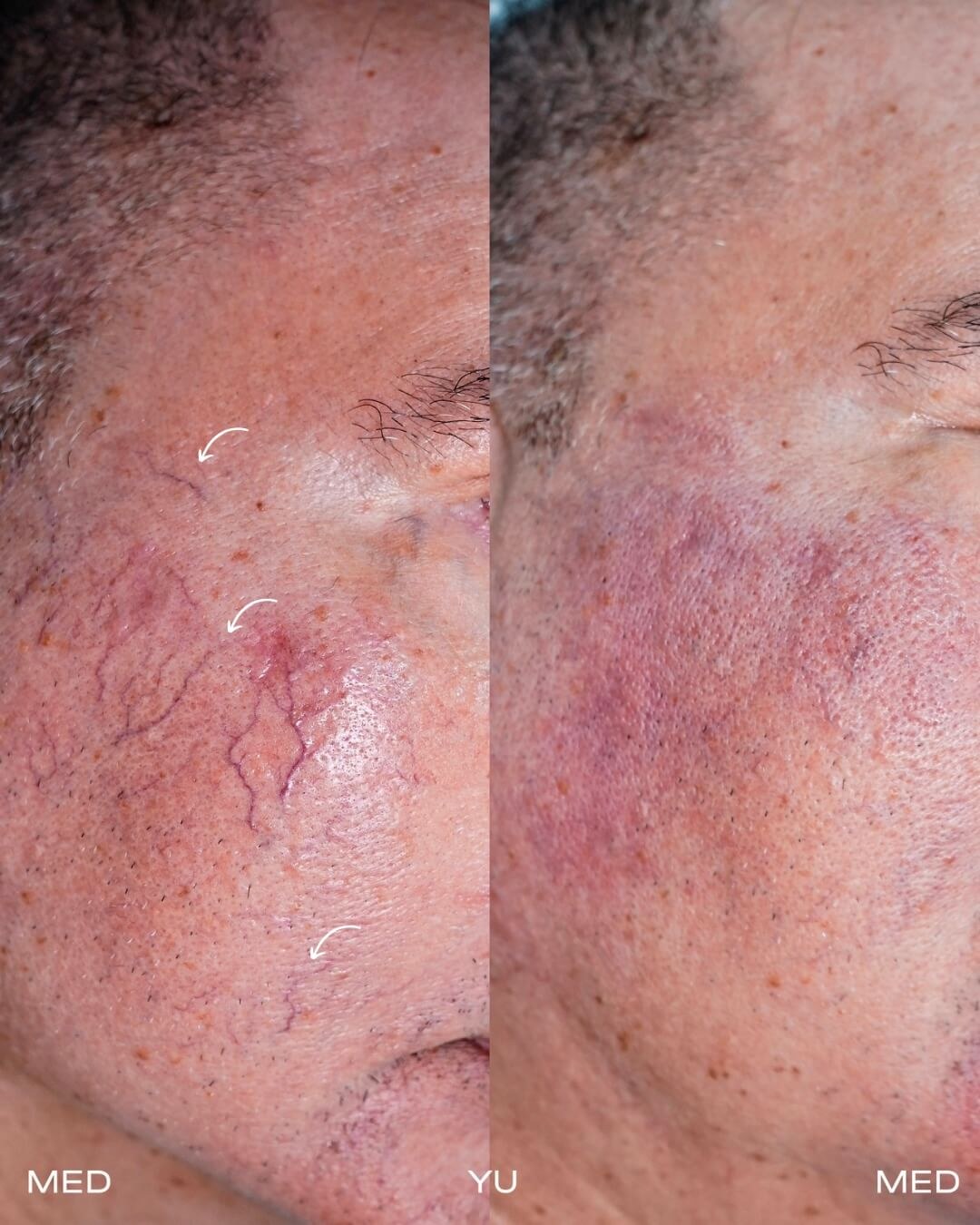
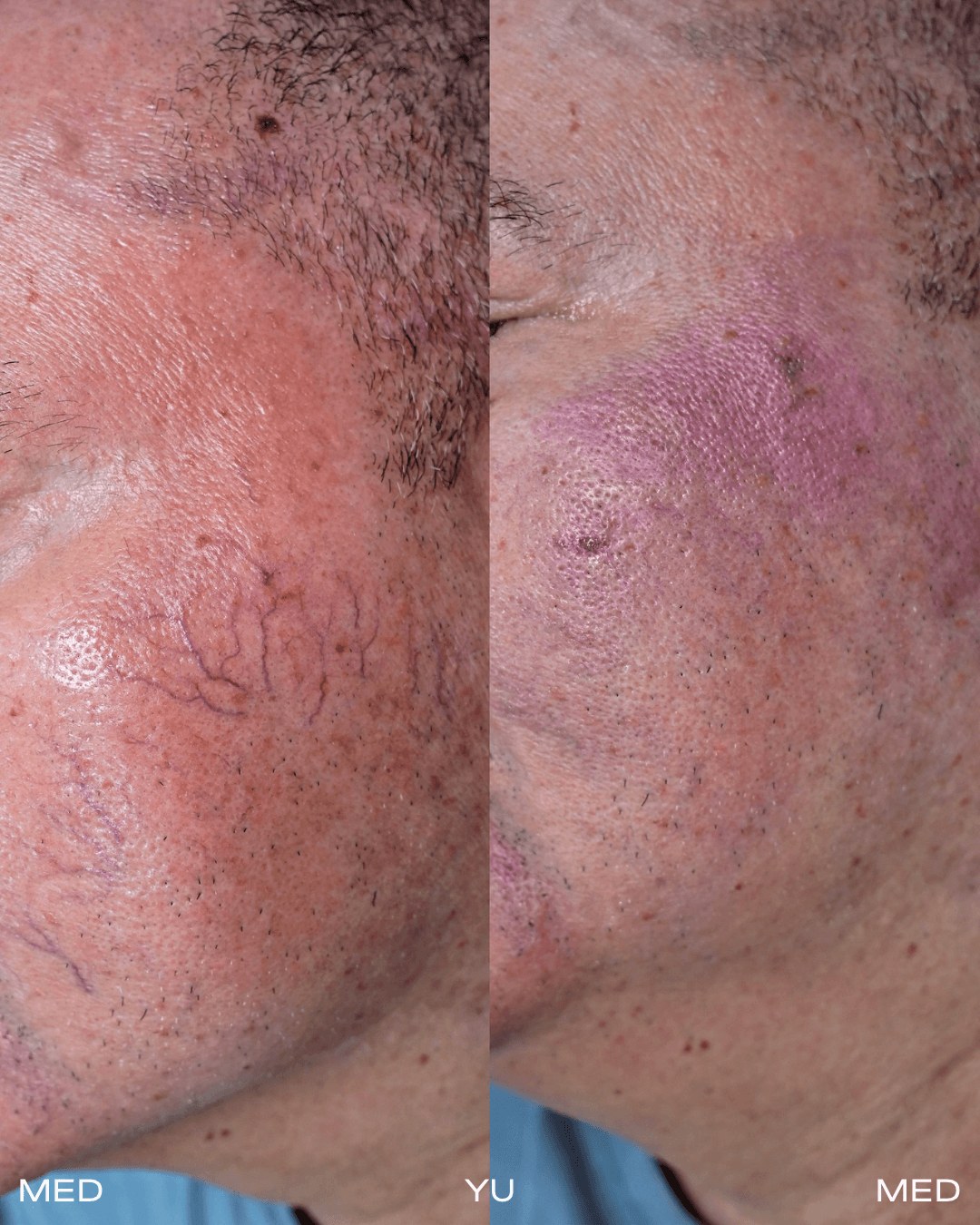
Fotona laser in Dubai covers a wider range of skin concerns than most single-purpose machines, because it carries two different lasers in one platform. At MED YU MED it runs on the Fotona SP Dynamis, which pairs a 1064 nm Nd:YAG laser that reaches deep into the skin with a 2940 nm Er:YAG laser that works precisely at the surface. Switching between them, or layering them, lets one system tighten, resurface and treat vascular marks instead of needing several machines.
That range is why Fotona suits everything from skin tightening to fine-line resurfacing and the non-surgical lift its 4D protocol is known for. The clinician matches the laser and mode to your concern, and a DHA-licensed medical team carries out the treatment. Downtime depends on the mode, from none after gentle passes to a few days after resurfacing. Results vary between individuals, and a consultation sets the plan first.
Read next: which Fotona modes are used for which goal.
Fotona is a laser platform built around two complementary wavelengths. The Nd:YAG laser (1064 nm) travels deep into the dermis, where it heats tissue to tighten skin, treats vascular lesions, and warms structure without breaking the surface. The Er:YAG laser (2940 nm) is absorbed strongly by water at the surface, which lets it resurface fine lines, scars and rough texture with controlled, layer-by-layer ablation.
The SP Dynamis builds signature protocols on this pair. SMOOTH mode warms tissue gently from inside the mouth to tighten the lower face and ease snoring, while the 4D approach combines intraoral and external passes for a non-surgical lifting effect. High peak power delivers the energy in short, fast pulses, which improves precision and comfort. Because it tightens and resurfaces with lasers, Fotona sits apart from light-based BBL, which treats pigment and redness — different tools for different jobs. The full device specification sits on the Fotona SP Dynamis device page.
The platform runs several named modes, and the doctor selects them for the task: FRAC3 for fractional work in the depth of the skin, PIANO for slow bulk heating, SupErficial for light polishing of the surface, and SMOOTH delivered inside the mouth for tightening the lower face from within. The 4D protocol runs these passes in sequence during one visit.
Fotona also treats small vascular concerns on the face and legs; see spider veins and vascular lesions: laser treatment in Dubai.
To compare all lifting methods we offer, see Skin tightening in Dubai: how the methods differ.
Skin assessment, review of your concern and medical history. The clinician selects the laser, mode and protocol — tightening, resurfacing or a 4D lift — and explains the expected downtime.
The area is cleansed and protective eyewear is fitted. For ablative resurfacing, numbing cream is applied; gentler modes usually need none.
The chosen laser is passed over the skin, and intraoral modes work from inside the mouth. Energy is delivered in short pulses with cooling; session length depends on the area and protocol.
Recovery is matched to the mode. Gentle passes need little care; resurfacing means a few days of redness and flaking. Sun avoidance and SPF are advised across the board.
What Fotona delivers depends on the mode. Gentle Nd:YAG tightening and SMOOTH protocols show a subtle firming that builds as collagen rebuilds over weeks, usually across a short course. Er:YAG resurfacing makes a more visible change to texture and fine lines once the skin heals, sometimes in a single session for milder concerns. The 4D lift combines several passes for a tightening effect that develops over the following weeks. Most plans run as a course, with the number of sessions set to your concern. The clinician explains a realistic range at consultation. Results vary between individuals, and Fotona firms and resurfaces rather than replacing surgery for heavy sagging.
Downtime depends entirely on the mode. Gentle Nd:YAG and SMOOTH passes usually have none — skin may look flushed for a few hours, then settles. Ablative Er:YAG resurfacing is more involved: expect redness, swelling and light flaking for several days as the surface heals, similar to a sunburn that peels. Across all modes, avoid sun, hot baths and saunas for a few days and use daily SPF, since treated skin is more sensitive. The clinician tells you which recovery to expect before treatment, and the clinic gives written aftercare.
Risks and side effects. The risk profile follows the mode. Gentle Nd:YAG and SMOOTH passes carry mainly redness and warmth; ablative Er:YAG resurfacing removes surface skin and carries the risks of a controlled wound: burns, blistering, prolonged redness, infection, herpes reactivation, delayed healing and scarring. Pigment change in either direction — post-inflammatory hyperpigmentation in particular — is the risk that matters most on skin types IV to VI, which are common in Dubai, and it can take months to fade. Protective eyewear is worn by everyone in the room for the whole session, and treatment close to the eyes carries a risk of ocular injury, which is why the doctor sets what can be treated and how. Tell us about photosensitising medicines such as isotretinoin, doxycycline or St John’s wort, about recent sun exposure or tanning, and about any history of cold sores, since antiviral cover is usually started before facial resurfacing. Moles and pigmented lesions are examined by a doctor before treatment: a laser must never be aimed at an undiagnosed lesion.
When to contact us urgently. Call MED YU MED on +971 52 184 5011 (daily 10:00–22:00) if you develop a blister or an open area of skin, a burn, pain that increases rather than eases after the first day, redness and heat spreading beyond the treated area, discharge or fever, or a dark or white patch of skin that was not there before. Eye pain or any change in vision after a treatment near the eyes needs assessment the same day. Outside our opening hours, go to the nearest emergency department or call 998 for an ambulance — do not wait for the clinic to reopen.
| Protocol | Price |
|---|---|
| Face lift 2D | 2100 AEDcourse x3: 5670 · 5+1: 10500 AED |
| Face lift 3D | 2750 AEDcourse x3: 7425 · 5+1: 13750 AED |
| Face lift 4D | 3500 AEDcourse x3: 9450 · 5+1: 17500 AED |
| Neck lift 2D | 1500 AEDcourse x3: 4050 · 5+1: 7500 AED |
| Neck lift 3D | 2150 AEDcourse x3: 5805 · 5+1: 10750 AED |
| Neck lift 4D | 2900 AEDcourse x3: 7830 · 5+1: 14500 AED |
| Face + neck lift 4D | 5500 AEDcourse x3: 14850 · 5+1: 27500 AED |
| Smooth eyes | 1500 AEDcourse x3: 4050 · 5+1: 7500 AED |
| Vector lift | 1800 AEDcourse x3: 4860 · 5+1: 9000 AED |
| Active acne | 2000 AEDcourse x3: 5400 · 5+1: 10000 AED |
| Lip laser | 1000 AEDcourse x3: 2700 · 5+1: 5000 AED |
| Hair growth | 1300 AEDcourse x3: 3510 · 5+1: 6500 AED |
| Skin resurfacing | 2000 AEDcourse x3: 5400 · 5+1: 10000 AED |
| Skin rejuvenation | 2000 AEDcourse x3: 5400 · 5+1: 10000 AED |
| Skin rosacea | 2000 AEDcourse x3: 5400 · 5+1: 10000 AED |
| Vascular lesions | 2000 AEDcourse x3: 5400 · 5+1: 10000 AED |
| Warts | 1500 AEDcourse x3: 4050 · 5+1: 7500 AED |
| Veins | 2000 AEDcourse x3: 5400 · 5+1: 10000 AED |
| Onychomycosis | 1000 AEDcourse x3: 2700 · 5+1: 5000 AED |
| Scars size S (1x5 cm) | 600 AEDcourse x3: 1620 · 5+1: 3000 AED |
| Scars size M (5x9 cm) | 1000 AEDcourse x3: 2700 · 5+1: 5000 AED |
| Scars size L (10x10 cm) | 1500 AEDcourse x3: 4050 · 5+1: 7500 AED |
| Scars size XL | 1700 AEDcourse x3: 4590 · 5+1: 8500 AED |
| Pulse veins (price per pulse) | 100 AED |
Final protocol and cost are set after consultation and depend on the treatment area, the number of sessions and the plan agreed with your doctor. See the full price list.
At MED YU MED Fotona laser starts from 600 AED. The final cost depends on the protocol and area — tightening, resurfacing or a 4D lift — and the number of sessions, so it is set per plan after assessment. A consultation gives you an exact quote.
Fotona 4D is a protocol that combines intraoral and external laser passes, using both the Nd:YAG and Er:YAG wavelengths, for a non-surgical lifting and tightening effect on the face. It builds firmness over the following weeks as collagen rebuilds. Results vary between individuals.
SMOOTH mode uses gentle, non-ablative Nd:YAG heating, often from inside the mouth, to tighten the lower face and to ease snoring. It works without breaking the skin surface, so downtime is minimal. The clinician confirms whether it suits your concern at consultation.
It depends on the mode. Gentle tightening and SMOOTH passes usually have no real downtime beyond brief flushing, while ablative Er:YAG resurfacing means a few days of redness and flaking as skin heals. The clinician tells you which recovery to expect before treatment.
Fotona uses Nd:YAG and Er:YAG lasers to tighten skin and resurface texture, while BBL is a broadband light (IPL) treatment for pigment, redness and vessels. They solve different problems, and the clinic runs both as separate systems. The clinician recommends the right one for your concern.
Most plans run as a short course, with the number set to your concern and the protocol — tightening, resurfacing or a 4D lift. Milder texture changes can show after a single resurfacing session, while tightening builds across several. The clinician estimates a range at assessment. Results vary between individuals.
They depend on the mode used. Gentle modes carry redness and warmth for a few hours. Ablative Er:YAG resurfacing is a controlled wound: expect redness, swelling and flaking for several days, with a real risk of burns, blistering, infection, a cold sore flare-up, delayed healing and scarring. Pigment change, especially darkening after inflammation, is the main risk on darker skin types and can take months to settle. Everyone in the room wears eye protection. The doctor examines moles and pigmented lesions before treating and explains which recovery to expect for your plan.
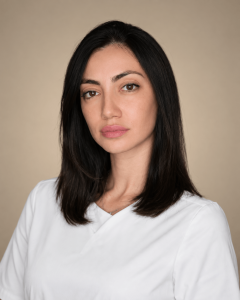
Aesthetic Medicine Doctor, 8 years' experience
DHA License No. 03325290-001
Last reviewed July 2026
The information on this page does not replace a medical consultation. Results are individual. Indications and contraindications are determined by a specialist at an in-person appointment.
The form sends a request for a call back: the clinic confirms the time and the plan by phone.
This site is protected by reCAPTCHA and the Google Privacy Policy and Terms of Service apply.


