


Lip Augmentation
Hyaluronic acid filler
Volume, contour, hydration and shape correction for lips that are naturally thin, have thinned with age, lost a defined border or lost balance between the top and bottom lip.

Treatment category
Four zones treated with hyaluronic acid fillers: lips, nasolabial folds, the cheekbones and jawline, and the horizontal lines of the neck. Check what is treated where and what a millilitre costs, or book a consultation — the fold that bothers you often sits where volume was lost, not where the line shows.
Dermatological consultation — 300 AED: examination, diagnosis and a treatment plan.
DHA-licensed doctors · Bluewaters Island 6, Dubai · daily 10:00–22:00
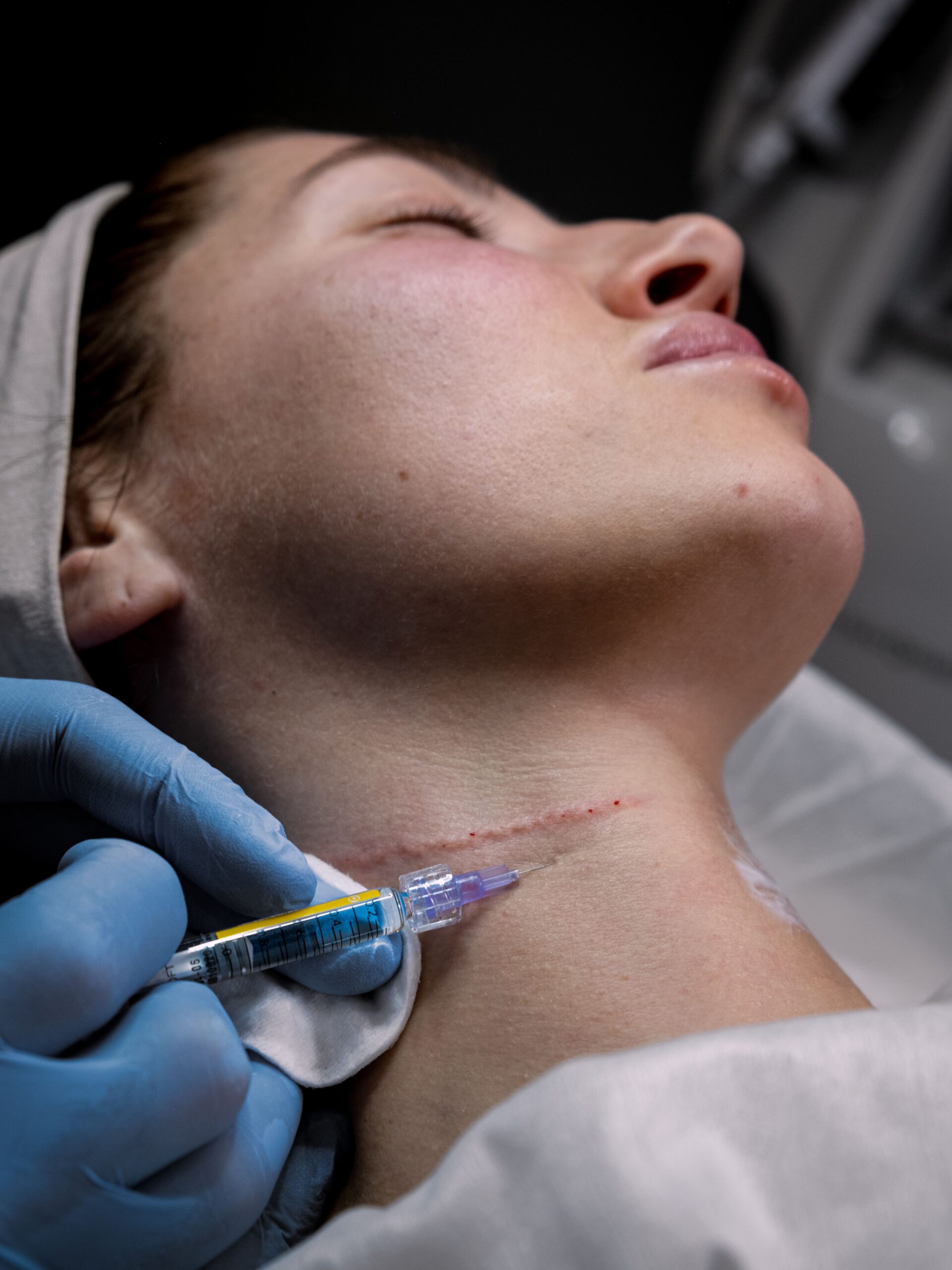
Pick a treatment by name. Prices below are starting points, shown together with the zone or protocol they refer to.
Hyaluronic acid filler
Volume, contour, hydration and shape correction for lips that are naturally thin, have thinned with age, lost a defined border or lost balance between the top and bottom lip.

Hyaluronic acid filler
Softening of the crease running from the nose to the corner of the mouth. In some cases the fold is treated directly, in others the mid-face is supported instead, because that is where the volume was lost.

Structural filler
Definition of the cheekbones, chin projection and a sharper jawline. The doctor assesses facial proportions, bone structure, soft tissue volume and asymmetry before choosing the product and the volume.

Soft filler for thin skin
Smoothing of horizontal neck lines and tech-neck creases with a soft filler chosen for thin, mobile skin. Filler softens the creases; it does not lift neck sagging, which needs a different treatment.
Related sections: Filler removal (dissolving) · Injectable treatments · Laser and device treatments · Full price list
These four treatments are grouped by anatomy rather than by product name: the face is dense with arteries, and the zones differ sharply in how much room for error they leave. The table shows which products are used where and what to keep in mind.
| Zone | Treatments | Mainly used for | Worth knowing |
|---|---|---|---|
| Lips | Juvederm Ultra 3, Volift, Volite; Stylage M, Stylage Special Lips; Aliaxin | Volume, contour, hydration, shape and asymmetry correction | Lip injections can trigger cold sores — tell the doctor if you get them at all |
| Nasolabial folds | Juvederm Ultra 3, Ultra 4, Volift, Voluma | Smile lines, deep nose-to-mouth folds, mid-face support | Supporting the cheek often softens the fold better than filling the crease |
| Cheekbones, chin, jawline | Juvederm Voluma, Volux; Stylage XL, Stylage L | Definition and structure of the mid and lower face | Plans run up to six millilitres; the volume is set after examination |
| Neck (Venus rings) | Belotero Balance, Soft, Intense; Juvederm Volite | Horizontal neck lines, necklace lines, tech-neck creases | Neck skin is thin and mobile, so a soft product is used; sagging is not treated this way |
Fillers are priced per millilitre of a named product. One millilitre starts at 1 800 AED for lips and at 2 100 AED for the other zones, and a contouring plan runs up to six millilitres when the mid and lower face are treated together. The doctor sets the volume at the consultation after examining the zone, so nothing here is sold as a fixed package.
A quoted price is not a treatment plan: the number of zones and sessions is agreed at the consultation. Every position is in the full price list.
Filler work here is done by doctors, and the doctors below are the medical reviewers of these four treatment pages. Each profile lists education, DHA licence and training certificates.
 Dr. Alina LebedevaGeneral Practitioner, Aesthetic Medicine Doctor
 Dr. Karina AbdullinaGeneral Practitioner, Aesthetic Medicine Doctor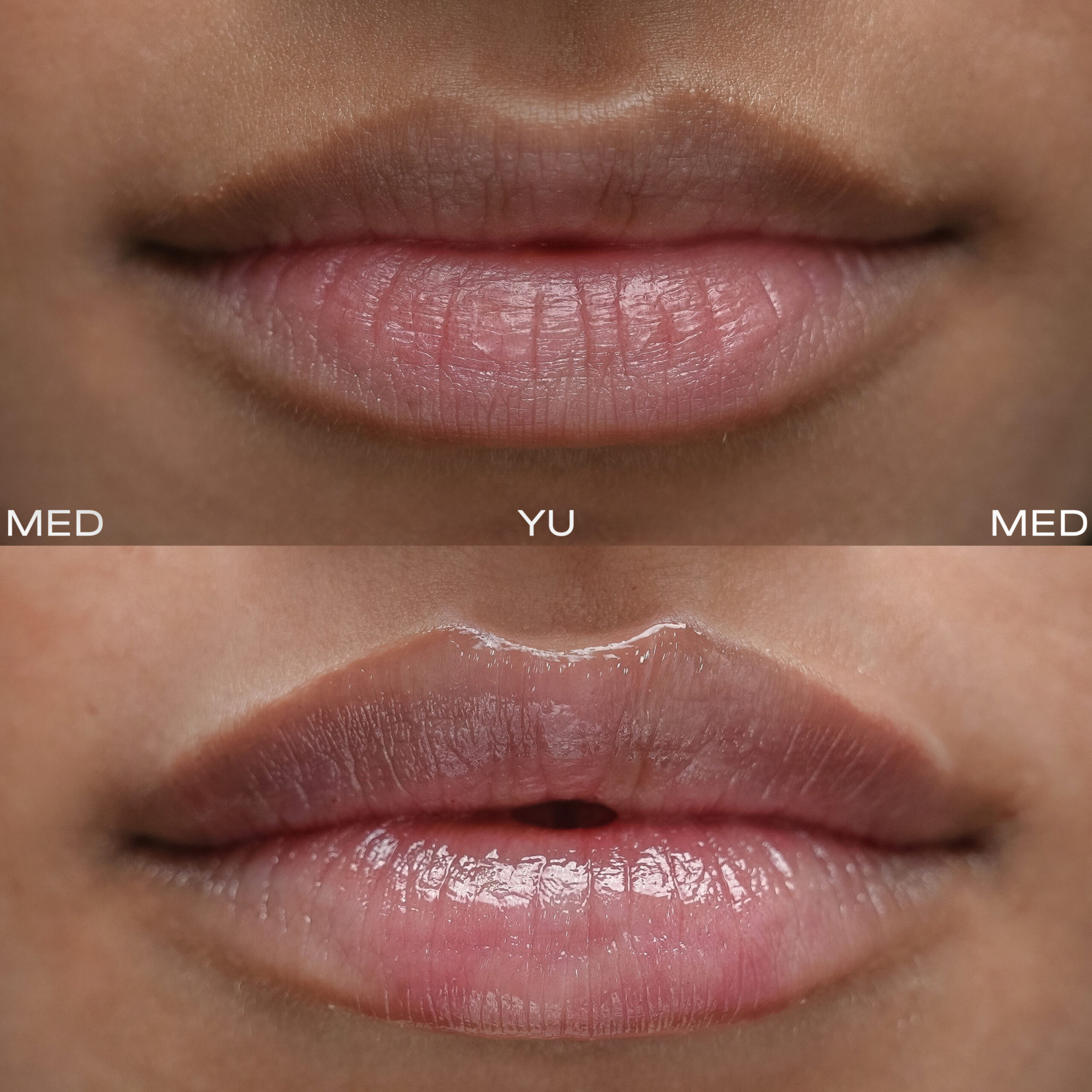

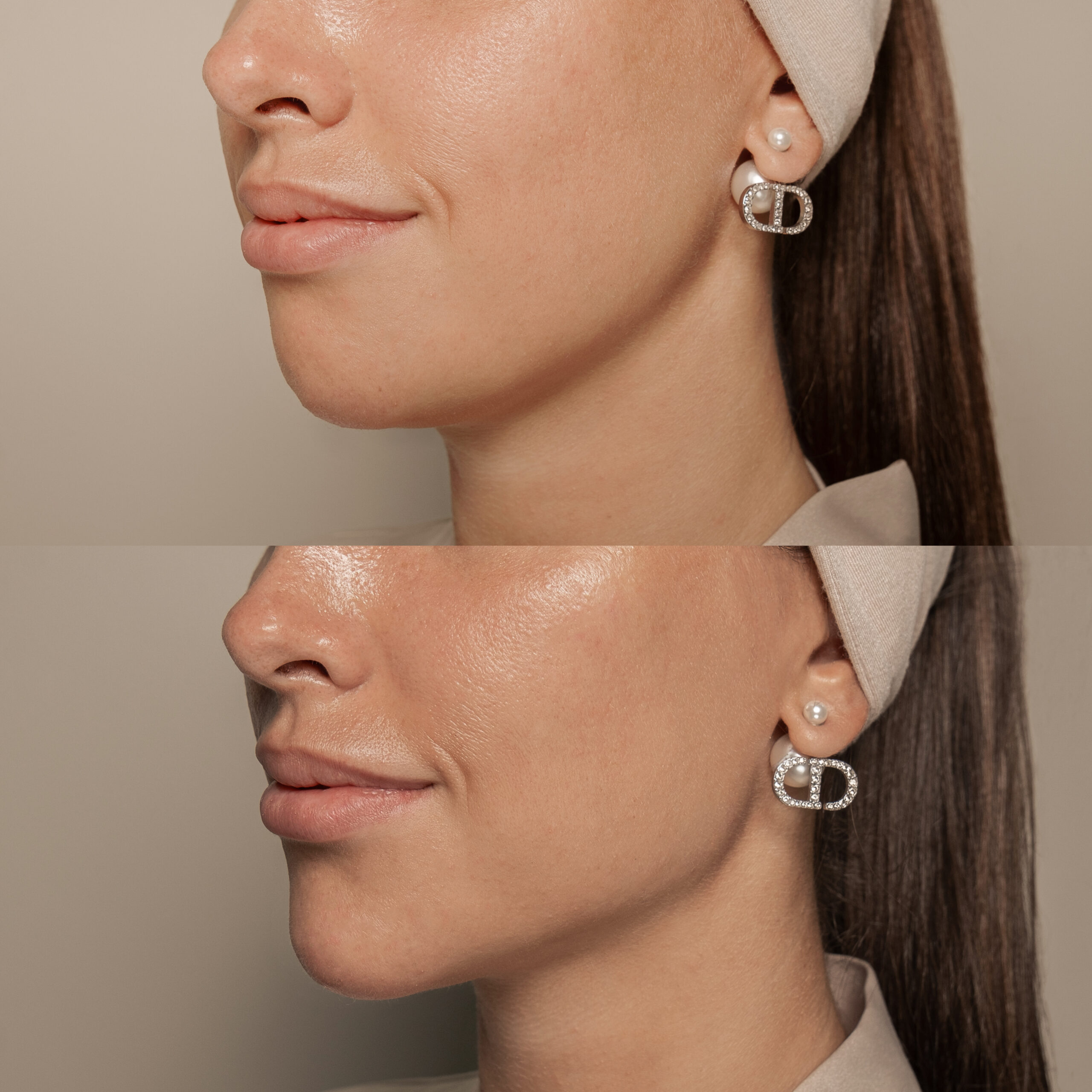

Photos from our practice. Results differ from person to person, and the doctor confirms the number of sessions at your consultation.
Swelling, tenderness, firmness and bruising at the injection points are common, not unusual, and can take up to two weeks to clear fully. Less common are lumps, asymmetry needing correction, infection, and delayed inflammatory nodules that appear weeks or months later. Filler is not placed over active infection or inflammation, during pregnancy or breastfeeding, or where a history of keloid scarring or an unresolved complication from previous injections makes it unwise.
Tell the doctor about blood-thinning medication, autoimmune and uncontrolled chronic conditions, previous filler anywhere in the face regardless of when it was placed, and any history of cold sores. Where possible, postpone dental procedures for about two weeks after treatment — dental work is a recognised trigger for delayed inflammation around filler.
Hyaluronic acid fillers can be dissolved with hyaluronidase, and that genuinely matters. It is not, however, an undo button: dissolving is a separate medical procedure, it may need more than one session, complete removal cannot be promised for every product, and the enzyme carries its own risk of allergic reaction.
Call 998 — the UAE ambulance number, free and available 24 hours — or go to the nearest emergency department immediately if you develop any change in vision, eye pain, difficulty breathing, swelling of the face, lips or tongue, or a spreading rash. Contact the clinic immediately if pain is severe or increasing rather than settling, if skin turns white, blue, dusky or develops a mottled, net-like pattern, or if blistering appears. These are rare and they need treatment within hours, not the next working day. Do not apply creams, ointments or ice while you wait for advice.
That is what the consultation is for. The fold that bothers you often sits where volume was lost, not where the line shows, so supporting the cheek can soften a nasolabial fold better than filling the crease. Sometimes the honest answer is that filler is not the right tool at all — that is a normal outcome of an assessment.
Per millilitre of a named product. Lips start at 1 800 AED per millilitre with Aliaxin; nasolabial folds, contouring and neck lines start at 2 100 AED per millilitre. Contouring plans run up to six millilitres, and the price rises with the volume. Every position is in the full price list.
It depends on the product, the amount placed, the zone and individual metabolism. Filler in mobile areas breaks down faster than in static ones — roughly six to eighteen months depending on the zone. No outcome is guaranteed, and no filler is permanent.
At about two weeks. Something is visible immediately, but the first days are swelling rather than result: the face can look fuller or slightly uneven at that stage, and minor asymmetry then is normal rather than a failure. A small correction, if needed, is decided at the same review.
Hyaluronic acid fillers can be dissolved with hyaluronidase, and that genuinely matters. It is not an undo button: dissolving is a separate procedure, it may need more than one session, complete removal cannot be promised for every product, and the enzyme carries its own risk of allergic reaction.
Yes, and the doctor needs to know about every injection you have had in the face, whenever it was placed and whatever it was. Previous filler changes the plan, and an unresolved complication from earlier injections postpones treatment.
Not sure which treatment to choose? Discuss your concerns with our team and see the options before deciding.
Book a consultationEvery treatment on this page is a medical procedure with contraindications and possible side effects, listed on its own page. Final suitability is determined by a clinician at an in-person assessment at MED YU MED, Bluewaters Island, Dubai. MEDYUMED MEDICAL CLINIC LLC · DHA Licence 6589480 · open daily 10:00–22:00. Outside our hours, urgent problems go to the nearest emergency department or 998.
