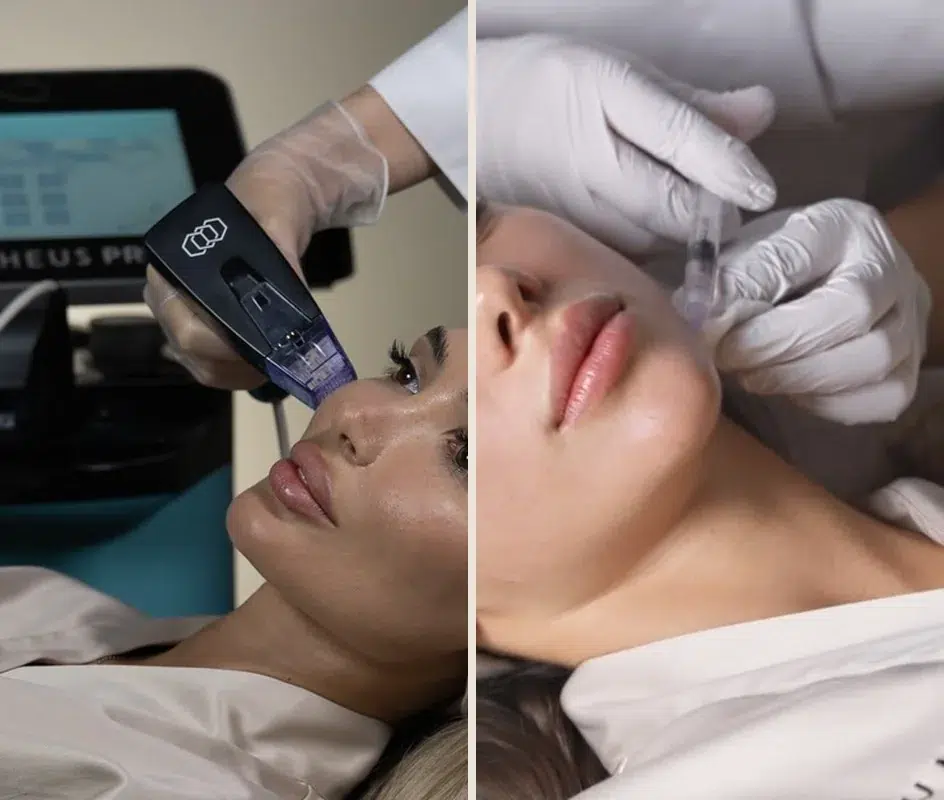
Filler removal at MED YU MED Dubai is a doctor-led treatment for dissolving unwanted hyaluronic acid filler. The procedure is used when filler needs to be partially corrected or fully removed because of migration, overfilling, lumps, asymmetry, swelling, an unnatural result or complications after previous injections.
The treatment is performed with hyaluronidase, an enzyme that breaks down hyaluronic acid-based dermal fillers. It can be used for lips, under-eye area, cheeks, nasolabial folds, chin, jawline and other facial zones where HA filler was previously injected. Non-hyaluronic fillers, permanent fillers and silicone-based products may not respond to hyaluronidase and require a different medical approach.

Indications
Works on hyaluronic acid fillers only — not permanent or biostimulator fillers, confirmed at consultation.
At MED YU MED, every filler dissolving treatment starts with a consultation. The doctor checks the treated area, type of filler if known, time since injection, degree of migration, swelling, lumps, asymmetry, previous complications and allergy history before selecting the amount and injection points. In some cases, partial correction is enough; in others, full filler removal or more than one session may be needed.
Filler removal is especially useful for migrated lip filler, overfilled lips, filler lumps, uneven correction, under-eye puffiness after filler, poorly placed filler and patients who want to return closer to their natural appearance before a new correction plan. New filler is usually considered only after the area has settled and the doctor confirms that it is safe to proceed.


Filler dissolving in Dubai reverses hyaluronic acid filler that has migrated, overfilled an area or simply outstayed its welcome. At MED YU MED a licensed doctor injects hyaluronidase, an enzyme that breaks down hyaluronic acid, into the treated area so the body clears the gel far faster than it would on its own. It works on hyaluronic acid fillers — the most common kind — and lets you correct an uneven result, reduce a lumpy or overfilled look, or return to your baseline before starting again.
People ask for dissolving for different reasons: filler that has spread beyond where it was placed, a bluish tint under thin skin, a result that looks too full, or simply a wish to start fresh. Hyaluronidase acts quickly, often within a day or two, and a single session is enough for many cases, though dense or layered filler can need more than one. It is a medical procedure, carried out under DHA facility licence No. 6589480, held by MED YU MED on Bluewaters Island. A consultation confirms the filler type and plan before any injection.
Hyaluronidase is an enzyme that breaks the bonds holding hyaluronic acid together. Hyaluronic acid (HA) filler is a cross-linked gel; inject hyaluronidase into it and the enzyme cuts those links, turning the firm gel back into fragments the body absorbs naturally over hours to days. Because HA also occurs naturally in skin, the enzyme acts on the filler first and the surrounding tissue recovers its own HA quickly afterwards.
The key limit is the filler type. Hyaluronidase dissolves hyaluronic acid fillers — the kind used for lips, cheeks, nasolabial folds and most facial work — but not permanent or biostimulator fillers such as those based on calcium hydroxylapatite or poly-L-lactic acid, which need a different approach. The doctor first establishes what was injected and where, then places the enzyme precisely into the target. An allergy patch test may be advised, because hyaluronidase is derived from animal or recombinant sources and a small number of people react to it.
Hyaluronidase only breaks down hyaluronic acid. Permanent and non-HA products do not respond to it and need a different route, which the doctor explains at consultation after identifying what was injected and where. Large volumes sometimes need more than one session, with the effect of each visit judged after a day or two.
If you plan new lip volume after dissolving a filler, see lip fillers in Dubai.
A doctor establishes which filler you had, when and where, and assesses the concern. An allergy patch test may be advised before the enzyme is used.
The area is cleansed and a topical numbing cream applied. If a patch test was done, the doctor checks it before proceeding.
The doctor injects hyaluronidase into the target filler with a fine needle. The treatment takes minutes; you may feel mild stinging as the enzyme goes in.
Swelling settles over a day or two. The doctor reviews the area a few days later to see how much dissolved and whether a second session is needed.
Hyaluronidase works fast. Many patients see the filler soften and reduce within 24-48 hours, and the area keeps settling over the following days. One session clears most straightforward cases, but dense, layered or long-standing filler can need a second visit, so the doctor reviews the result before deciding. The dissolving is not always perfectly even on the first pass, which is why a follow-up assessment is part of the plan. If you intend to re-treat, the doctor usually waits a couple of weeks for the area to calm before placing new filler. Results vary between individuals.
Downtime is short. Swelling is usually most marked for the first two to three days and can take up to a week to settle, with bruising lasting up to two weeks and the final result judged at about two weeks — dissolving can swell more than you might expect, because the enzyme acts quickly. The area may look flatter or slightly deflated at first as the filler clears and any retained water leaves. Avoid heat, heavy exercise and pressure on the area for the rest of the day. If you plan new filler, the doctor advises a short gap so the tissue settles first.
Risks and side effects. The enzyme is not selective: it breaks down the skin’s own hyaluronic acid alongside the filler, so the area can look flatter, thinner or laxer than it did before any filler was placed. Native hyaluronic acid is replenished over days to weeks, and the doctor uses the smallest effective dose to limit this. How much dissolves cannot be predicted exactly — the result can be more than intended, leaving a hollow or asymmetry, or less than intended, needing a second session. Allergic reactions are rare but real, and can include anaphylaxis, usually within minutes of the injection; our doctors treat with emergency medication on site and observe you afterwards. Other risks: swelling, bruising and infection at the injection points.
Dissolving as an emergency is different. If after any filler injection, anywhere, you develop blanching or a pale patch of skin, pain out of proportion to the procedure, a dusky, blue or net-like skin pattern, or any change in vision, this may be a vascular occlusion and it is an emergency, not a booking. Call MED YU MED on +971 52 184 5011 (daily 10:00–22:00) immediately. Outside our opening hours, or with any change in vision, go straight to the nearest emergency department or call 998. Outcomes are best when treatment starts within the first hours, so do not wait for a scheduled appointment. In an emergency the doctor treats without delaying for an allergy test dose and manages the allergy risk with emergency medication on site.
| Protocol | Price |
|---|---|
| PB Serum Drain | 1000 AED |
Final protocol and cost are set after consultation and depend on the treatment area, the number of sessions and the plan agreed with your doctor. See the full price list.
At MED YU MED filler dissolving starts from 1000 AED. The final cost depends on the filler type, the area and how much enzyme it needs, plus whether a second session is required, so the doctor quotes the full price after assessing the area.
Hyaluronidase acts fast. Softening and visible reduction usually show in the first 24 to 48 hours, and the area carries on settling for several days after that. Dense or layered filler can need a second visit. Results vary between individuals.
No. Hyaluronidase dissolves hyaluronic acid fillers — the most common kind, used for lips, cheeks and folds. It does not break down permanent or biostimulator fillers such as calcium hydroxylapatite or poly-L-lactic acid, which the doctor identifies at consultation.
Hyaluronidase has a long record in aesthetic medicine. A DHA-licensed doctor performs the injections and checks your history, and an allergy patch test may be advised because a small number of people react to the enzyme. It is not suitable during pregnancy, breastfeeding or with active skin infection.
Yes. Once the area has settled, new filler can be placed. The doctor usually advises a short gap — often a couple of weeks — so any swelling has gone and the tissue has calmed, which gives the new result a cleaner base. The timing is set at review.
Discomfort is mild. A numbing cream is applied first and the needle is fine, so most patients feel brief stinging rather than pain as the enzyme goes in. The treatment takes only minutes, with short-lived swelling afterwards rather than recovery time.
Hyaluronidase is a prescription-only medicine, and using it to dissolve dermal filler is an off-label use — accepted practice in aesthetic medicine, but outside the registered indication, so you consent to it in writing. The enzyme also breaks down the skin’s own hyaluronic acid, so the area can end up flatter or laxer than before the filler was placed, and the amount that dissolves cannot be predicted exactly. Allergic reactions are rare but can be severe, including anaphylaxis within minutes of injection, which is why the injection is done in clinic with emergency medication on hand and you are observed afterwards. Swelling, bruising and infection at the injection points are also possible.

Aesthetic Medicine Doctor
DHA License No. 26439795-001
Last reviewed September 2026
The information on this page does not replace a medical consultation. Results are individual. Indications and contraindications are determined by a specialist at an in-person appointment.
The form sends a request for a call back: the clinic confirms the time and the plan by phone.
This site is protected by reCAPTCHA and the Google Privacy Policy and Terms of Service apply.