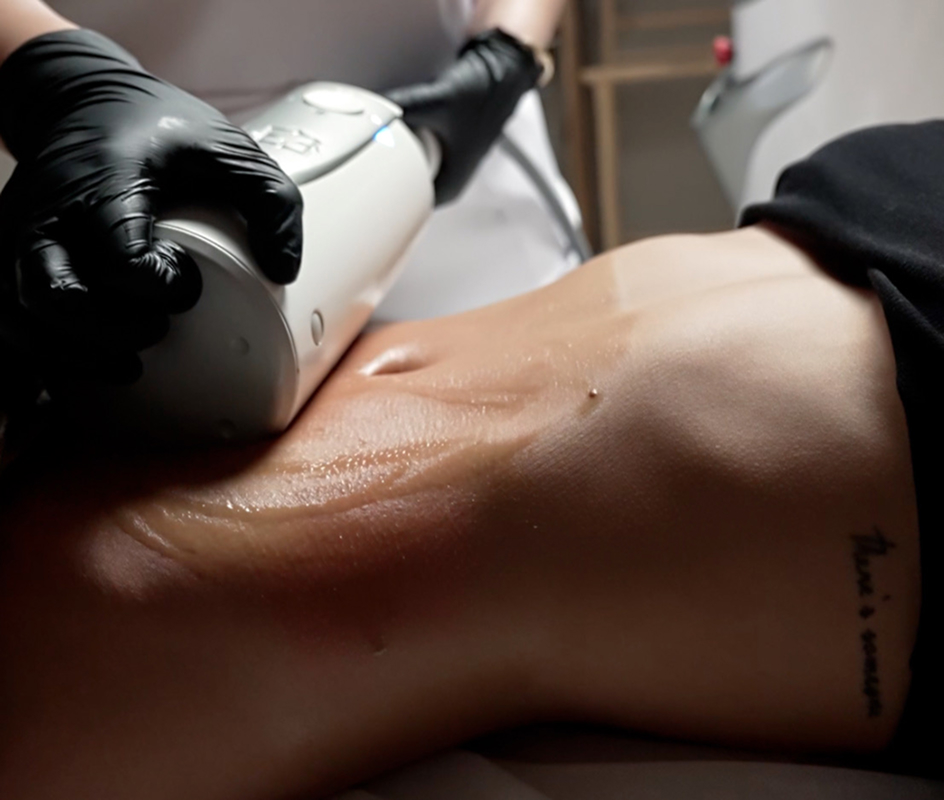
Pico laser treatment in Dubai at MED YU MED runs on the PicoSure Pro, a picosecond laser used for melasma, pigmentation, skin discoloration and uneven skin tone. The device uses ultra-short 755 nm laser pulses to target excess pigment with less reliance on heat than many traditional laser systems. This may make it suitable for patients looking for laser melasma treatment, pigmentation treatment or a brighter, more even-looking complexion without aggressive resurfacing.
The treatment can be used for melasma on the face, sun spots, age spots, post-inflammatory pigmentation, light to strong facial pigment and uneven tone. Common treatment areas include the face, forehead, cheeks, upper and lower eyelids, neck, décolleté and hands. PicoSure Pro is also used for tattoo removal and permanent makeup removal, including eyebrows, eyelid pigment, lip contour and lips.
PicoSure Pro delivers its energy in picosecond pulses — bursts so short that the pigment absorbs the impact faster than the surrounding skin can heat up. The 755 nm wavelength targets excess melanin and ink, breaking pigment into smaller fragments that the body clears gradually over the weeks after treatment, while the reduced heat load spares the surrounding tissue.
At MED YU MED, every PicoSure Pro treatment starts with a medical skin assessment. The doctor checks the type and depth of pigmentation, Fitzpatrick skin type, skin sensitivity, recent sun exposure and previous treatments before selecting the treatment settings. This is especially important for melasma, because it can be triggered by UV exposure, hormones, inflammation and unsuitable laser settings. Treatments are available for selected small areas and larger combinations, including face, face + neck, face + décolleté, and face + neck + décolleté. Prices start from 700 AED for selected zones, with the final cost depending on the area, pigment intensity and treatment plan.
The doctor assesses the type and depth of pigmentation, your Fitzpatrick skin type, sensitivity, recent sun exposure and previous treatments, then selects the settings and plan. Suspicious pigmented lesions are referred for dermatologist assessment first.
The area is cleansed and protective eyewear is fitted. Settings are matched to the pigment and your skin. For sensitive zones the doctor may apply a topical anaesthetic cream and use skin cooling; tell the doctor about any anaesthetic allergies beforehand. Before your session, avoid sun exposure, tanning and self-tanner for at least two weeks, pause retinoids, acids and aggressive peels as the doctor advises, and tell the clinic about any photosensitising medication, recent isotretinoin or a history of cold sores in the treatment area.
The handpiece delivers ultra-short picosecond pulses over the treated zone; most patients describe quick snapping sensations. Session length depends on the size of the area.
The area may look flushed and treated pigment can darken before it fades. Pinpoint crusting is common; on tattoos and permanent makeup, blistering and scabbing can appear over the following days. Strict sun avoidance and daily SPF are essential, and sessions repeat across the course.
Pigment fades gradually rather than disappearing in one visit. Treated spots often darken first, then break down and lighten over the weeks that follow as the body clears the fragmented pigment. Pigmentation is usually treated as a course of sessions spaced several weeks apart, with the number set by the type and depth of pigment at assessment; melasma in particular often needs ongoing maintenance rather than a fixed short course. Melasma is managed rather than cured — it responds to treatment but can return with sun and hormonal triggers, so maintenance and strict sun protection are part of the plan. Tattoo and permanent makeup removal need a series of sessions, as the ink breaks down gradually: how well a tattoo clears depends on the colours, ink composition, depth and age of the work, complete clearance cannot be promised, and some tattoos leave residual shading. Results vary between individuals, and not everyone responds to the same degree — in some cases pigmentation can return or temporarily worsen after treatment.
Downtime depends on what is treated. After pigmentation sessions the area usually looks flushed and feels warm, like mild sunburn, for a few hours to a day. After tattoo or permanent makeup removal the skin reacts more strongly: swelling, crusting and blistering can develop over the first days and take one to two weeks to settle, and the area may need to be kept covered at first. Treated pigment may darken before it starts to fade — let it break down on its own and avoid scrubbing or picking, and if blisters form, do not pop them. Strict sun avoidance and daily SPF are essential, especially for melasma, since fresh treatment leaves the skin more reactive to UV. Skip saunas, hot baths, swimming pools, heavy sweating and strenuous exercise for several days, pause strong actives (retinoids, acids) until the skin has settled, and follow the written aftercare the clinic provides. Less commonly, treatment can cause post-inflammatory hyperpigmentation or patchy loss of pigment, which may be long-lasting.
When to contact us. Contact the clinic if you develop increasing pain, spreading redness, pus, fever, an unexpected colour change in the treated pigment, or blistering you were not warned about.
How to reach us. During clinic hours, call MED YU MED on +971 52 184 5011 (daily 10:00–22:00). Outside those hours, or if any symptom above is severe or getting worse, go to the nearest emergency department or call 998 for an ambulance — do not wait for the clinic to reopen.
| Protocol | Price |
|---|---|
| Skin rejuvenation / tightening | 1500 AED · course x3: 4050 · 5+1: 7500 AED |
| Face (lite) | 1800 AED · course x3: 4860 · 5+1: 9000 AED |
| Face (medium) | 2200 AED · course x3: 5940 · 5+1: 11000 AED |
| Face (intensive) | 2600 AED · course x3: 7020 · 5+1: 13000 AED |
| Upper and lower eyelids | 1400 AED · course x3: 3780 · 5+1: 7000 AED |
| Upper or lower eyelids | 700 AED · course x3: 1890 · 5+1: 3500 AED |
| Décolleté | 2600 AED · course x3: 7020 · 5+1: 13000 AED |
| Intimate area | 1800 AED · course x3: 4860 · 5+1: 9000 AED |
| Hands | 1300 AED · course x3: 3510 · 5+1: 6500 AED |
| Face + décolleté | 4300 AED · course x3: 11610 · 5+1: 21500 AED |
| Face + neck + décolleté | 5300 AED · course x3: 14310 · 5+1: 26500 AED |
| Face + neck | 4000 AED · course x3: 10800 · 5+1: 20000 AED |
| Body (one palm-size zone) | 1000 AED · course x3: 2700 · 5+1: 5000 AED |
| Neck + décolleté | 3800 AED · course x3: 10260 · 5+1: 19000 AED |
| Neck | 1500 AED · course x3: 4050 · 5+1: 7500 AED |
| Buttocks | 3600 AED · course x3: 9720 · 5+1: 18000 AED |
| Protocol | Price |
|---|---|
| Size XS (1x2 cm) | 300 AED · course x3: 810 · 5+1: 1500 AED |
| Size S (3x5 cm) | 600 AED · course x3: 1620 · 5+1: 3000 AED |
| Size M (5x9 cm) | 800 AED · course x3: 2160 · 5+1: 4000 AED |
| Size L (10x10 cm) | 1000 AED · course x3: 2700 · 5+1: 5000 AED |
| Size XL (20x15 cm) | 1300 AED · course x3: 3510 · 5+1: 6500 AED |
| Size XXL (half sleeve) | 1900 AED · course x3: 5130 · 5+1: 9500 AED |
| Protocol | Price |
|---|---|
| Melasma | 1500 AED · course x3: 4050 · 5+1: 7500 AED |
| Pigmentation general | 1000 AED · course x3: 2700 · 5+1: 5000 AED |
| Face - light pigment | 1300 AED · course x3: 3510 · 5+1: 6500 AED |
| Face - medium pigment | 1500 AED · course x3: 4050 · 5+1: 7500 AED |
| Face - strong pigment | 2000 AED · course x3: 5400 · 5+1: 10000 AED |
| Upper and lower eyelids | 1200 AED · course x3: 3240 · 5+1: 6000 AED |
| Upper or lower eyelid | 700 AED · course x3: 1890 · 5+1: 3500 AED |
| Décolleté | 1800 AED · course x3: 4860 · 5+1: 9000 AED |
| Hands | 1000 AED · course x3: 2700 · 5+1: 5000 AED |
| Face + décolleté | 3000 AED · course x3: 8100 · 5+1: 15000 AED |
| Face + neck + décolleté | 3600 AED · course x3: 9720 · 5+1: 18000 AED |
| Face + neck | 2000 AED · course x3: 5400 · 5+1: 10000 AED |
| Forehead | 800 AED · course x3: 2160 · 5+1: 4000 AED |
| Neck + décolleté | 2200 AED · course x3: 5940 · 5+1: 11000 AED |
| Neck | 900 AED · course x3: 2430 · 5+1: 4500 AED |
| Cheeks | 1200 AED · course x3: 3240 · 5+1: 6000 AED |
| Protocol | Price |
|---|---|
| Eyebrows | 1100 AED · course x3: 2970 · 5+1: 5500 AED |
| Brow tip | 600 AED · course x3: 1620 · 5+1: 3000 AED |
| Upper and lower eyelid | 1500 AED · course x3: 4050 · 5+1: 7500 AED |
| Upper or lower eyelids | 800 AED · course x3: 2160 · 5+1: 4000 AED |
| Lip contour | 800 AED · course x3: 2160 · 5+1: 4000 AED |
| Lips | 1100 AED · course x3: 2970 · 5+1: 5500 AED |
Final protocol and cost are set after consultation and depend on the treatment area, the product selected and the number of sessions. See the full price list.
At MED YU MED pigmentation and skin rejuvenation zones start from 700 AED, and tattoo removal starts from 300 AED for the smallest size. The final cost depends on the area, pigment intensity and the number of sessions in your plan. A consultation gives you an exact quote.
PicoSure Pro is cleared for treating melasma pigment, and its ultra-short 755 nm pulses rely less on heat than older laser systems — melasma is a condition that unsuitable settings can worsen. That does not make it risk-free: laser treatment of melasma can cause post-inflammatory hyperpigmentation, relapse, or, uncommonly, patchy loss of pigment that may be long-lasting. The doctor assesses your pigment type, skin and sun exposure and decides whether laser is the right option for you at all. Melasma is managed rather than cured, and sun protection is part of the plan.
Pigmentation usually runs as a short course of sessions spaced several weeks apart, with the number depending on the type and depth of pigment. Tattoos and permanent makeup need a series of sessions, since ink breaks down layer by layer. The doctor estimates a range at assessment. Results vary between individuals.
Most patients describe quick snapping sensations rather than lasting pain. Tattoo and permanent makeup removal is more uncomfortable than treating sun spots, especially on thin-skinned areas such as the lips and eyelids, and the area can feel tender for some hours afterwards. Topical anaesthetic and cooling are used where needed, and the doctor adjusts the approach to your tolerance during the session.
It depends on what was treated. On sun spots and age spots, the pigment usually looks darker and forms fine crusts before it flakes away over the following weeks. Tattoos whiten immediately after the pulse and then fade gradually between sessions. Permanent makeup is a separate case: pigments containing iron oxide or titanium dioxide — common in brow, lip and light-toned work — can darken or turn grey when hit by laser light, which is why the doctor assesses the pigment and reviews the response before continuing. Let the skin heal on its own and avoid picking or scrubbing the area.
After pigmentation sessions downtime is short — the area looks flushed and can feel warm for a few hours to a day, and most people return to normal activity straight away. After tattoo or permanent makeup removal, plan on avoiding heavy sweating, exercise, pools and saunas for several days while the skin heals, and expect crusting or blistering over the first days. Avoid sun and strong actives and use daily SPF, since treated skin reacts more strongly to UV.
Dr. Alina Lebedeva
Dermatologist & Aesthetic Medicine Doctor, 8 years' experience
DHA License No. 35044799-002
Last reviewed July 2026
The information on this page does not replace a medical consultation. Results are individual. Indications and contraindications are determined by a specialist at an in-person appointment.