Published 23 September 2026 · Updated 30 September 2026
Swelling, bruising and hard spots after surgery: INDIBA recovery courses in Dubai
Your surgeon did the operation. The weeks after it are when swelling goes down, the tissue softens and the scar settles, and the right care can support that. We run INDIBA 448 kHz recovery courses after rhinoplasty, eyelid surgery, breast surgery, tummy tuck, liposuction and lipofilling. We start about two weeks after the operation, once your surgeon has cleared you.
DHA-licensed doctors · Bluewaters Island 6, Dubai · daily 10:00–22:00
- Start
- About 2 weeks after surgery
- Needles
- None
- Downtime
- No extra downtime after a session
- Course
- 3 or 5+1 sessions
- Price
- From 600 AED per session
What INDIBA does in recovery
INDIBA is a radiofrequency device that works at one fixed frequency, 448 kHz. The current passes through the tissue between an electrode and a return plate. At low settings it acts without noticeable warming. At higher settings it warms the tissue gently. Both modes are designed to increase local circulation and lymphatic drainage. After surgery that matters because the operated area holds fluid, blood from bruising and inflammation for weeks.
The handpiece has two modes. Capacitive mode acts on the skin and the fat just under it, which is where most post-operative swelling and bruising sit. Resistive mode reaches denser tissue such as scar bands and fibrous areas after liposuction. The doctor chooses the mode and the intensity for each zone and changes them as healing progresses.
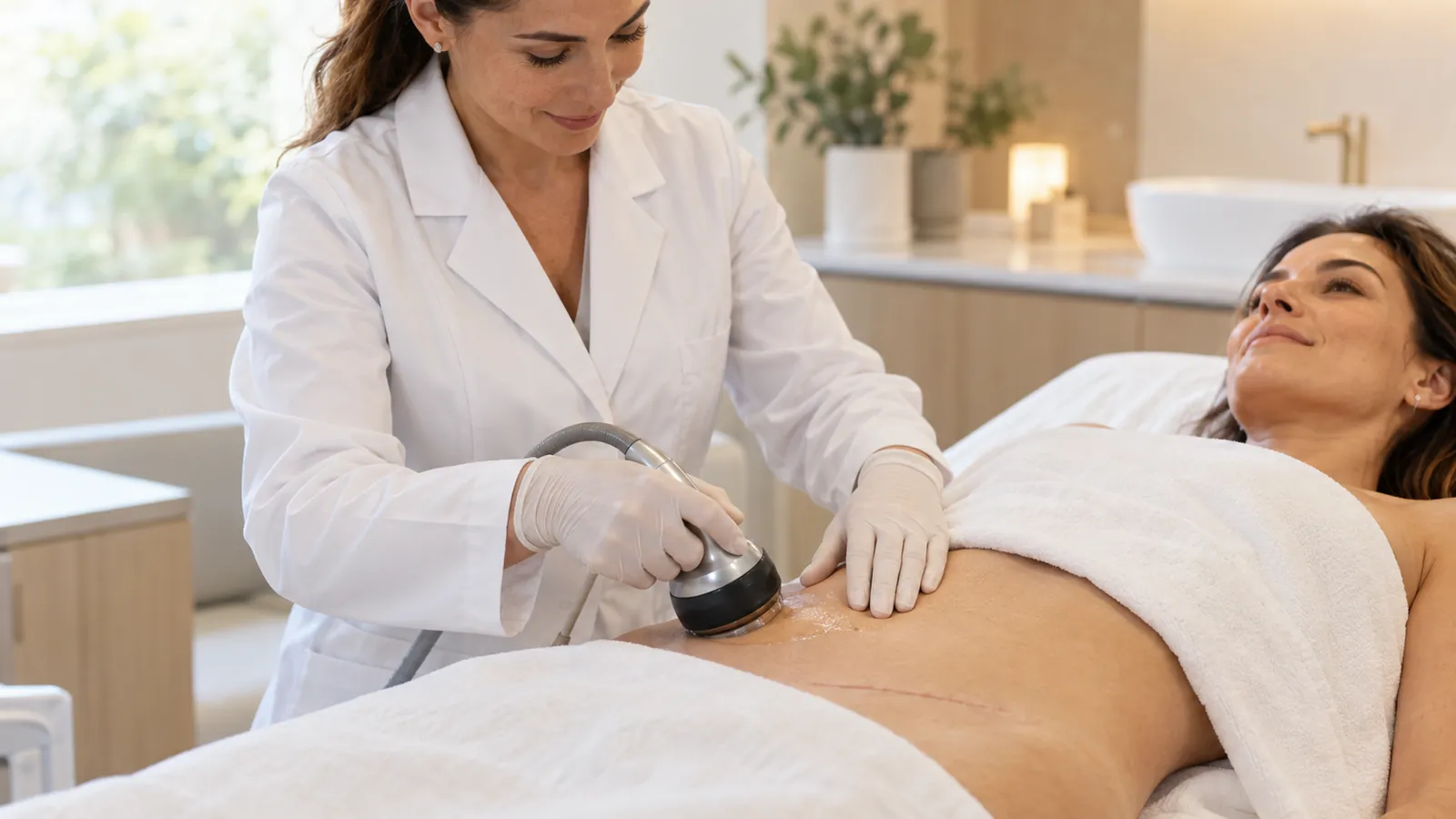
The session feels like a warm hand massage. Nothing punctures the skin and you go home straight after. Scars, bruises and swollen areas are treated only after the doctor has examined them.
We do not perform plastic surgery. MED YU MED is an aesthetic medicine clinic. We work alongside the surgeon who operated on you, not instead of them. Compression garments, drains, wound care and follow-up visits stay with your surgeon. If your surgeon’s instructions and ours ever differ, theirs apply to the operated area.
When we start: about two weeks after the operation
We begin INDIBA recovery courses about two weeks after surgery. By then most incisions have closed and the first, most fragile phase of healing is over. Before the first session we need three things:
- Your surgeon has agreed to INDIBA for the operated area
- Incisions have closed, with no open wound, discharge or dressing on the treatment zone
- No signs of infection, fever or a new hard, hot or painful swelling
The doctor examines the area at your first visit and may shift the start date. Healing speed differs from person to person and between operations. Bring the name of your procedure, its date and any written aftercare instructions from your surgeon.
After rhinoplasty
Swelling after nose surgery settles in stages. The American Society of Plastic Surgeons notes that the first swelling goes down within a few weeks, while the final contour of the nose can take up to a year to refine. Swelling often comes and goes and looks worse in the morning during that year.
From the two-week mark INDIBA is used on the face to help swelling and residual bruising around the nose, cheeks and eyes settle. Over the nose itself, where the structures are still settling, the doctor sets the intensity individually and follows your surgeon’s instructions on touching and pressure. The number of sessions depends on how much swelling you have and how you respond, and the doctor adjusts the plan after the first sessions.
After breast augmentation, reduction or lift
After breast surgery, bruising, swelling and tightness around the incisions and the chest are common in the first weeks. NHS guidance advises avoiding heavy lifting and strenuous exercise for at least a month after breast enlargement.
Implants do not rule INDIBA out, provided your surgeon agrees. The manufacturer states that INDIBA can be applied over breast implants to reduce swelling and pain after surgery and to support tissue recovery later on. Pacemakers and other implanted electronic devices rule treatment out, and so does pregnancy. Metal implants in the area need a doctor’s decision first. The course follows your surgeon’s timeline for garments and massage of the breast. Scar lines are treated only once they have closed and the doctor has checked them.
After lipofilling and fat transfer
Lipofilling has two areas: the place where fat was taken and the place where it was injected. They are treated differently.
The donor area recovers like any liposuction zone, with swelling, bruising and sometimes hard, lumpy spots. INDIBA can be used there to help fluid drain and the tissue soften.
The grafted area is where caution matters. Transferred fat has to build a new blood supply during the first weeks and months, and surgeons differ on how much heat it should receive during that time. Whether the grafted zone is treated at all, and at what setting, is agreed with your surgeon. Without that agreement we treat only the donor area and leave the graft alone.
After liposuction
NHS guidance says bruising and swelling after liposuction can last up to six months, and that lumpy or uneven results are among the possible problems. Fibrous, hard areas are a common reason patients come to us after body surgery.
For these zones the doctor combines capacitive work for swelling with resistive work over firm, fibrous spots. Compression garments stay on as your surgeon prescribed. INDIBA works alongside them and does not replace them.
Swelling after a tummy tuck (abdominoplasty)
A tummy tuck removes excess skin and fat from the abdomen and often tightens the abdominal muscles. NHS guidance says most people wear a corset or tummy-control pants for about six weeks and need around six weeks to recover fully. A temporary fluid-filled swelling above the scar is common, and the skin of the abdomen can stay numb for months, sometimes years.
From about two weeks after the operation, with your surgeon’s agreement, INDIBA is used over the abdomen and flanks to support lymphatic drainage and soften firm areas around the scar. It is used for a similar purpose to lymphatic drainage massage after a tummy tuck, but works through radiofrequency rather than by hand. A fluid collection above the scar is assessed by your surgeon, who decides how to manage it; INDIBA is not a treatment for it. If your surgeon has prescribed massage, the two can run side by side. Because numb skin does not sense heat reliably, the doctor takes it into account when setting the intensity.
The scar itself is treated only once it has closed and the doctor has checked it. Post-abdominoplasty recovery costs 1 600 AED per session, 4 320 AED for a course of three and 8 000 AED for 5+1.
After blepharoplasty (eyelid surgery)
Eyelid surgery removes excess skin or fat from the upper or lower eyelids. NHS guidance says most people take about two weeks off work, bruising and redness may take several weeks to fade, the eyelids can stay puffy and numb for a while, and the scar may feel tight for a few months. By the time we start, the work is on what remains: residual puffiness, lower-lid swelling and tightness along the scar.
Some surgeons advise against heat on the eyelids in the early weeks, so eyelid treatment starts only with your surgeon’s agreement. The doctor sets the intensity for the thin eyelid skin individually. If your vision becomes blurred or double, your eye becomes very painful, or swelling around the eye grows quickly, call 998 or go to the nearest emergency department, do not wait for a session. Post-blepharoplasty recovery costs 800 AED per session, 2 160 AED for a course of three and 4 000 AED for 5+1.
Prices for post-surgical INDIBA in Dubai
Every protocol is sold as a single session, a course of three or a course of 5+1. The doctor recommends how many sessions you need after examining the area.
| Protocol | 1 session | Course of 3 | Course 5+1 |
|---|---|---|---|
| Post-rhinoplasty recovery | 800 AED | 2 160 AED | 4 000 AED |
| Post-mammoplasty recovery (augmentation) | 1 400 AED | 3 780 AED | 7 000 AED |
| Post-breast reduction or lift recovery | 1 400 AED | 3 780 AED | 7 000 AED |
| Post-facial lipofilling recovery | 800 AED | 2 160 AED | 4 000 AED |
| Post-buttock lipofilling recovery | 1 200 AED | 3 240 AED | 6 000 AED |
| Post-liposuction recovery (abdomen) | 1 600 AED | 4 320 AED | 8 000 AED |
| Post-liposuction recovery (legs or arms) | 1 400 AED | 3 780 AED | 7 000 AED |
| Post-body liposculpture recovery | 1 600 AED | 4 320 AED | 8 000 AED |
| Post-abdominoplasty recovery (tummy tuck) | 1 600 AED | 4 320 AED | 8 000 AED |
| Post-blepharoplasty recovery | 800 AED | 2 160 AED | 4 000 AED |
| Post-facelift recovery (SMAS) | 1 200 AED | 3 240 AED | 6 000 AED |
| Post-gluteoplasty recovery (implants) | 1 400 AED | 3 780 AED | 7 000 AED |
| Post-otoplasty recovery | 600 AED | 1 620 AED | 3 000 AED |
| Scar and fibrosis treatment | 800 AED | 2 160 AED | 4 000 AED |
| Hematoma and bruising resorption | 800 AED | 2 160 AED | 4 000 AED |
Prices from the MED YU MED INDIBA price list, checked 23 September 2026. The final plan and cost are confirmed at the consultation.
What the evidence shows, and what it does not
INDIBA’s manufacturer lists reduced bruising, swelling, pain and scarring among the aims of post-surgical treatment. A 2023 brief report by a doctor at a plastic surgery clinic in Cali, Colombia, describes 448 kHz radiofrequency as an adjunct before and after plastic surgery, with faster settling of swelling and hematomas. These are clinical observations and case series, not large controlled trials. The size of the effect for any one patient cannot be predicted.
So we describe INDIBA as support for recovery, not as a way to change the result of the operation. It does not correct the shape your surgeon created, and it does not replace compression, rest or your surgeon’s follow-up.
Who this suits, and who should wait
A recovery course suits you if
- You are about two weeks or more after surgery and your surgeon has agreed
- Incisions have closed
- Swelling, bruising, tightness or hard spots are slowing your recovery
- You can come for a course of visits in Dubai
INDIBA is not suitable, or needs a doctor’s decision first, if
- A wound on the treatment area is still open
- You have a fever or feel unwell
- You have thrombosis or active thrombophlebitis in the area
- You have metal implants in the treatment area (the doctor decides after assessment)
- You have a pacemaker or other implanted electronic device
- You are pregnant
- You have active cancer or are in cancer treatment
Get urgent help, do not wait for a session. If one leg becomes swollen, red, hot or painful, or you have chest pain or sudden shortness of breath, call 998 or go to the nearest emergency department. If swelling on one side grows fast, a wound opens or leaks, or you develop a fever, contact your surgeon the same day.
This list is not exhaustive. Medicines, previous treatments and your medical history can change the plan. A licensed doctor decides whether treatment is suitable at an in-person assessment.
Bring your surgery date and your surgeon’s instructions
At the first visit the doctor examines the operated area, checks that incisions have closed and sets the course to your operation and your stage of healing. If it is too early, we tell you when to come back.
Questions people ask
How soon after surgery can I start INDIBA?
We start about two weeks after the operation, once your surgeon has agreed and the incisions have closed. The doctor examines the area at the first visit and may move the start later if healing needs more time.
Does INDIBA really reduce bruising and swelling after surgery?
It is designed to increase local circulation and lymphatic drainage, which is why it is used to help bruising and swelling settle. Clinical reports and case series support this use, but large controlled trials are lacking. How much it helps differs between patients.
How many sessions will I need?
Courses come in three or 5+1 sessions. The doctor recommends the number after examining the area and adjusts the plan after the first sessions, depending on how the swelling responds.
Can INDIBA be used after rhinoplasty?
Yes, from about two weeks after surgery with your surgeon’s agreement. It is used to help swelling and bruising around the nose, cheeks and eyes settle. Over the nose the doctor sets the intensity individually and follows your surgeon’s instructions.
Is INDIBA safe with breast implants?
Implants are not a contraindication for INDIBA itself: the manufacturer states that it can be applied over breast implants after surgery. We treat the breast only with your surgeon’s agreement. Pacemakers and other implanted electronic devices are contraindications, as is pregnancy; metal implants in the area need a doctor’s decision. The doctor checks your history before the first session.
Can INDIBA damage transferred fat after lipofilling?
Grafted fat builds a new blood supply over the first weeks and months, and surgeons differ on how much heat it should receive. The donor area can be treated like any post-liposuction zone. We treat the grafted area only when your surgeon agrees, and at settings agreed with them.
Does INDIBA hurt after surgery?
Most patients describe a gentle warmth and a massage-like feeling. The doctor adjusts the intensity for tender areas. Tell the doctor if any spot feels too warm so the setting can be reduced.
Does INDIBA replace lymphatic massage or compression garments?
No. Compression garments and any massage your surgeon prescribed stay in place. INDIBA is added to that routine and does not replace it.
How can I reduce swelling after a tummy tuck?
Follow your surgeon’s instructions on the compression garment, rest and movement; NHS guidance says the corset is usually worn for about six weeks. From about two weeks after surgery, with your surgeon’s agreement, INDIBA can be added to help swelling settle and firm areas soften. Swelling that grows quickly on one side, a hot red area or a fever needs your surgeon the same day.
Can I have INDIBA after blepharoplasty?
Yes, from about two weeks after surgery and only with your surgeon’s agreement, because some surgeons advise against heat on the eyelids early on. It is used for residual puffiness and tightness along the scar. Blurred or double vision, severe eye pain or fast-growing swelling around the eye after eyelid surgery needs urgent help: call 998 or go to the nearest emergency department.
How much does post-surgical INDIBA cost in Dubai?
A single session costs 600 to 1 600 AED depending on the operation and zone: 800 AED after rhinoplasty, 1 400 AED after breast surgery, 1 200 AED after buttock lipofilling, 800 AED after facial lipofilling. Courses of three and 5+1 sessions cost less per session.
What are the risks?
INDIBA can warm tissue, so the main risk is thermal: overheating and, rarely, a burn. This is more likely over scars or numb skin, and numbness is common after surgery. The doctor takes this into account when setting the intensity. Call the clinic if you get a blister, a burn, or redness and pain that do not settle. If one limb becomes swollen, red and hot, or you develop fever or chest pain, go to the nearest emergency department or call 998.
Related reading


For skin recovery after laser, microneedling, peels or injectables, see LED light therapy; combined plans are described on the page for combined aesthetic protocols.
Medical disclaimer: this page is for information and does not replace a consultation with your surgeon or with our doctors. Post-operative care is led by the surgeon who performed your operation. INDIBA is started only with their agreement and after an in-person assessment by a licensed doctor.
License statement: MEDYUMED MEDICAL CLINIC LLC operates under DHA License 6589480, Bluewaters Island 6, Dubai. The clinic does not perform plastic surgery.
Individual results caveat: how quickly swelling, bruising and firmness settle varies from person to person. No result is guaranteed, and INDIBA does not change the outcome of the operation itself.
Sources
- Protocols and prices: MED YU MED INDIBA service page, checked 23 September 2026.
- Post-surgical use, breast implants and metal implants: INDIBA Group, Pre- and post-surgery care and FAQs.
- Hernández Beltrán JA. Capacitive-Resistive Monopolar Radiofrequency at 448 kHz as Coadjuvant Treatment in Plastic Surgery. Aesthetic Medicine, 2023.
- Rhinoplasty swelling timeline: American Society of Plastic Surgeons, Rhinoplasty recovery.
- Recovery after breast enlargement: NHS, Breast enlargement (implants).
- Swelling and bruising after liposuction: NHS, Liposuction.
- Recovery after a tummy tuck: NHS, Tummy tuck (abdominoplasty).
- Recovery after eyelid surgery: NHS, Eyelid surgery.
Two weeks after surgery, a plan for the weeks ahead
An examination first, then a course matched to your operation and your stage of healing. If it is too early or the area needs your surgeon’s attention, we tell you straight away.
MEDYUMED MEDICAL CLINIC LLC · DHA License 6589480 · open daily 10:00–22:00. Outside our hours, urgent problems go to the nearest emergency department or 998.
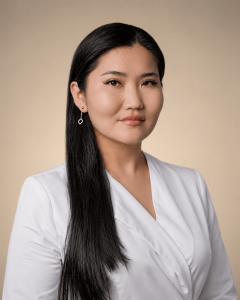
Medically reviewed by