Published 23 July 2026 · Updated 23 September 2026
Deciding to undergo plastic surgery is a significant step toward achieving your aesthetic goals. However, many patients mistakenly believe that the final visual outcome relies entirely on the surgeon’s technical mastery. In reality, surgical skill represents only half of the equation. The other half depends entirely on the biological quality of your tissues and your body’s innate capacity for rapid, scarless healing.
Any surgical intervention imposes severe physical stress, involving disrupted microcirculation, incisions, and inevitable lymphostasis (fluid retention). If your skin is chronically thin, dehydrated, or depleted of biological reserves, even a technically perfect suture can take longer to heal—potentially leaving a visible scar or resulting in secondary tissue laxity. This is exactly why a partnership between the plastic surgeon and the aesthetic practitioner is now common practice in aesthetic medicine.
Pre-Surgical Preparation: Building a Solid Biological Foundation
Preparation for surgical intervention should begin well in advance. At this initial stage, the aesthetic practitioner’s objective is to build a robust structural framework within the skin and establish a cellular reserve for future tissue regeneration.
4 to 6 Months Prior: Tissue Densification and Neocollagenesis
Plastic surgeons unanimously prefer operating on dense, resilient, and well-vascularized skin. There are two fundamental physiological reasons for this:
Reliable Tensile Strength: During procedures such as a SMAS-lifting, blepharoplasty, or abdominoplasty, tissues undergo significant mechanical tension. A dense, reinforced collagen matrix withstands this pull, preventing the skin from stretching out or sagging once post-operative swelling subsides.
Safety: Active microcirculation in the surgical zone ensures that tissues receive an optimal, continuous supply of oxygen, reducing the risk of ischemia or marginal tissue necrosis to virtually zero.
Because the natural synthesis of new, youthful collagen (neocollagenesis) requires time, energy-based and injectable biostimulators must be introduced six months prior to surgery. In our clinical practice, the most reliable foundation is built using fractional RF microneedling (Morpheus8, Vivace), which compacts protein fibers, alongside injectable collagen stimulators based on poly-L-lactic acid or calcium hydroxyapatite (Radiesse).
2 to 3 Weeks Prior: Creating a Deep Moisture Reserve
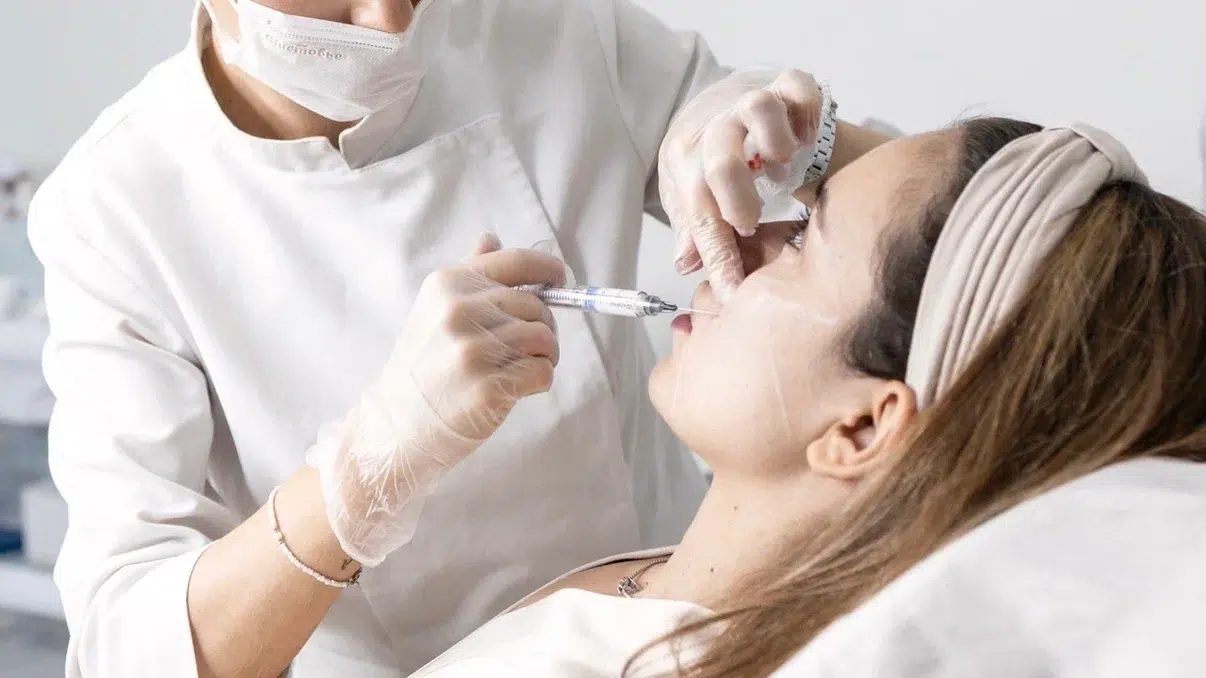
Once the structural framework is established, your cells require energy and deep hydration. In the exact areas where incisions will be made, whether along the lower breast fold, the abdomen, or behind the ears, creating a localized moisture reservoir is critical.
Well-hydrated skin withstands surgical trauma significantly better, resists micro-tearing, and initiates epithelialization (wound healing) much faster. To achieve this, we administer 1 to 2 sessions of deep biorevitalization using formulations enriched with polynucleotides or high-concentration hyaluronic acid (Bellarti Nucleo, Revi Silk). This provides your fibroblasts with the essential biological building blocks needed for rapid post-incision recovery.
Post-Surgical Protocols: Accelerating Your Recovery
During the recovery phase, the primary objective is to alleviate discomfort, support tissue healing, and help surgical scars fade into thin, virtually imperceptible lines.
The Early Post-Operative Period: Combating Swelling and Fibrosis
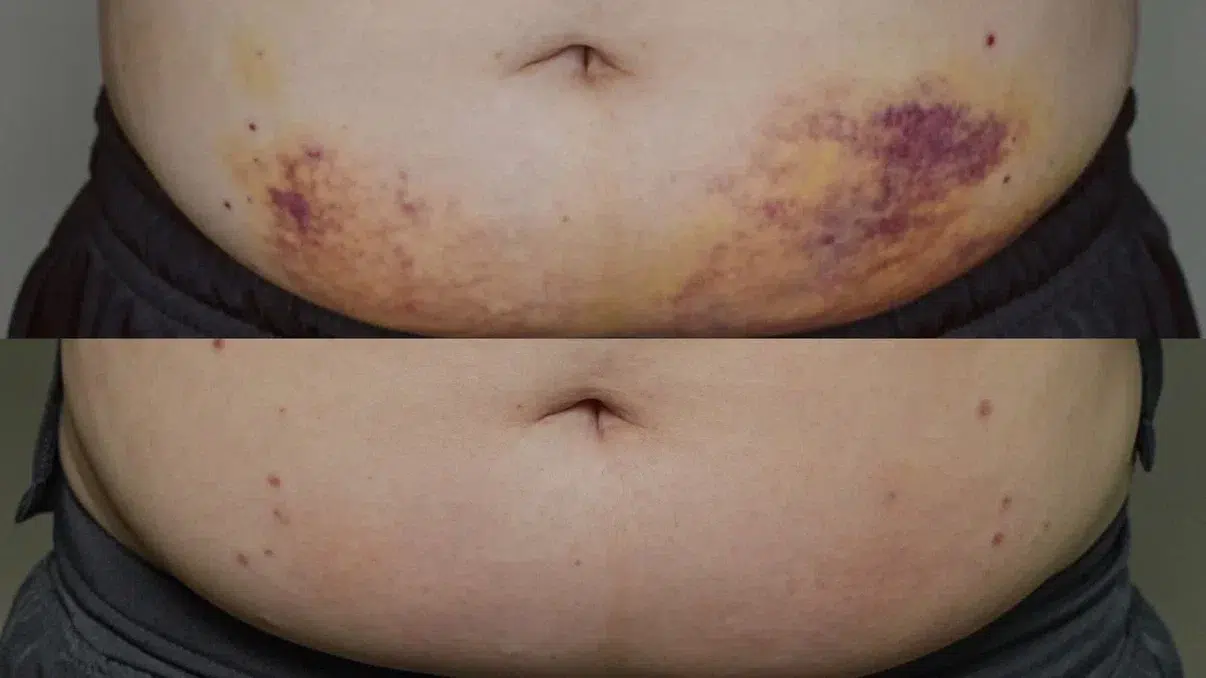
Lymphostasis is inevitable immediately following surgery: disrupted lymphatic vessels temporarily struggle to drain excess fluid, causing tissues to swell and press against nerve endings, which triggers pain and a persistent feeling of tightness. If this swelling remains unresolved for too long, it can provoke fibrosis—the formation of dense internal scar tissue and surface irregularities.
Once the incisions have closed, cellular therapy using the INDIBA can help with this.
Operating at a specific radiofrequency of 448 kHz, this modality is used in post-operative care after plastic surgery. At MED YU MED, INDIBA recovery courses start about two weeks after surgery, once the incisions have closed and the surgeon has agreed. INDIBA is designed to stimulate lymphatic drainage. It is used to help swelling settle, ease discomfort and reduce the build-up of fibrous tissue. The evidence comes mainly from clinical reports and case series, and the effect varies from patient to patient. Protocols and prices by operation are on the page about INDIBA after plastic surgery.
The Second Phase: Tissue Regeneration and Scar Refinement
Once the initial swelling has subsided, we introduce targeted modalities to polish and refine your final result:
HELEO4 Photodynamic Therapy: A completely comfortable, non-contact light therapy utilizing specific wavelengths. It gently calms the traumatized zone, eliminates residual redness, suppresses chronic inflammation, and stimulates localized cellular immunity.
Targeted Cellular Therapy: Targeted mesotherapy, biorevitalization, polynucleotide (salmon DNA) infusions, and exosome therapy. Administered along the contours of the operated area, these formulations enhance microcirculation, assist the body in eliminating lingering fluid, and send a powerful biological signal for proper skin regeneration—actively preventing the formation of hypertrophic or keloid scars.
Important Note
Every step of your pre-surgical preparation and post-operative rehabilitation must be strictly coordinated with your operating surgeon. Only your performing surgeon knows the exact technical nuances and tissue planes of your specific procedure.
An intelligent, scientifically backed synergy between surgery and aesthetic medicine ensures that your recovery is smooth, comfortable, and that your final aesthetic results exceed all expectations.
Medical disclaimer: This page is for informational purposes only and does not replace a medical consultation.
License statement: MED YU MED operates under DHA License 6589480.
Individual results caveat: Results vary by diagnosis, skin type, and individual response.
What this article does not decide
MED YU MED does not perform plastic surgery. Whether an operation is appropriate, when it can be scheduled and what preparation it requires are decisions for the operating surgeon, and any skin treatment planned around surgery is agreed with that surgeon rather than arranged independently.
Injectables, energy-based devices and peels each have their own timing constraints before and after an operation.
Aesthetic procedures carry risks of their own, including bruising, swelling, infection, pigment change and, for injectables, vascular complications. Suitability and contraindications are determined by a clinician at an in-person assessment.
If something goes wrong afterwards
Call MED YU MED on +971 52 184 5011, daily 10:00-22:00, if you develop a blister, a burn or an open area of skin, pain that increases rather than eases, spreading redness with heat, or a fever. Any change in vision needs assessment the same day. Outside our opening hours go to the nearest emergency department or call 998 for an ambulance, rather than waiting for the clinic to reopen. The clinic does not operate 24 hours.
Related articles

Medically reviewed by