Published 19 August 2026
The one-minute version
A cyst forms deep under the skin when a blocked follicle ruptures inward and inflammation spreads into the surrounding tissue. It hurts, it has no head to extract, it lasts weeks instead of days, and squeezing it pushes the inflammation deeper and raises the chance of a permanent scar. Surface products reach the top layers of skin, which is why creams that handle blackheads stall on cysts. Recurring cystic acne is a medical condition that a dermatologist diagnoses and treats; clinic procedures then deal with the marks and scars it leaves behind.
How a cyst differs from a regular pimple
A whitehead sits in the follicle opening and resolves in days. A cyst is a deep, tender, often large bump under intact skin. It feels firm or fluid at the base, hurts when pressed, and can sit on the jawline, chin, cheeks or back for two to four weeks. Several cysts in the same area often connect under the skin, which is why one flare can leave a cluster of marks.
Colour matters less than depth. Red surface pimples respond to routine care; deep painful nodes with no visible head are the ones this page is about.
| Surface pimple | Cyst | |
|---|---|---|
| Depth | Follicle opening | Deep under the skin |
| Pain | Mild | Tender, hurts when pressed |
| Visible head | Yes | No |
| Lifespan | Days | Two to four weeks |
| Scarring risk | Low | High, higher still if squeezed |
| What helps | Routine care | Doctor-led treatment |
Why squeezing deep acne backfires
The content of a cyst sits below the skin, so pressure cannot push it out through the follicle. It goes sideways and down instead, spreading bacteria and inflammation into healthy tissue. The visible result is a larger, longer bump; the lasting result is a higher chance of a depressed scar and a dark mark that outlives the cyst by months. Scars from squeezed cysts are among the most common requests on our acne scar treatment page, and preventing them costs far less than treating them.
What drives cystic acne
Hormonal activity is the usual engine, which is why cystic acne clusters in the teens, around the menstrual cycle, and in adults on the lower face. Genetics set how strongly follicles react. On top of that sit local factors that Dubai supplies in quantity, heat and sweat that keep pores occluded, heavy sunscreen layered through the day, and helmets, masks or straps that rub the same spot. The local factors rarely cause cystic acne on their own, and they reliably make an existing tendency worse.
Why pharmacy creams stall
Over-the-counter products work in the upper layers of the skin, where blackheads and small pimples live. Cystic inflammation sits deeper than those products reach. Prescription routes exist for deep acne, from hormonal therapy to systemic medication, and every one of them is prescribed and monitored by a doctor after an examination, not chosen off a shelf. If the same deep bumps return month after month, the useful step is a diagnosis, and self-treatment mostly buys the acne more time to scar.
What happens at a consultation
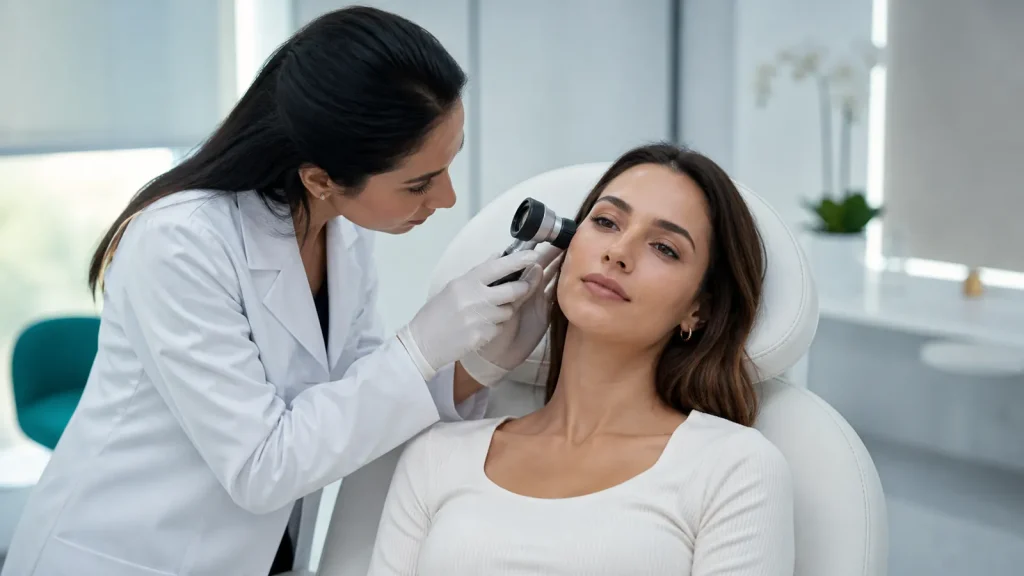
The dermatologist examines the skin, asks about the pattern, cycle, medication, previous treatments and family history, and sometimes orders blood work when a hormonal driver looks likely. The outcome is a written plan that names the medical treatment, the timeline, and which procedures support it at which stage. In Dubai a dermatology consultation at MED YU MED starts the process.
Where clinic procedures fit
Procedures do their work around the medical treatment, mostly on what the acne leaves behind. Chemical peels even out post-acne marks and texture. BBL phototherapy works on the redness and dark marks after the inflammation settles. Professional cleansing manages the comedonal component on calm skin; it is postponed during an active deep flare. Scars are a separate route with its own methods, described on the acne treatment page. The sequencing is the doctor’s call, and doing procedures in the wrong phase wastes money.
When to see a doctor fast
Book promptly if deep painful bumps recur monthly, if a flare spreads over days, or if marks and early scars are accumulating. Fever with rapidly spreading, hot, painful skin is a different situation and needs a hospital emergency department the same day, whatever the hour.
Frequently Asked Questions
Can a cyst go away on its own?
A single cyst often settles over two to four weeks. A pattern of recurring cysts rarely stops on its own, and each cycle adds to the risk of marks and scars, so the recurring form deserves a diagnosis.
Does food cause cystic acne?
No single food causes it. If your flare-ups follow specific foods, tell the dermatologist; the treatment plan takes your pattern into account.
Is professional cleansing enough for cystic acne?
No. Cleansing works on the surface component and calm skin. Cysts sit deeper, and their treatment is medical. Cleansing supports the plan; it does not replace it.
Will cystic acne scar?
Deep inflammation can scar, and squeezing raises that chance sharply. Early treatment lowers it. Existing scars are treated separately with their own methods.
How is adult cystic acne different from teenage acne?
Adults tend to get deep bumps on the jawline and chin, often tied to hormonal activity, and adult skin scars and marks more readily. The medical work-up and the plan differ from a teenage protocol.
Can I wear makeup over a flare?
Light non-comedogenic products are usually acceptable. Remove them fully in the evening and avoid layering heavy occlusive textures over inflamed areas in the heat.
How long does treatment take?
Months, not days. Deep acne responds slowly, and the doctor sets checkpoints along the way to adjust the plan. Marks and scars are handled after the inflammation is controlled.
Medical disclaimer: This page is for informational purposes only and does not replace a consultation with a licensed physician. It does not recommend or prescribe any prescription-only medicine.
License statement: MED YU MED operates under DHA License 6589480.
Individual results caveat: Results vary by diagnosis, anatomy, product used and individual response, and no outcome is guaranteed.
Related articles

Medically reviewed by

General Practitioner, Aesthetic Medicine Doctor, Dermatologist
DHA License No. 35044799-002