Published 2 June 2026 · Updated 19 August 2026
✅ Medically reviewed by the MED YU MED medical team (DHA-licensed physicians) | Updated: July 2026
Acne scars are among the most common and emotionally challenging skin concerns that dermatologists treat in Dubai. Whether you are dealing with deep ice-pick marks, wide boxcar depressions, or the rolling texture left behind by cystic breakouts, understanding your scar type is the essential first step toward effective treatment. This complete acne scar treatment guide for Dubai patients covers the full spectrum of scar classifications, maps each type to the most appropriate clinical interventions, and explains what realistic outcomes look like over a structured treatment course. You will learn how Morpheus8 RF microneedling, PicoSure laser, chemical peels, and standalone microneedling differ in mechanism and indication, why combination protocols often outperform single-modality treatment, and what questions to ask your DHA-licensed physician before beginning. Dubai’s year-round sun exposure, diverse skin tones — spanning Fitzpatrick I through VI — and lifestyle factors all influence protocol selection, and this guide addresses each consideration in detail.
Understanding the Types of Acne Scars
Dermatologists classify acne scars into two broad categories based on whether tissue has been lost (atrophic) or gained (hypertrophic). Identifying your scar type precisely is not cosmetic pedantry — it is the clinical foundation for choosing an effective treatment.
Atrophic scars (the most common, accounting for roughly 80–90% of acne scars) form when the healing process fails to produce sufficient collagen to replace destroyed tissue. Three subtypes exist:
- Ice-pick scars are narrow (< 2 mm), deep, V-shaped channels that extend into the mid to deep dermis. They are the most challenging subtype to treat because their depth makes them resistant to surface-level interventions. TCA CROSS (trichloroacetic acid chemical reconstruction of skin scars) applied focally, followed by Morpheus8 RF microneedling, is the most evidence-supported protocol.
- Boxcar scars present as round or oval depressions with sharply defined, near-vertical edges. Shallow boxcar scars (< 0.5 mm depth) respond well to resurfacing approaches including ablative fractionated laser and medium-depth chemical peels. Deeper boxcar scars benefit from subcision combined with RF microneedling or PRP.
- Rolling scars produce an undulating, wave-like texture due to fibrous tethering bands that tether the dermis to subcutaneous fat. Subcision — the physical release of these fibrous bands — is often necessary before energy-based resurfacing achieves its full benefit.
Hypertrophic and keloid scars form when the healing process overproduces collagen. Hypertrophic scars remain within the original wound boundary; keloids extend beyond it. Both are more prevalent in Fitzpatrick IV–VI skin tones common in Dubai’s patient population. Treatment typically involves intralesional corticosteroid injections, silicone sheeting, and laser therapy — not ablative resurfacing, which can worsen keloid formation.
Post-inflammatory hyperpigmentation (PIH) is not a true scar but a flat, dark macule resulting from melanin overproduction following inflammation. PIH does not involve textural change and responds to a completely different treatment class than atrophic scars — primarily PicoSure picosecond laser, topical depigmenting agents (such as azelaic acid, kojic acid, and niacinamide), and chemical peels. It is critical to distinguish PIH from true scarring to avoid inappropriate treatment.
Acne Scar Treatment Options at Med Yu Med Dubai
The clinic’s treatment menu for acne scarring spans multiple modalities, allowing physicians to personalise protocols to scar subtype, skin tone, and patient downtime tolerance.
Morpheus8 RF Microneedling
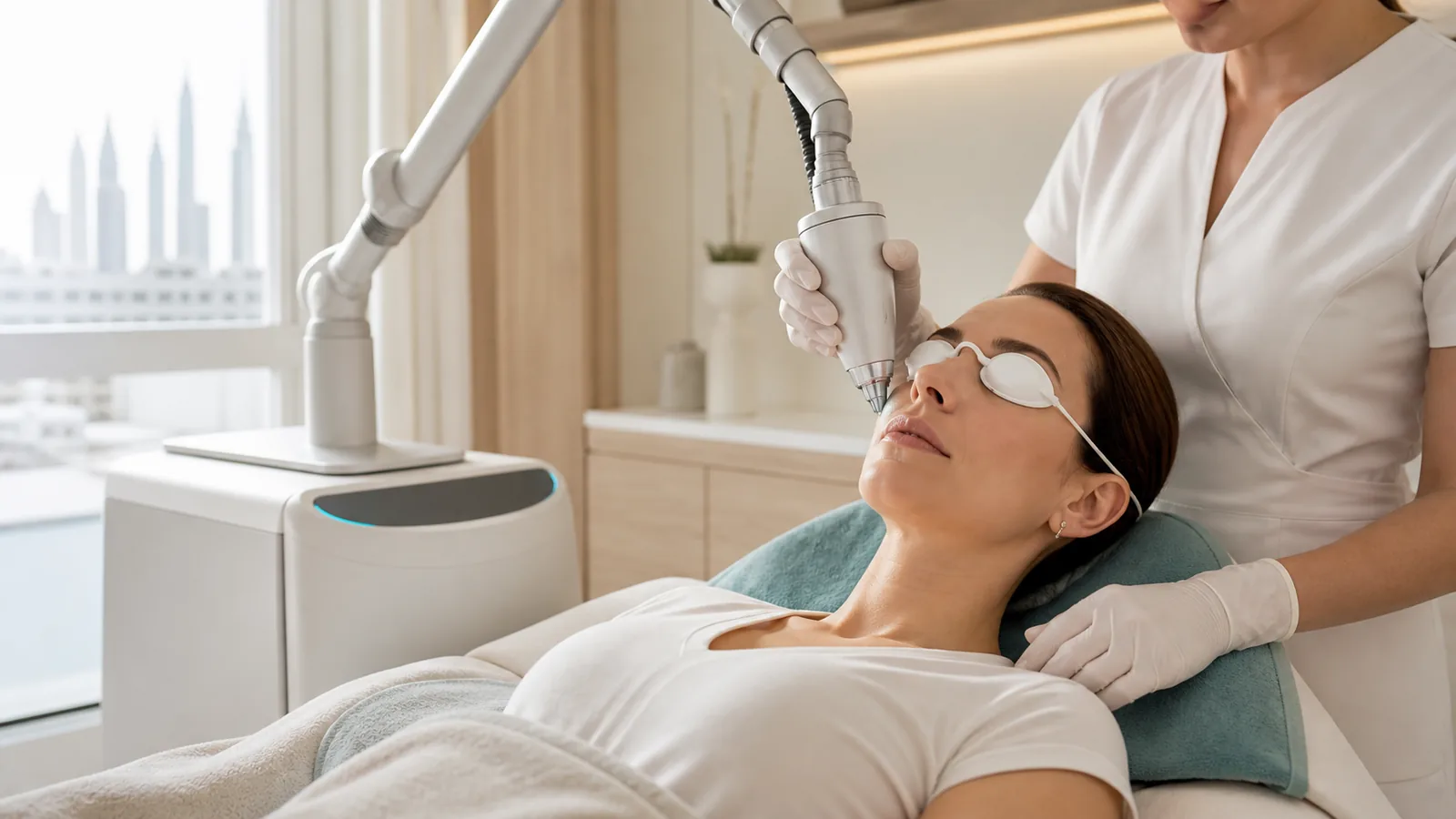
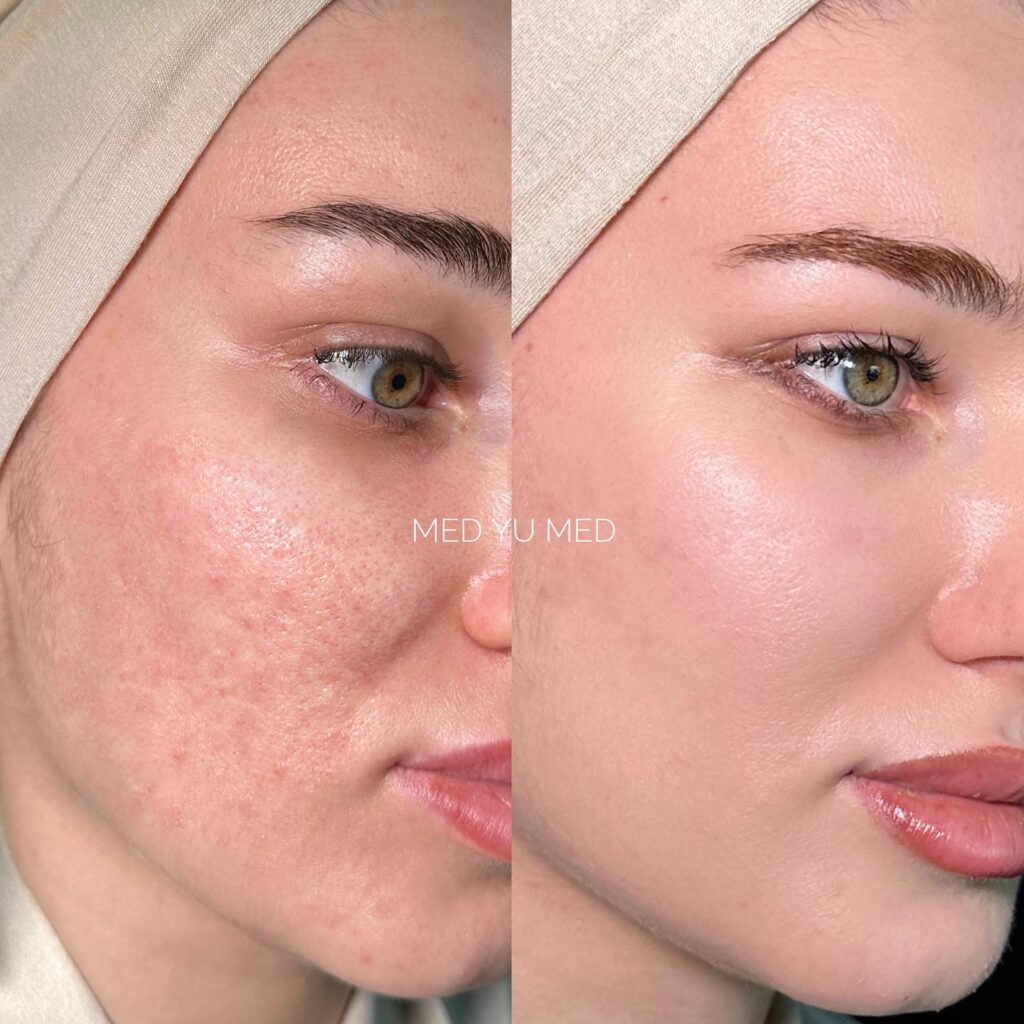
Morpheus8 combines fractional radiofrequency (RF) energy with microneedling needles to deliver controlled thermal injury deep into the dermis and sub-dermis. The insulated needles penetrate to depths of up to 4 mm, depositing RF energy precisely at the target depth while protecting the epidermis. This dual mechanism — mechanical micro-channels plus RF-induced heat — stimulates fibroblast activation and new collagen synthesis, progressively remodelling atrophic scar tissue. Morpheus8 is particularly well-suited to rolling and boxcar scars, and is considered safe across all Fitzpatrick skin types, making it a strong option for Dubai’s diverse patient population. A standard course typically involves 3 sessions spaced 4–6 weeks apart, with visible remodelling continuing for up to 6 months after the final treatment. Individual results may vary.
Microneedling (Collagen Induction Therapy)
Standalone microneedling using a medical-grade device creates thousands of controlled micro-injuries per second, triggering the wound-healing cascade and collagen induction. It is appropriate for mild to moderate atrophic scars and can be combined with PRP (platelet-rich plasma) to deliver autologous growth factors directly into the treatment zone, potentially accelerating tissue regeneration. This is a lower-downtime option — typically 24–48 hours of redness — but generally requires more sessions (4–6) to achieve results comparable to energy-based devices.
PicoSure Laser
The PicoSure picosecond Nd:YAG/alexandrite laser delivers ultra-short energy pulses (picoseconds) that create photoacoustic pressure waves, shattering pigment particles and stimulating collagen remodelling without significant thermal damage. For acne scars, PicoSure is most effective against PIH, post-acne discolouration, and shallow textural irregularities. It is safe for Fitzpatrick III–V skin types and is frequently incorporated into combination protocols following structural scar revision.

Fotona Laser Resurfacing
Fotona’s Er:YAG laser ablates the stratum corneum and upper epidermis with high precision, stimulating new skin formation and collagen contraction. It is effective for superficial boxcar scars, mild rolling texture, and overall skin resurfacing. The non-ablative Nd:YAG handpiece can also be used for deeper dermal stimulation with minimal downtime.
Chemical Peels
Medium-depth TCA peels (15–35%) can resurface the epidermis and upper papillary dermis, improving shallow boxcar scars, PIH, and overall skin texture. They are most effective as part of a combination protocol — for example, a series of superficial peels to prepare skin, followed by more invasive resurfacing.
Comparison Table: Scar Type vs Best Treatment vs Sessions vs Expected Result
| Scar Type | Best Treatment(s) | Typical Sessions | Expected Improvement* |
|---|---|---|---|
| Ice-pick | TCA CROSS + Morpheus8 | 3–5 | 40–70% depth reduction |
| Boxcar (shallow) | Morpheus8 / Fotona Er:YAG | 3–4 | 50–75% improvement |
| Boxcar (deep) | Subcision + Morpheus8 + PRP | 3–5 | 40–60% improvement |
| Rolling | Subcision + Morpheus8 | 3–4 | 60–80% improvement |
| Hypertrophic | Steroid injections + Nd:YAG laser | 3–6 | 50–70% flattening |
| PIH (pigmentation) | PicoSure + chemical peel | 3–6 | 70–90% lightening |
*Individual results may vary. Results depend on scar severity, skin type, and treatment adherence.
Combination Protocols and Treatment Timelines
Single-modality treatment rarely achieves optimal outcomes for acne scars because most patients present with multiple scar subtypes simultaneously. The current consensus in aesthetic dermatology favours layered, multi-modal protocols that address different aspects of scar pathology in sequence.
A typical combination protocol at Med Yu Med might follow this structure:
Phase 1: Skin Optimisation (4–8 weeks before energy-based treatment)
- Topical regimen: retinoids (tretinoin 0.025–0.05%), azelaic acid, broad-spectrum SPF 50+
- For PIH-prone patients: pre-treatment with hydroquinone 4% or tranexamic acid to suppress reactive melanocyte activity
- Rationale: optimised skin tolerates laser and RF energy better and heals more predictably
Phase 2: Structural Correction
- Subcision for rolling scars with fibrous tethering bands (performed under local anaesthesia)
- TCA CROSS for isolated ice-pick scars
- Timing: at least 2 weeks before energy-based treatment
Phase 3: Resurfacing and Remodelling (3–4 sessions, 4–6 weeks apart)
- Morpheus8 RF microneedling as the anchor treatment for atrophic scars
- PicoSure sessions interspersed for PIH if present
- Each session builds on collagen stimulation from the previous
Phase 4: Consolidation and Maintenance
- Microneedling + PRP sessions at 3–6 month intervals to maintain collagen density
- Ongoing photoprotection with SPF 50+ (non-negotiable in Dubai’s UV environment)
- Annual assessment to determine if booster sessions are warranted
Realistic timeline: Most patients begin noticing visible improvement after the second Morpheus8 session. Significant remodelling continues for 3–6 months after the final treatment. Complete treatment programmes typically span 4–9 months. Expecting dramatic single-session results is a red flag of unrealistic marketing — genuine dermatological improvement requires patient patience.
Important safety notes: All energy-based treatments carry risk of post-inflammatory hyperpigmentation, particularly in Fitzpatrick IV–VI skin types. DHA-licensed physicians at Med Yu Med conduct thorough Fitzpatrick typing and undertake test patches before full-face treatment where clinically appropriate. Treatments are not performed on patients with active acne breakouts, as this risks spreading bacterial infection and worsening inflammation.
Who Is a Good Candidate for Acne Scar Treatment?
Candidacy assessment is conducted during a personalised medical consultation and considers several factors:
Suitable candidates generally:
- Have stable, non-active acne (breakouts under control with topical or systemic therapy)
- Are not pregnant or breastfeeding
- Have not used oral isotretinoin (Accutane/Roaccutane) within the past 6 months — isotretinoin impairs wound healing and significantly increases risk of scarring and abnormal healing responses to ablative treatments
- Have realistic expectations and can commit to a multi-session course
- Can adhere to strict sun protection post-treatment (particularly important in Dubai)
- Do not have a personal or family history of keloid formation (for ablative or deeper treatments)
Contraindications and cautions:
- Active bacterial, viral (herpes simplex), or fungal skin infections in the treatment area — treatment must be delayed until infection is resolved
- Blood-thinning medications (aspirin, warfarin, NSAIDs): may increase bruising risk; discuss with prescribing physician before pausing
- Autoimmune conditions affecting the skin (e.g. lupus, morphoea)
- Uncontrolled diabetes — impaired wound healing increases risk of adverse outcomes
- Photosensitising medications (certain antibiotics, retinoids) for laser treatments
- Very dark skin tones (Fitzpatrick V–VI) undergoing ablative laser: requires specialist experience and conservative parameters
At Med Yu Med, every patient undergoes a comprehensive skin analysis including Fitzpatrick typing, medical history review, and a discussion of realistic outcomes before any treatment is prescribed. The DHA-licensed physicians are experienced in managing the full range of skin tones represented in Dubai’s multicultural population.
Maintaining Your Results in Dubai’s Climate
Dubai’s climate presents unique challenges for acne scar management that are not relevant in temperate climates. High UV index (typically 8–11 throughout most of the year), intense sun exposure even during brief outdoor intervals, and the dehydrating effects of air conditioning all require specific countermeasures.
Photoprotection is non-negotiable. UV exposure is the single greatest trigger for post-inflammatory hyperpigmentation following any resurfacing treatment. Patients must use a broad-spectrum SPF 50+ sunscreen — ideally containing physical blockers (zinc oxide, titanium dioxide) for their anti-inflammatory properties — every morning, reapplied every two hours during outdoor activity. Mineral-based formulations are preferred post-treatment as chemical filters can cause transient stinging on healing skin.
Hydration and barrier support: Air conditioning reduces ambient humidity dramatically, accelerating transepidermal water loss. Post-treatment skin is especially vulnerable. Patients are advised to apply ceramide-containing moisturisers twice daily and use a humidifier in sleeping environments.
Avoid unnecessary heat exposure for at least 2 weeks following RF or laser treatments. This includes steam rooms, saunas, hot yoga, and prolonged sun exposure between 10 am and 4 pm.
Maintenance schedule: Most patients benefit from a maintenance microneedling or PicoSure session every 6–12 months to preserve scar improvement and address new pigmentation from ongoing UV exposure. Your physician at Med Yu Med will recommend a personalised maintenance plan at your follow-up appointment.
With a properly designed treatment protocol, consistent sun protection, and appropriate home skincare, significant and lasting improvement in acne scar appearance is achievable.
For a personalised assessment of your scar type and a tailored treatment plan, explore our dedicated Acne Scar Treatment Dubai page and learn more about Morpheus8 Dubai and Microneedling Dubai.
Acne scars are a complex clinical challenge that benefit enormously from accurate diagnosis and a structured, evidence-based approach. Ice-pick, boxcar, rolling, hypertrophic scars, and post-inflammatory hyperpigmentation each respond to different treatments — misidentifying a scar type and applying the wrong modality wastes time and money, and may worsen the skin’s appearance. At Med Yu Med Dubai, DHA-licensed doctors and aesthetic physicians assess each patient individually, create combination protocols tailored to scar subtype and skin tone, and guide patients through realistic treatment timelines. Most patients require 3–6 sessions over 4–9 months to achieve meaningful improvement, with results continuing to develop for up to six months after the final session.
If you are ready to begin your acne scar treatment journey, book a consultation at Med Yu Med Dubai — your physician will assess your scars in person, discuss suitable options, and help you set realistic expectations for your skin.
How many sessions does acne scar treatment take in Dubai?
| The number of sessions depends on scar type, severity, and the treatment modality selected. As a general guideline, Morpheus8 RF microneedling for atrophic scars typically requires 3–4 sessions spaced 4–6 weeks apart. PicoSure for post-inflammatory hyperpigmentation usually needs 3–6 sessions. Chemical peel series for surface-level improvement may involve 4–6 sessions at 2–4 week intervals. Combination protocols addressing multiple scar types simultaneously may span a total of 5–9 sessions over several months. Your physician at Med Yu Med will provide a personalised session estimate during your initial consultation after assessing your specific scars. It is important to note that collagen remodelling continues for up to 6 months after the final treatment session, so patience is part of the protocol. Individual results may vary. |
Is Morpheus8 safe for darker skin tones?
| Yes — Morpheus8 is generally considered one of the safer RF microneedling devices for darker skin tones (Fitzpatrick IV–VI), which are very common in Dubai’s patient population. The reason is the design of the insulated needles, which deliver RF energy deep into the dermis while shielding the melanin-rich epidermis from heat. This significantly reduces the risk of post-inflammatory hyperpigmentation compared to ablative laser resurfacing, which applies energy at the skin surface where melanocytes reside. However, no energy-based treatment is entirely risk-free for deeper skin tones. A DHA-licensed physician should perform a thorough Fitzpatrick skin type assessment, potentially undertake a test patch on a discreet area, and use conservative energy settings initially. At Med Yu Med, our physicians are experienced in treating all skin tones represented in Dubai’s multicultural community. |
What is the difference between acne scars and post-inflammatory hyperpigmentation?
| Post-inflammatory hyperpigmentation (PIH) is a flat, dark discolouration caused by excess melanin production following skin inflammation — it carries no textural irregularity and is technically not a scar. Acne scars, by contrast, involve structural changes to the dermal architecture: either a loss of tissue (atrophic scars — ice-pick, boxcar, rolling) or an excess of scar tissue (hypertrophic scars, keloids). The distinction matters enormously for treatment planning. PIH responds well to PicoSure picosecond laser, chemical peels, and topical depigmenting agents. Atrophic scars require collagen-stimulating treatments such as RF microneedling, subcision, or ablative laser. Applying a pigment-focused treatment to a textural scar, or vice versa, will not produce meaningful results. A dermatologist can differentiate between these conditions on clinical examination — sometimes photography under specific lighting (such as Wood’s lamp) helps characterise pigment depth. |
Can I treat acne scars if I still have active acne?
| Active acne breakouts are a contraindication to most scar resurfacing treatments, including laser, RF microneedling, and chemical peels. The reasons are twofold: first, energy-based treatments can rupture active pustules and spread bacterial infection across the face, worsening inflammation and creating new scars. Second, ongoing acne means you are continuously adding new scars, which undermines the investment made in resurfacing existing ones. The recommended sequence is to first achieve adequate acne control through a dermatologically supervised regimen — this may include topical retinoids, benzoyl peroxide, topical or oral antibiotics, or in severe cases oral isotretinoin — and then begin scar treatment once breakouts are stable. A DHA-licensed doctor at Med Yu Med can assess and treat both active acne and existing scarring as part of a unified skin health plan. |
How much does acne scar treatment cost in Dubai?
| Acne scar treatment costs in Dubai vary considerably depending on the modality selected, the number of sessions required, and the extent of the treatment area. As a general range, a single Morpheus8 session for facial acne scars typically falls in the AED 1,500–3,500 range; PicoSure laser sessions are broadly similar; and professional chemical peels range from AED 400–1,200 per session depending on depth and acid type. Combination protocols covering multiple modalities over several months represent a larger overall investment. Med Yu Med does not publish package pricing here as treatment plans are highly individualised — the cost of an appropriate protocol for your specific scars can only be accurately quoted after a clinical assessment. We encourage booking a consultation to receive a transparent, itemised treatment proposal with no obligation. |
⚠️ This article is for informational purposes only and does not constitute medical advice. Consult a DHA-licensed physician before making any healthcare decisions.
Medical disclaimer: This page is for informational purposes only and does not replace a medical consultation.
License statement: MED YU MED operates under DHA License 6589480.
Individual results caveat: Results vary by diagnosis, skin type, and individual response.
Related articles
Medically reviewed by
General Practitioner, Aesthetic Medicine Doctor
DHA License No. 09620692-002
Morpheus8 RF Microneedling (Morpheus Pro) at MED YU MED: prices
- Face2900 AED
- Face + eyes3500 AED
- Neck2900 AED
Treatment page and booking · full price list
The final protocol and cost are confirmed at an in-person consultation.