Published 8 May 2026 · Updated 9 September 2026
For some, pigmentation is just a few cute freckles. For others, it means dark spots from breakouts that last for months, or deep patches on the cheeks that stay for years. Each case needs a different approach. Improving your complexion requires a plan that combines powerful clinic treatments with daily skincare at home.
Professional Methods to Fight Dark Spots
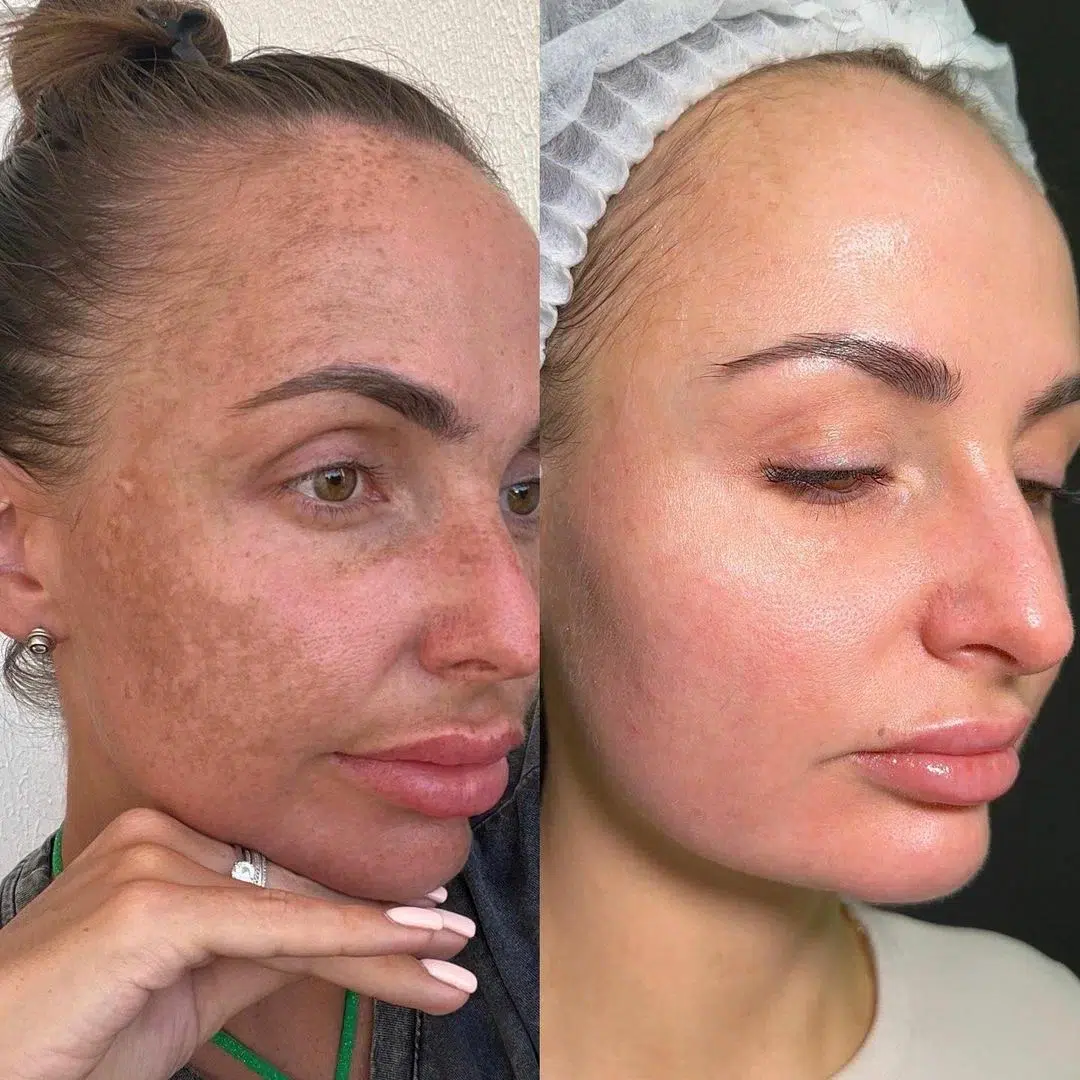
Hardware treatments are the most effective way to reach an even skin tone today. BBL phototherapy is ideal for removing surface pigmentation and couperose. If the spots are deep, like melasma, Lumecca is a great choice. It targets pigment specifically and breaks it down even in the deeper layers of the skin. These technologies literally erase sun damage and even out the face color.
Injectable treatments are a perfect addition to these treatments. Special mesotherapy contains ingredients that block the production of melanin, helping to prevent new spots from appearing. Biorevitalization hydrates the tissue and speeds up cell renewal, which strengthens the brightening effect and makes the skin healthier.
Professional peelings, like MeLine, gently exfoliate the top layer of skin to make spots less visible. HELEO4™ photodynamic therapy cleanses the tissue at a molecular level. This prepares the skin for more intense treatments and improves its overall condition.
Home Care: The Foundation of Your Results
Clinic procedures provide a strong start, but keeping the results depends on your home care. It is important to know which active ingredients keep the skin bright and even. If you have marks left from acne, look for products with Azelaic Acid and Niacinamide. This duo calms the skin and clears up stagnant spots quite quickly.
When you want to bring back a healthy glow and remove dullness, Viniferine is an excellent choice. This antioxidant from grapevines works very gently to brighten the face without damaging the skin barrier. For complex and deep pigmentation, Tranexamic Acid is the best active ingredient. It doesn’t just lighten spots; it blocks the biological signal that tells your body to create new pigment. It works even better with Arbutin to break down old melanin deposits.
If you need a total skin reset, add Retinoids or Glycolic Acid to your evening routine. These proven ingredients make cells renew faster, pushing out old pigment with new, healthy cells. However! It is vital to remember that any acids or medical-grade products should be chosen during a consultation with a doctor who can prescribe the best options based on medical knowledge.
The Main Rule of Protection
Any effort to fight pigmentation is useless without high-quality sun protection. In a climate like Dubai, UV rays are the main trigger for melanin. Even if you are in the city or the weather is cloudy, using SPF is a must. This rule is critical after any brightening treatments or when using acids. Protecting the skin barrier helps avoid new pigmentation and locks in the results achieved at the clinic.
Conclusion
Beating pigmentation requires patience and a system. Combining high-tech devices with the right home products allows one to achieve a clean and even skin tone. Remember that every type of pigment needs its own plan. Phototherapy and lasers break down existing pigment, injections control its production, and home care supports the skin as it renews. This full approach is the only way to get a lasting, glowing result.
Medical disclaimer: This page is for informational purposes only and does not replace a medical consultation.
License statement: MED YU MED operates under DHA License 6589480.
Individual results caveat: Results vary by diagnosis, skin type, and individual response.
Related articles


Medically reviewed by