


Lipolytic injections at MED YU MED Dubai are injectable fat-dissolving treatments for localized fat deposits on the face and selected body areas. The procedure is designed for patients who want to refine facial proportions, reduce a double chin, improve lower face contour or target small stubborn fat pockets that do not respond well to lifestyle changes.
Lipolytics are injected into selected areas with excess subcutaneous fat. The active solution helps break down local fat deposits, after which the body gradually processes and eliminates the released fat components through natural metabolic pathways. This makes the treatment suitable for contour refinement rather than general weight loss.

Indications
Not suitable during pregnancy or breastfeeding, or with certain conditions — checked at consultation.
For the face, lipolytic injections may be selected for double chin, lower face heaviness, cheek fullness, jowls and local fat deposits that make the contour look less defined. For the body, the protocol may be considered for selected areas with localized fat, such as abdomen, flanks, arms, thighs or other zones, after doctor assessment.
Every lipolytic treatment at MED YU MED starts with a medical consultation. The doctor checks the treatment area, fat thickness, skin elasticity, swelling tendency, facial anatomy, body proportions, medical history and contraindications before selecting the injection points and treatment plan. This is important because lipolytics are not suitable for every type of volume: skin laxity, edema, muscle structure or severe fat deposits may require another correction method.
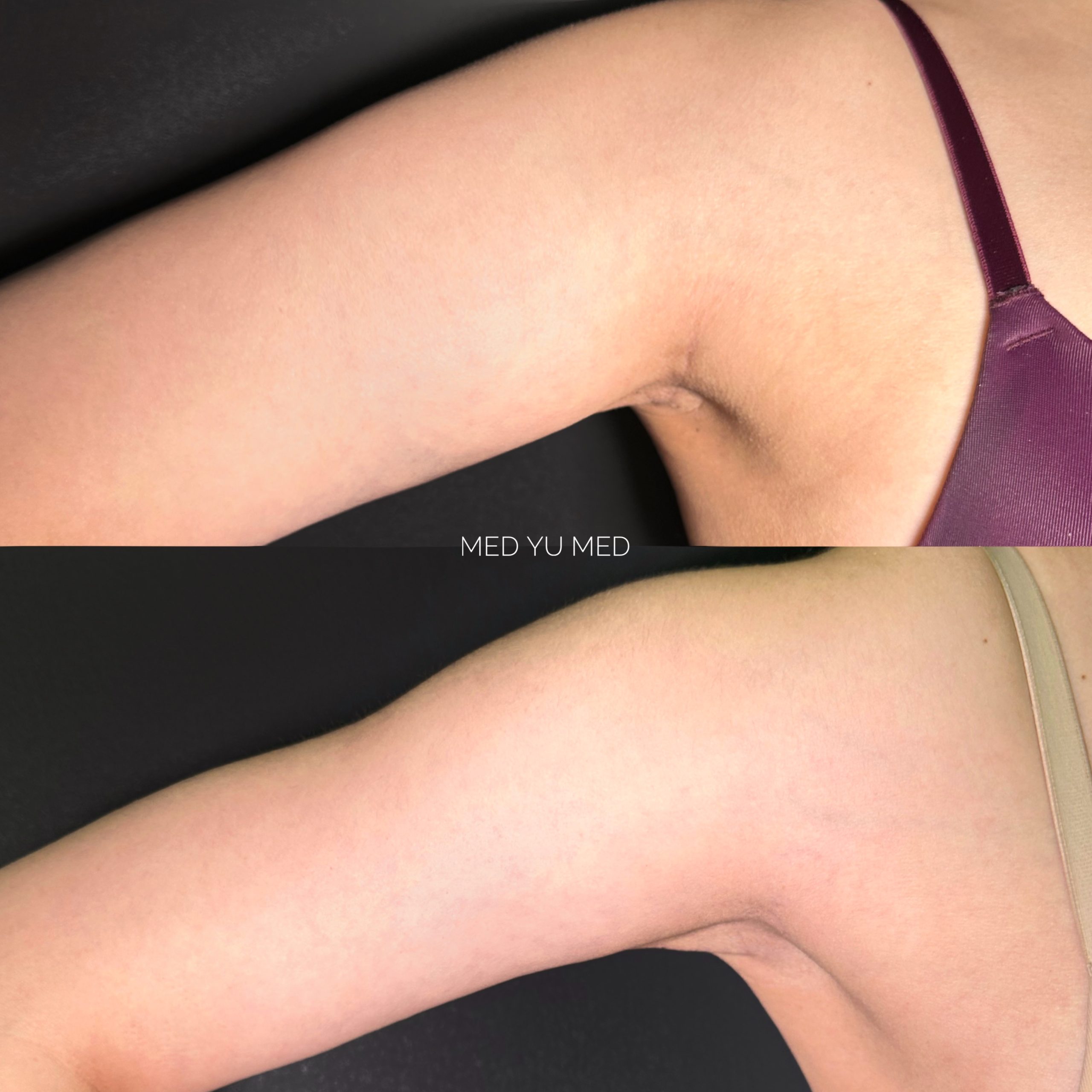
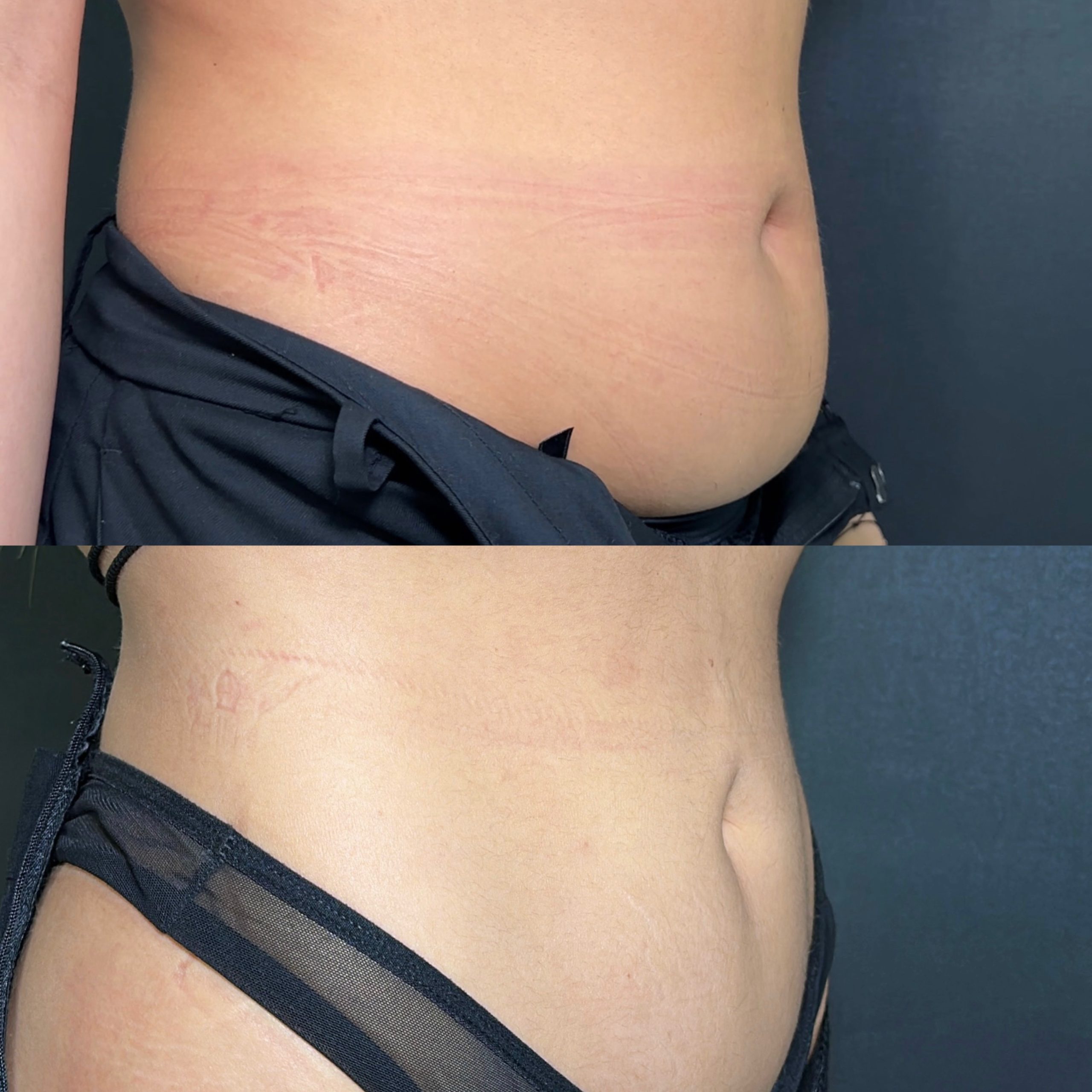
Fat dissolving injections in Dubai break down small, stubborn pockets of fat that hold on despite diet and exercise — the double chin being the classic target. At MED YU MED a licensed doctor injects a lipolytic solution directly into the fat layer, where it disrupts the wall of the fat cells so the body clears them gradually over the following weeks. It treats a defined bulge, not overall weight: the aim is contour, not the scales.
The under-chin area is the most requested, but the same approach can refine other small pockets — jowls, the bra line or a soft lower belly — where the fat is pinchable and the skin still has tone. It works as a short course, not a single shot. Fat dissolving is a medical procedure carried out under DHA facility licence No. 6589480, held by MED YU MED on Bluewaters Island. Results vary between individuals, and a consultation confirms whether you are a good candidate before any injection.
Lipolytic injections use a solution that targets the membrane of fat cells. Injected into a defined pocket of fat, it breaks down the cell walls so the fat is released, then cleared by the body's own waste and lymphatic system over the following weeks. Because the treated cells are removed rather than just shrunk, the contour change in that pocket tends to hold, as long as your weight stays stable.
The skill is in patient selection and placement. Fat dissolving suits small, pinchable pockets in someone close to their target weight — it is not a weight-loss treatment and it cannot tighten loose skin. The doctor maps the area, marks an injection grid and places measured amounts across the pocket with a fine needle, often over two to four sessions a few weeks apart. The number of sessions depends on the size of the pocket. The plan is set at the consultation, not sold as a fixed package.
One preparation, and the price list says so plainly: PB Serum Slim, a
recombinant lipase made by Proteos Biotech in Spain. The enzyme breaks down triglycerides
inside the fat cell so the body can clear them. It is not deoxycholic acid, which works by
destroying the cell membrane and behaves differently in swelling and recovery.
It does not treat obesity, and no course of injections substitutes for weight management.
It does not tighten skin: if laxity is the main complaint, the lifting methods on the
hardware cosmetology page address it and
lipolytics will not. It is not liposuction and shifts far smaller volumes. And it is not
mesotherapy: those cocktails hydrate and improve skin
quality, they do not dissolve fat. A doctor who examines the area will say whether a local fat
pocket is what you actually have.
A doctor checks the fat pocket and skin tone, reviews your medical history and goals, and confirms whether fat dissolving suits you and how many sessions it needs.
The area is cleansed, an injection grid is marked over the pocket, and a topical numbing cream is applied for comfort.
The doctor places measured amounts of the lipolytic solution across the marked grid with a fine needle. A session usually takes 20-30 minutes.
Swelling in the area is expected for several days. Avoid heat and heavy exercise briefly, follow the doctor's care notes, and sessions repeat a few weeks apart.
Fat dissolving works slowly, because the body needs weeks to clear the broken-down fat. Noticeable swelling follows each session, especially under the chin, and the real contour change shows once that settles — usually over four to six weeks. Most pockets need a course of two to four sessions a few weeks apart, with the result building across the course. Because the treated fat cells are cleared rather than shrunk, the change tends to hold while your weight is stable. How much you need depends on the size of the pocket. Results vary between individuals, and the doctor reviews progress between sessions.
Expect real swelling after each session, particularly under the chin, where it can look fuller before it looks slimmer and last from several days to a few weeks, and longer in some people. Tenderness, firmness, bruising and a little numbness in the area are common and settle on their own. Avoid heat, saunas and heavy exercise for a day or two. Most people work through it, though many plan the first session with the swelling in mind.
Risks and side effects. Swelling, tenderness, firmness, bruising and temporary numbness in the treated area are expected rather than rare, and small lumps can be felt for a few weeks while the area settles. Less common: swelling that lasts beyond a month, an uneven or asymmetric contour, infection at an injection point, and damage to the skin if solution is placed too superficially. Injections under the chin sit close to the nerve that moves the lower lip, so weakness on one side of the mouth or an uneven smile is possible and is usually temporary. The doctor names the exact product, goes through the full list at consultation and takes your written consent before the first session.
When to contact us urgently. Call MED YU MED on +971 52 184 5011 (daily 10:00–22:00) if you develop pain or difficulty when swallowing, weakness on one side of the mouth or an uneven smile, skin at an injection point that turns pale, dark, blistered or breaks open, spreading redness, heat or fever, or swelling that keeps increasing after the third day. Outside our opening hours, or with any difficulty breathing or swallowing, go to the nearest emergency department or call 998 for an ambulance — do not wait for the clinic to reopen.
| Protocol | Price |
|---|---|
| PB Serum Slim 5 ml | 2300 AED |
| PB Serum Slim 5 ml - 2 zones | 4400 AED |
| PB Serum Slim 5 ml - 3 zones | 6200 AED |
| PB Serum Slim 5 ml - 4 zones | 8000 AED |
Final protocol and cost are set after consultation and depend on the treatment area, the number of sessions and the plan agreed with your doctor. See the full price list.
At MED YU MED fat dissolving injections start from 2300 AED per session. Most pockets, including the double chin, need a course of two to four sessions, so the doctor prices the full plan at consultation. The number of sessions depends on the size of the area, so you get an exact quote before starting.
The under-chin pocket is the most common area treated. The lipolytic solution breaks down the fat there over a course of sessions, and the body clears it gradually. It suits a defined pocket with good skin tone rather than loose, sagging skin. A doctor assesses whether it fits.
Most areas need two to four sessions a few weeks apart, depending on the size of the fat pocket. The result builds across the course as the body clears the treated fat. The doctor sets your plan at consultation. Results vary between individuals.
Yes — swelling is expected, especially under the chin, where the area can look fuller before it looks slimmer and stay swollen for several days to a couple of weeks. Tenderness and firmness are normal and settle on their own. Many patients plan the first session around it.
No. They refine small, defined pockets of fat for contour, not overall weight. They work best in someone close to their target weight with good skin tone, and they cannot tighten loose skin. If weight or sagging is the main concern, the doctor will say so at the assessment.
Because the treated fat cells are broken down and cleared rather than just shrunk, the contour change in that pocket tends to hold — as long as your weight stays stable. Significant weight gain can still enlarge remaining fat cells nearby. Results vary between individuals.
Swelling, bruising, tenderness, firmness and temporary numbness affect most patients and settle on their own. Less commonly the area heals unevenly, an injection point becomes infected, or the skin is damaged where solution was placed too superficially. Under the chin the nerve that moves the lower lip runs close to the treated fat, so a temporary uneven smile is possible. Your doctor goes through the full list before the first session and you consent in writing. Warning signs and who to call are in the aftercare section above.
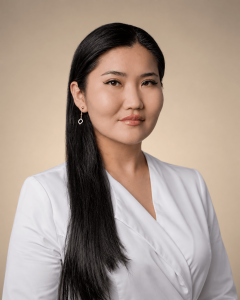
Aesthetic Medicine Doctor, 8 years' experience
DHA License No. 28857822-001
Last reviewed July 2026
The information on this page does not replace a medical consultation. Results are individual. Indications and contraindications are determined by a specialist at an in-person appointment.
The form sends a request for a call back: the clinic confirms the time and the plan by phone.
This site is protected by reCAPTCHA and the Google Privacy Policy and Terms of Service apply.


