Published 2 June 2026 · Updated 19 August 2026
Reviewed by the MED YU MED medical team, DHA-licensed physicians practising at Med Yu Med, Bluewaters Island, Dubai. Facility DHA License 6589480. Last reviewed 4 August 2026.
Disclosure: Med Yu Med performs one of the treatments described here. That is a commercial interest, and it is why the first-line options that cost the clinic nothing are set out before it, in the order a physician would actually work through them.
In a city where forty degrees is an ordinary afternoon, sweating heavily gets written off as normal. That assumption is why hyperhidrosis often goes untreated for years here. The distinction that matters is not how much you sweat in the heat, but whether you sweat far beyond what the temperature or your activity would explain, in a pattern that has nothing to do with the weather.
This page sets out how the condition is defined and graded, the order in which treatments are normally tried, what the published data shows for each step, and the signs that mean sweating needs investigation rather than treatment.
What hyperhidrosis actually is
Hyperhidrosis is sweating in excess of what the body needs for temperature regulation. It comes in two forms, and telling them apart changes everything that follows.
Primary focal hyperhidrosis affects specific sites, most often the underarms, palms, soles or face. It is usually symmetrical, tends to begin in adolescence or early adulthood, stops during sleep, and has no underlying disease behind it.
Secondary hyperhidrosis is a symptom of something else, whether a medication, an endocrine condition, an infection or another illness. It is more likely to be generalised rather than focal, can continue during sleep, and often starts later in life. Secondary sweating needs a diagnosis before it needs a procedure, which is why an honest consultation begins with questions rather than with a price.
How severity is measured
Clinics that treat this properly grade it, and the instrument used in the trials is the Hyperhidrosis Disease Severity Scale, a four-point scale describing how tolerable the sweating is and how much it interferes with daily activity. It is worth knowing because published outcomes are usually reported as the proportion of patients improving by two points on it.
The scale also gives you a way to describe your own situation more usefully than “a lot”. Sweating that is never noticeable and never interferes sits at one end. Sweating that is intolerable and constantly interferes sits at the other.
The order treatments are tried, and why
There is a sequence here, and it exists because the least invasive options work for a substantial number of people.
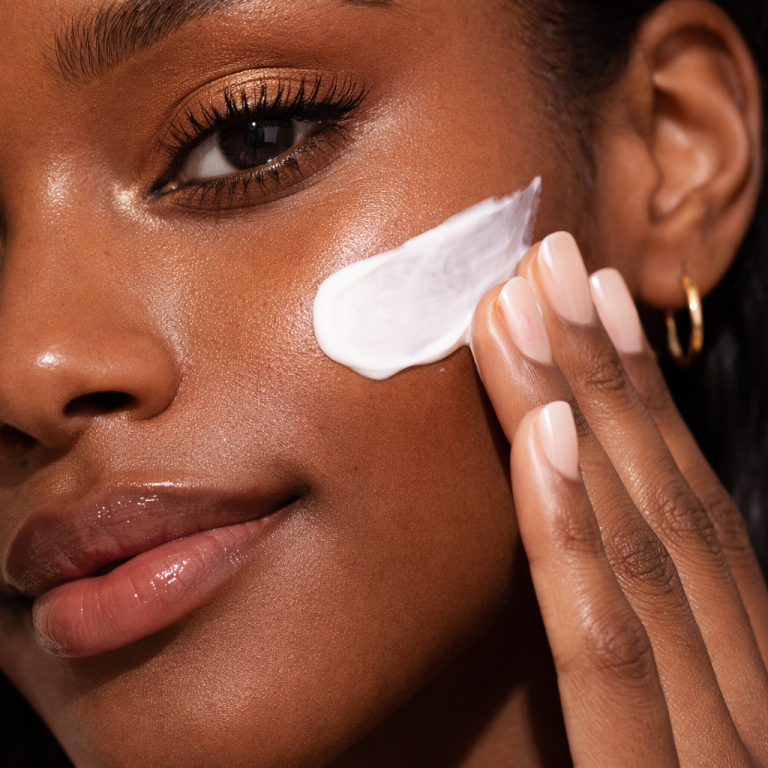
- Antiperspirants come first, including higher-strength aluminium chloride preparations, applied at night to dry skin rather than in the morning.
- Topical anticholinergics are the newer first-line option for underarm sweating. A 2024 systematic review and meta-analysis in Scientific Reports, PMID 39424822, pooled four randomised controlled trials covering 1,401 patients and found topical glycopyrronium bromide significantly increased the proportion of patients responding on the severity scale, with a relative risk of 2.33.
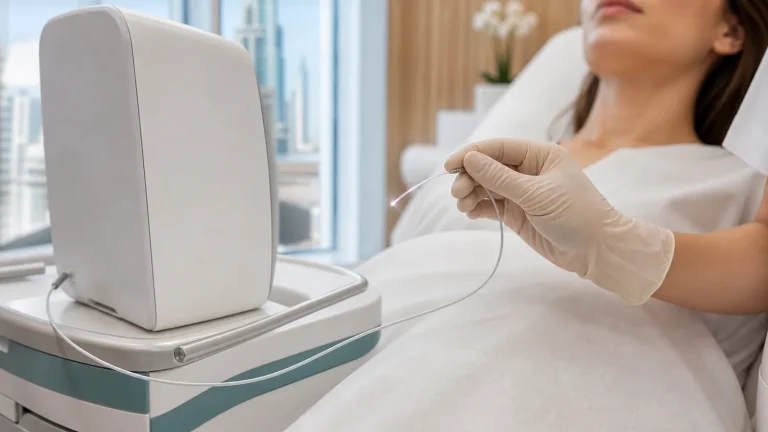
- Iontophoresis, which passes a weak electrical current through water, is mainly used for palms and soles and requires repeated sessions.
- Botulinum toxin injections come next when the options above are not enough, and they are the main clinic-based treatment for underarm sweating.
- Oral medication and surgical options sit beyond that and belong to a specialist discussion, not to an aesthetic clinic.
A clinic that skips the first three steps and books you straight into injections is not following that sequence.
What the evidence shows for botulinum toxin
Botulinum toxin blocks the chemical signal that tells sweat glands to activate in the area injected. The gland is not damaged, which is why the effect is temporary and why it returns as the signal recovers.
The strongest data comes from a 52-week multicentre, double-blind, randomised, placebo-controlled study published in the Journal of the American Academy of Dermatology, PMID 17306417, with 322 subjects who had primary axillary hyperhidrosis. Daily activity limitations were significantly reduced four weeks after injection. A two-point improvement on the severity scale was reported in 75 per cent of treated subjects against 25 per cent on placebo. Median duration of effect was 197 days at one dose and 205 days at the other, compared with 96 days for placebo.
Read the placebo figure before the treatment figures. Ninety-six days of apparent benefit from an injection of nothing is a reminder of how much expectation contributes, and it is also the reason a single testimonial tells you nothing.
A smaller 2020 randomised trial in the Journal of Drugs in Dermatology, PMID 32726556, treated 24 patients with severe hyperhidrosis and found 95 per cent were responders, meaning at least a 50 per cent reduction in measured sweat, 30 days after treatment. Most patients showed a 90 to 100 per cent reduction on starch-iodine testing, sustained for at least 270 days, and treatment was well tolerated regardless of which of two injection techniques was used.
So the realistic expectation is a marked reduction rather than complete dryness, beginning within days to a couple of weeks, lasting somewhere in the region of six to nine months, and needing repetition.
What the treatment involves
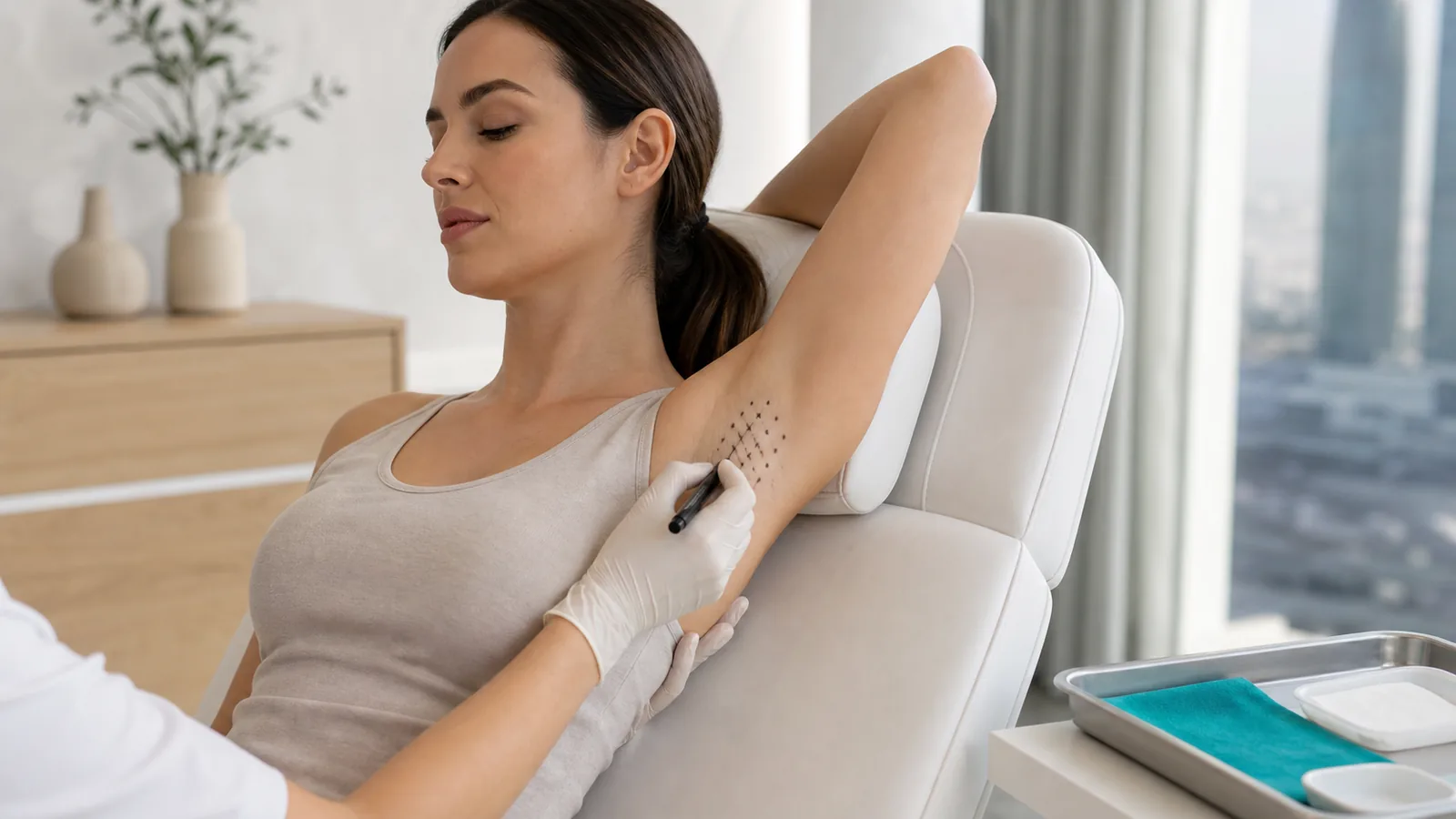
The area is mapped, often with a starch-iodine test that stains actively sweating skin, and a grid of small injections is placed across it. The underarm is the most straightforward site. Palms and soles are more painful and are approached differently, and the face carries a higher risk of affecting nearby muscles.
Two practical points people are rarely told. Sweating may not stop everywhere evenly, and a second mapping session sometimes catches missed areas. And compensatory sweating, meaning a modest increase elsewhere, is described more often after surgical approaches than after injections, but it is worth raising at consultation.
Risks and who should postpone
Botulinum toxin for sweating is a prescription-only medicine given by a licensed physician, and it carries the risks of any injection plus those of the drug itself.
- Injection site pain, bruising and swelling, which settle within days.
- Temporary muscle weakness near the injected area. In the underarm this can mean a brief reduction in grip strength; in the palm it is a more relevant consideration and is discussed before treatment.
- Headache and flu-like symptoms in the days after treatment.
- Rarely, spread of effect beyond the injection site. Difficulty swallowing, difficulty breathing, generalised weakness or drooping eyelids after any botulinum toxin treatment is an emergency.
Postpone or discuss carefully in pregnancy or breastfeeding, with a neuromuscular disorder such as myasthenia gravis, with an active infection in the treatment area, while taking aminoglycoside antibiotics or other medicines that affect neuromuscular transmission, or if a previous botulinum toxin treatment caused an unusual reaction.
When sweating needs investigation rather than treatment
Some patterns point away from primary hyperhidrosis, and treating them cosmetically means treating a symptom while its cause goes unexamined. Raise any of these with a physician before booking anything.
- Sweating that started suddenly in adulthood rather than gradually in adolescence.
- Sweating that continues during sleep, particularly night sweats that soak bedding.
- Sweating on one side of the body only.
- Sweating with unexplained weight loss, fever, a persistent cough, palpitations or a lump anywhere.
- Sweating that began after starting a new medication.
None of these means something serious is happening. All of them mean the question deserves a proper answer first.
What Med Yu Med performs
The clinic performs botulinum toxin treatment for excessive sweating, using the same medicine it uses for facial botulinum therapy. It does not supply antiperspirant prescriptions, iontophoresis devices or surgical options, and if your case belongs earlier in the sequence above, the useful outcome of a consultation is being told so.
Prescription-only medicines are prescribed by a licensed physician after assessment. Nothing on this page is a recommendation to use one.
When to seek help urgently
Call 998 immediately and do not wait for any of these after a botulinum toxin treatment: difficulty breathing, difficulty swallowing, slurred speech, generalised weakness, or swelling of the lips, tongue or throat.
Seek medical attention the same day for spreading redness with heat and pain at an injection site, fever, or drooping of the face or eyelids.
Related reading

Frequently Asked Questions
How do I know if I have hyperhidrosis or just sweat a lot in Dubai’s heat?
The distinction is whether the sweating matches the circumstances. Primary focal hyperhidrosis affects specific sites such as underarms, palms, soles or face, is usually symmetrical, typically starts in adolescence or early adulthood, and stops during sleep. Sweating that is generalised, began suddenly in adult life, or continues overnight points towards a secondary cause and needs a medical assessment before any treatment.
How long does botulinum toxin last for sweating?
Longer than it does for facial lines. In a 52-week randomised placebo-controlled study of 322 patients, PMID 17306417, the median duration of effect was 197 and 205 days for the two doses tested, against 96 days for placebo. A smaller trial, PMID 32726556, found 95 per cent of patients responded at 30 days, with most showing a 90 to 100 per cent reduction on starch-iodine testing sustained for at least 270 days.
Will it stop the sweating completely?
Expect a marked reduction rather than complete dryness. The trials measure response as at least a 50 per cent reduction in sweat production, and the outcome reported in the 322-patient study was a two-point improvement on a four-point severity scale in 75 per cent of treated patients. Some areas may respond less than others, which is why mapping the area before treatment matters.
Should I try anything before injections?
Usually yes. Higher-strength aluminium chloride antiperspirants applied at night come first, and topical anticholinergics are now a first-line option for underarm sweating: a meta-analysis of four randomised trials covering 1,401 patients, PMID 39424822, found topical glycopyrronium bromide more than doubled the proportion of patients responding on the severity scale. Iontophoresis is used mainly for palms and soles. Injections come after those.
Is the treatment painful?
The underarm is the most tolerable site, since it involves a grid of small injections into skin that is relatively insensitive. Palms and soles hurt considerably more and are approached differently, with additional numbing. In the 2020 trial comparing two injection techniques, PMID 32726556, the faster technique produced higher pain scores, so speed and comfort are not the same thing.
Who should not have this treatment?
Postpone or discuss carefully in pregnancy or breastfeeding, with a neuromuscular disorder such as myasthenia gravis, with an active infection in the treatment area, while taking medicines that affect neuromuscular transmission such as aminoglycoside antibiotics, or after an unusual reaction to a previous botulinum toxin treatment. Any difficulty breathing or swallowing after treatment is an emergency, and 998 is the number.
Medical disclaimer: This page is for informational purposes only and does not replace a consultation with a licensed physician. It does not recommend or prescribe any prescription-only medicine.
License statement: MED YU MED operates under DHA License 6589480.
Individual results caveat: Results vary by diagnosis, severity, treated area and individual response, and no outcome is guaranteed.
Related articles

Medically reviewed by