Published 30 September 2026
The short answer
Most Botox side effects are mild and pass on their own: soreness or bruising where the needle went in, redness, headache, and sometimes a temporarily drooping eyelid or brow. Serious problems are uncommon, but the US label carries a boxed warning: the toxin can spread beyond the injection site and affect swallowing, speech or breathing. Whether Botox is safe for you depends on your health history, the area treated, the product and who injects it. A doctor should check all four before treatment.
Which side effects are common
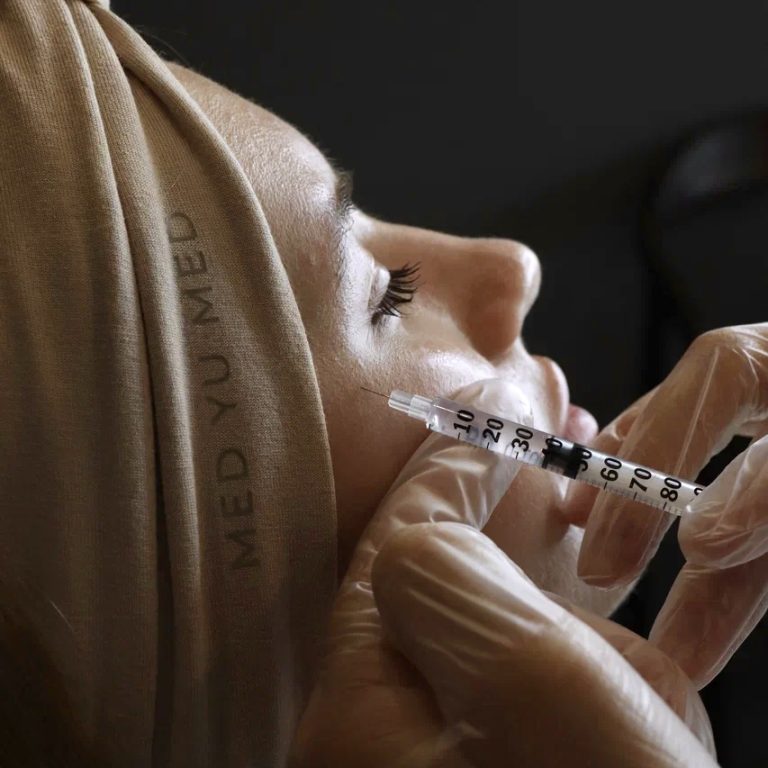
After a cosmetic injection, the usual effects stay local and short. The botulinum toxin treatment page at the clinic lists injection marks, redness, swelling, bruising and headache in the following days. A 2026 paper in the Journal of Cosmetic Dermatology describes the most frequent effects the same way: mild, transient injection-site reactions such as bruising and localized pain.
Headache deserves its own paragraph because people rarely expect it. In a prospective study of 102 adults injected with abobotulinumtoxinA (Dysport, a different botulinum toxin product), 13 patients (12.7%) developed a headache. It was generally mild to moderate, short-lived and self-limited. First-time recipients reported it far more often than people treated before (45.5% against 8.8%). Every headache followed injections in the upper face, and none followed masseter or armpit injections alone. The authors found no link with dose.
The Botox Cosmetic label reports the reactions seen in at least 1% of treated subjects and more often than with placebo:
- frown-line studies (405 treated): eyelid ptosis 3%; facial pain, facial paresis and muscular weakness 1% each;
- forehead-line studies (665 treated): headache 9% against 5% with placebo; eyelid ptosis, brow ptosis and skin tightness 2% each;
- crow’s feet studies (526 treated): eyelid edema 1%.
The label warns that rates from different trials cannot be compared directly, so read these as a sense of scale and not as a forecast for you.
What the wider evidence says
A 2014 systematic review in Dermatologic Surgery pooled 35 clinical studies with 8,787 subjects. In the upper face it reported blepharoptosis (eyelid droop) in 2.5%, brow ptosis in 3.1% and eye sensory disorders in 3%. In the lower face it reported lip asymmetries and imbalances in 6.9%. The reviewers state that all of these events resolved spontaneously.
The 2021 Cochrane review of botulinum toxin for facial wrinkles is more cautious. It covers 65 randomized trials with 14,919 participants and lists ptosis among the main adverse events, along with other eye-related events such as strabismus and sensory disorders. Its authors conclude that treatment reduces wrinkles within four weeks but probably increases the risk of ptosis. They also rate the certainty of the evidence on adverse events as very low to moderate, and they note a lack of evidence about repeated treatment cycles and about how often major adverse events occur.
Read together, the two reviews name ptosis as the main significant adverse event, the 2014 review reports all events as resolving on their own, and data on repeated use remain thin.
What is rare but serious
The boxed warning on the US label says the effects of botulinum toxin products may spread from the injection area and produce symptoms of botulinum toxin effect. The listed symptoms include generalized muscle weakness, double vision, drooping eyelids, trouble swallowing, hoarseness or trouble speaking, loss of bladder control and breathing difficulties. The label says these symptoms have been reported hours to weeks after injection, that swallowing and breathing difficulties can be life threatening, and that deaths have been reported. It states that the risk is probably greatest in children treated for muscle spasticity, and that adults with an underlying condition that predisposes them are also at risk.
The Medication Guide adds a point that matters for cosmetic patients: there has not been a confirmed serious case of spread of toxin effect when Botox Cosmetic was used at the recommended dose for frown lines, crow’s feet, forehead lines or neck bands.
The label lists several other reported events without giving a frequency for them. They include serious or immediate hypersensitivity reactions, among them anaphylaxis; heart rhythm problems and heart attack after administration, some with fatal outcomes, in some patients who had risk factors; and dry eye after injection near the muscle that circles the eye. People with neuromuscular disorders may be at higher risk of significant effects.

Who should not have Botox, and what to tell the doctor
The Medication Guide says not to receive Botox Cosmetic if you are allergic to any of its ingredients, have had an allergic reaction to another botulinum toxin product, or have a skin infection at the planned injection site. It asks you to tell the doctor about:
- diseases of muscles and nerves, such as ALS, myasthenia gravis or Lambert-Eaton syndrome;
- breathing problems, swallowing problems or bleeding problems;
- planned surgery, or surgery on your face;
- weak forehead muscles, drooping eyelids or any other change in how your face normally looks;
- pregnancy or breastfeeding, because the label says there are no adequate data on use in pregnant women and animal studies showed effects on fetal growth;
- every medicine and supplement you take, since aminoglycoside antibiotics and muscle relaxants can strengthen the effect of the toxin.
The clinic’s treatment page states that it does not treat during pregnancy or breastfeeding, under 18, or with neuromuscular disorders such as myasthenia gravis. It reviews the full list of exclusions at the consultation.
What people call Botox mistakes
When patients search for Botox mistakes, they usually mean one of four things.
A droop or asymmetry. A heavy brow, a lowered eyelid or uneven movement appear in the trial tables above. The clinic’s page describes them as temporary and passing as the product wears off.
Mixed-up products and units. The label states that Botox Cosmetic units cannot be compared with or converted into units of any other botulinum toxin product, so a number quoted for one brand says nothing about another. The Medication Guide tells you to make sure your doctor knows exactly which product you received before. Botox vs Dysport: What Actually Differs covers why the units differ.
Treatments too close together. The Medication Guide says it is not known whether Botox Cosmetic is safe and effective when used more often than once every three months. A weak result is a separate question, and Why Isn’t Botox Working? Myths and Real Causes deals with it.
Zones outside the approved list. The US label approves Botox Cosmetic for frown lines, crow’s feet, forehead lines and platysma bands, and it says the safety and effectiveness of unapproved uses have not been established. The clinic’s own page says masseter treatment is an off-label use and that the doctor explains the benefits and risks before you decide.
How the doctor manages the risk
Risk control starts before the injection. The doctor takes your history, asks about medicines, explains the approved and off-label zones, and calculates the units for your muscles at the consultation. The treatment page says the doctor reviews the correction after the effect settles, at about two weeks. You carry part of the work: tell the truth about your health, name every product you used before, and report symptoms early. Your doctor gives the exact instructions for your treatment.
When to seek urgent help
Call 998 or go to the nearest emergency department if you have trouble swallowing, speaking or breathing, a sudden change in vision, or skin near an injection that turns white, mottled or dark. The label says swallowing, speech and breathing problems can start hours, days or weeks after the injection, so do not dismiss them because treatment was some time ago. Tell the emergency team that you had botulinum toxin injections and when. Contact the clinic at once if you notice severe or worsening pain, signs of infection, a drooping eyelid, double vision, marked asymmetry or weakness beyond the treated area. The clinic does not operate around the clock, so do not wait for it to reopen if a symptom is severe or getting worse.
Frequently asked questions
Is Botox safe?
Botox Cosmetic is a prescription medicine approved in the US for specific cosmetic uses, and its label carries a boxed warning about spread of toxin effect. Most side effects are mild and temporary. Safety for you depends on your health, the zone, the dose and the injector, which a doctor reviews first.
How common are Botox side effects?
Mild effects such as soreness, bruising and headache are common. In the label’s frown-line studies, eyelid ptosis occurred in 3% of treated subjects. In its forehead-line studies, headache occurred in 9%, against 5% with placebo. Trial rates differ by zone and study, so they give scale, not a personal forecast.
How long do Botox side effects last?
Injection-site effects and headache are described as short-lived and self-limited. A droop of the eyelid or brow is temporary and fades as the effect wears off, which the label places at about three to four months for frown lines. Your doctor tells you what to watch for.
Can Botox spread to other parts of the body?
The label says it can in some cases, with symptoms such as widespread weakness, trouble swallowing or breathing, reported hours to weeks after injection. The Medication Guide notes no confirmed serious case at recommended cosmetic doses for frown, crow’s feet, forehead and neck-band treatment. Seek emergency care if these symptoms appear.
Who should avoid Botox?
People allergic to its ingredients or to another botulinum toxin, and people with a skin infection at the injection site, should not receive it. Neuromuscular disease, swallowing or breathing problems, pregnancy and breastfeeding all need a doctor’s decision first. The full screening happens at the consultation.
What are the most common Botox mistakes?
Patients usually mean a droopy brow or eyelid, uneven movement, treatments repeated too soon, confusion between products and units, or treatment of zones outside the approved list. A screened history, a clear product name and a review visit reduce these problems.
Is repeated Botox treatment safe?
The Medication Guide says it is not known whether Botox Cosmetic is safe and effective when used more often than once every three months. The Cochrane review also notes limited evidence on repeated cycles. Your doctor sets the interval for your treatment and does not shorten it below that limit.
What to read next

If you want a doctor to review your history and explain the risks for your face, you can request a consultation.
Sources
- BOTOX Cosmetic (onabotulinumtoxinA), US prescribing information and Medication Guide, revised 10/2024, DailyMed: https://dailymed.nlm.nih.gov/dailymed/fda/fdaDrugXsl.cfm?setid=485d9b71-6881-42c5-a620-a4360c7192ab
- Camargo CP, et al. Botulinum toxin type A for facial wrinkles. Cochrane Database Syst Rev. 2021: https://pmc.ncbi.nlm.nih.gov/articles/PMC8407355/
- Akpinar U, et al. Post-Botulinum Headache in Cosmetic Practice: A Prospective Study. J Cosmet Dermatol. 2026: https://pmc.ncbi.nlm.nih.gov/articles/PMC12917442/
- Cavallini M, Cirillo P, Fundarò SP, et al. Safety of botulinum toxin A in aesthetic treatments: a systematic review of clinical studies. Dermatol Surg. 2014: https://pubmed.ncbi.nlm.nih.gov/24575858/
Medical disclaimer: This page is for informational purposes only and does not replace a consultation with a licensed physician. It does not recommend or prescribe any prescription-only medicine.
License statement: MED YU MED operates under DHA License 6589480.
Individual results caveat: Results vary by diagnosis, anatomy, product used and individual response, and no outcome is guaranteed.
Related articles



Medically reviewed by

Botox (Botulinum Therapy) at MED YU MED: prices
- Botox - 1 unit, wrinkle correction (price per unit)40 AED
- Dysport - 1 unit, wrinkle correction (price per unit)28 AED
- Nabota toxin - 1 unit (price per unit)35 AED
Treatment page and booking · full price list
The final protocol and cost are confirmed at an in-person consultation.