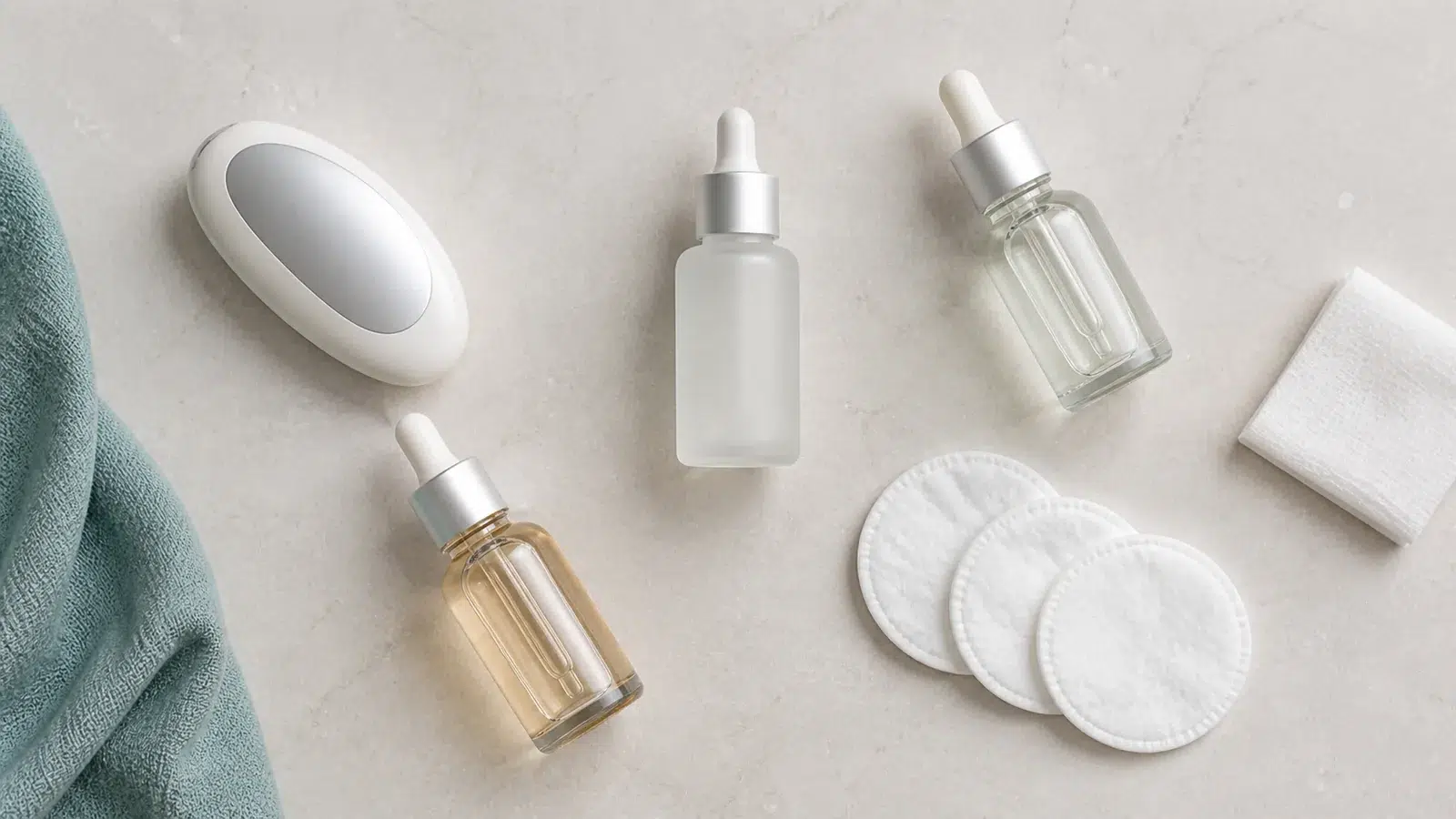
Published 19 August 2026
The one-minute version
Dubai runs a high UV index most of the year, outdoor heat that keeps skin sweating, and indoor air conditioning that dries it back out. The routine that survives this climate is short. In the morning, cleanse, hydrate lightly, and put on SPF every single day. In the evening, remove the day properly and give the skin something to repair with. Everything else is an add-on for your specific skin, and the point where add-ons stop helping is the point where a dermatologist starts.
What this climate does to skin
Three forces work on skin here at the same time. Sun exposure drives pigmentation and photoageing all year, including through car windows in January. Heat keeps sebum and sweat flowing, which occludes pores and makes sunscreen and makeup sit heavier. And air conditioning pulls water out of the upper skin layers for the ten or more hours a day you spend inside. The common Dubai skin pattern is oily surface with dehydrated depth, and it confuses people into stripping their skin harder, which makes both problems worse.
Morning, three steps that matter
Cleanse once with a gentle product; overnight oil and yesterday’s residue come off, the skin barrier stays. Follow with a light hydrating layer, a gel or fluid rather than a heavy cream, because thick occlusive textures under sweat invite congestion. Finish with broad-spectrum SPF 30 to 50 on face, neck and ears, every day of the year. If you spend the day outdoors, reapply every two to three hours; a driving-and-office day needs one solid morning application and a top-up before a long afternoon outside.
Evening, remove the day
Sunscreen plus sweat plus city dust is a film worth removing deliberately. If you wear SPF and makeup, cleanse twice, an oil or balm first, then a gentle wash. Actives, if your skin uses them, go on clean dry skin; keep strong actives to the evening because several of them raise sun sensitivity. Close with a moisturiser richer than your daytime layer, which offsets the day’s air conditioning.
| Step | Morning | Evening |
|---|---|---|
| Cleanse | Once, gentle wash | Twice if you wore SPF or makeup |
| Treat | Light hydrating layer | Actives, if prescribed, on dry skin |
| Finish | SPF 30 to 50, every day | Moisturiser richer than daytime |
Summer adjustments
From May to September, shift textures lighter across the board and rinse the face after sport instead of adding another active. Book deeper resurfacing, stronger peels and laser work into the cooler months when sun exposure is easier to control; superficial treatments continue year-round under strict SPF. The doctor times these at the consultation.
By skin type
Oily skin does best with gel cleansers, light non-comedogenic hydration and fluid sunscreens; it still needs the hydration step, because stripped oily skin produces more oil. Dry skin keeps a cream cleanser, layers a hydrating serum under moisturiser, and moves to a richer night cream in deep summer when the air conditioning runs hardest. Combination skin splits the difference by zone rather than averaging one product over the whole face.
Where a routine ends and a doctor begins
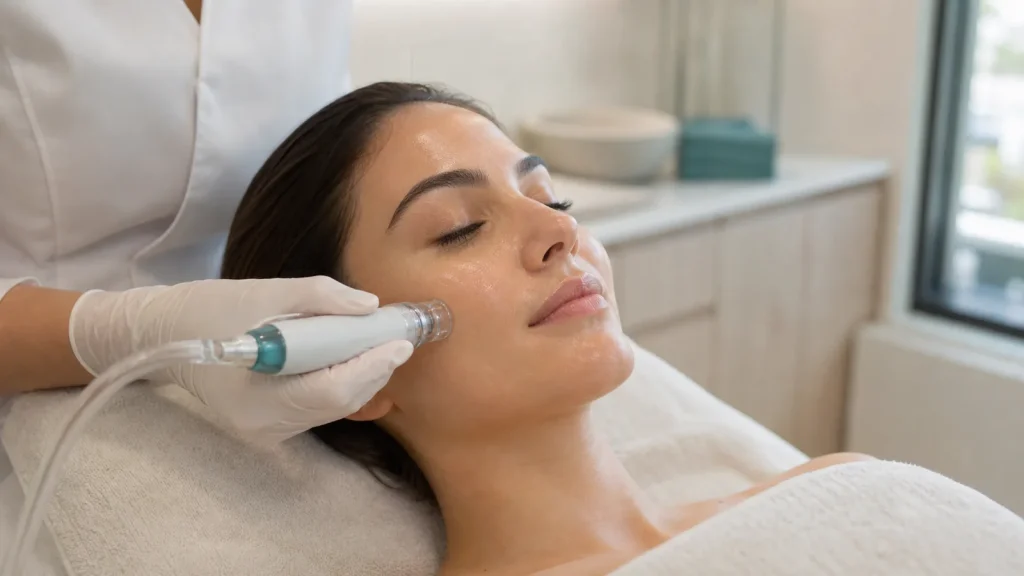
A routine maintains healthy skin. It does not treat disease, and three signals mean the job has changed. Breakouts that recur monthly despite consistent care, pigmentation that deepens over a season, and persistent redness or flushing all deserve a dermatology consultation rather than another product. In-clinic care then works alongside the routine, professional cleansing for congestion, HydraFacial for hydration and texture, and peels for tone, timed to the season. Concern-by-concern routes are collected on the concerns page.
Related reading

Frequently Asked Questions
Do I need SPF indoors?
Near windows and in the car, yes, glass does not block UVA. A single morning application usually covers an indoor day; top up before going back outside for long.
How do I reapply sunscreen over makeup?
An SPF spray or powder works for top-ups, or blot and reapply a fluid sunscreen. The morning base layer still does most of the work.
My skin feels tight in the office. What helps?
Air conditioning dries the upper layers. A hydrating serum in the morning, a richer evening moisturiser and drinking water through the day cover most cases; persistent tightness with flaking deserves a look from a doctor.
Can I do peels in summer?
Superficial peels continue in summer under strict daily SPF. Deeper peels and resurfacing sit better in the cooler months. The doctor picks the depth and the timing.
Should I pause my actives around clinic treatments?
Usually yes, for a few days around a procedure. Bring your product list to the consultation and the doctor marks what pauses and when it returns.
How fast will a new routine show results?
Weeks of consistency, not days. Hydration changes show first, tone and texture follow over a month or two. If nothing moves after that, the next step is a diagnosis, not a bigger shelf.
Medical disclaimer: This page is for informational purposes only and does not replace a consultation with a licensed physician. It does not recommend or prescribe any prescription-only medicine.
License statement: MED YU MED operates under DHA License 6589480.
Individual results caveat: Results vary by diagnosis, anatomy, product used and individual response, and no outcome is guaranteed.
Related articles



Medically reviewed by