Published 17 September 2026 · Updated 1 October 2026
Sun spots and rough, uneven texture rarely respond to the same settings on the same device, which is why clinics increasingly treat them in one visit with two different approaches instead of one. The short answer to the article’s title is yes. A broadband light photofacial and a non-ablative fractional resurfacing laser can be used together in a single session. Moreover, the two work on pigment simultaneously at different depths.
Why one device rarely covers both problems
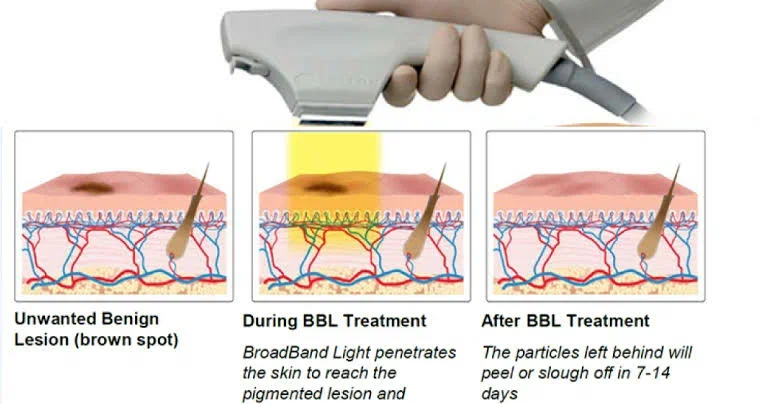
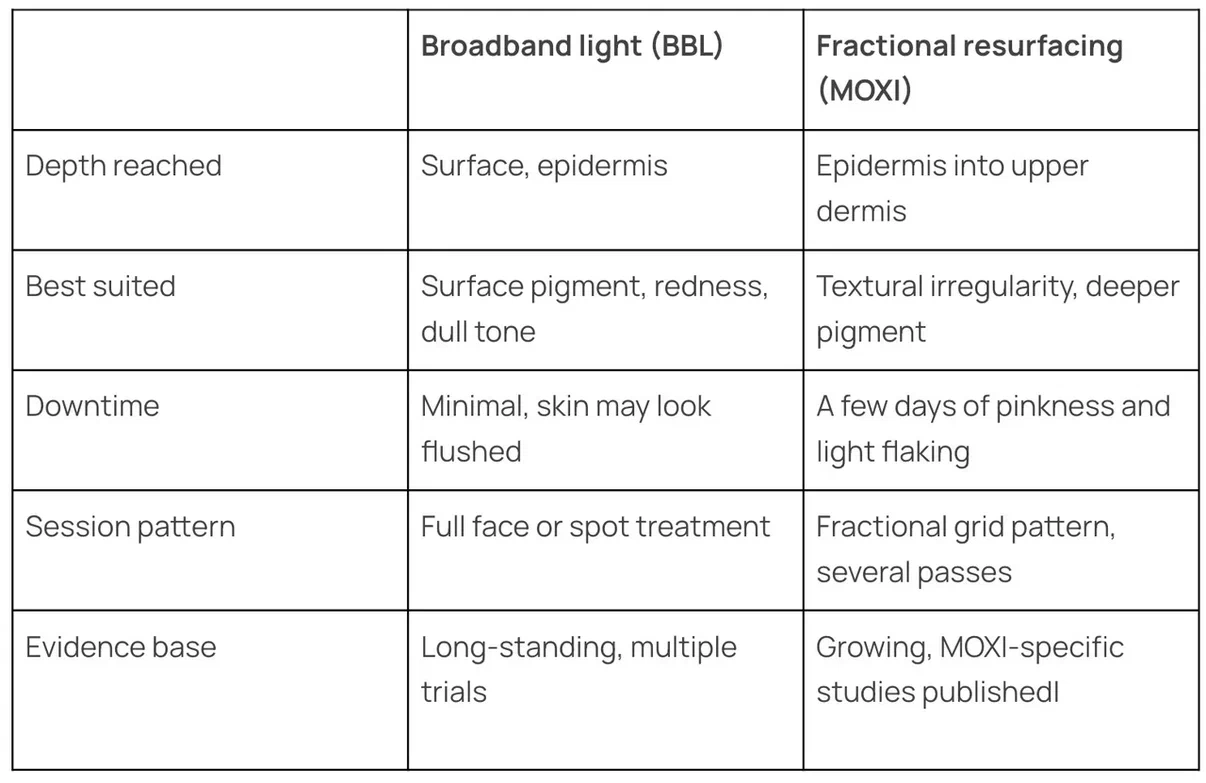
Broadband light (BBL) is a form of intense pulsed light. It fires a spread of wavelengths into the skin, and pigment and small vessels absorb that light selectively, which is why it works well on surface brown spots, redness and an uneven, dull tone. What it does not do well is reach pigment that has already migrated deeper into the skin, and has little effect on rough texture.
Fractional resurfacing lasers such as MOXI work differently. They create a grid of microscopic treatment zones in the skin reaching slightly deeper skin layers and triggering a renewal response that improves both pigment and texture over the following weeks. In a prospective study of patients with Fitzpatrick skin types I to IV, MOXI has shown a significant reduction in the number of pigmented spots that held up over three months (1).
What research shows about combining the two
The evidence specific to pairing broadband light with this type of fractional laser is still limited. The most relevant published data comes from a retrospective case series of nine patients treated for facial solar lentigines with broadband light immediately followed by fractional 1,927 nm resurfacing in the same session (2). Across all nine patients, the change in pigment score from before to after treatment did not reach statistical significance (p=0.11). When the one patient who showed no improvement was excluded, the remaining eight showed a statistically significant increase in clearing (p=0.03) (2). The authors also noted that the improvement in that subgroup appeared larger than what the fractional laser typically achieves alone, though the sample size in this report is small and the follow-up period varied considerably between patients, from two weeks to nearly twenty months.
Broadband light alone has a longer track record. A multi-center study of 93 patients treated for photoaged skin found a significant improvement in the physician-rated wrinkle and elastosis score at four and six months after a course of treatments (p<0.001), with an improved score recorded in 82 percent of patients at four months and 75 percent at six months (3). That study measured broadband light on its own, not in combination, and it is included here to show what one half of the pairing is capable of by itself.
Taken together, the honest summary is that each technology has reasonable evidence behind it individually, the combination has a small but supportive early report, and larger comparative trials of the pairing have not yet been published.
How the two technologies compare
Who may be a good candidate and who is not
People with diffuse sun spots, an uneven surface tone and some roughness or enlarged pores together are the ones a combined approach is usually discussed for, because it addresses more than one concern in a single appointment. It is not performed on active skin infection, herpes at the treatment site, a recent suntan, or in anyone using medications that increase photosensitivity or interfere with healing, and it is postponed during pregnancy. Very dark or very light Fitzpatrick types, keloid-prone skin, and any suspicious or changing lesion all need the treating doctor’s assessment before either device is used. This list is not exhaustive, and final suitability is decided at an in-person consultation.
What a combined session involves
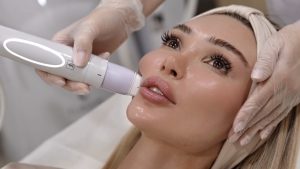
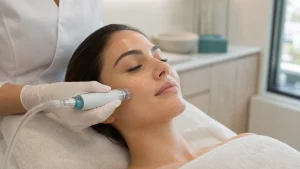
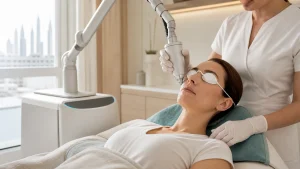
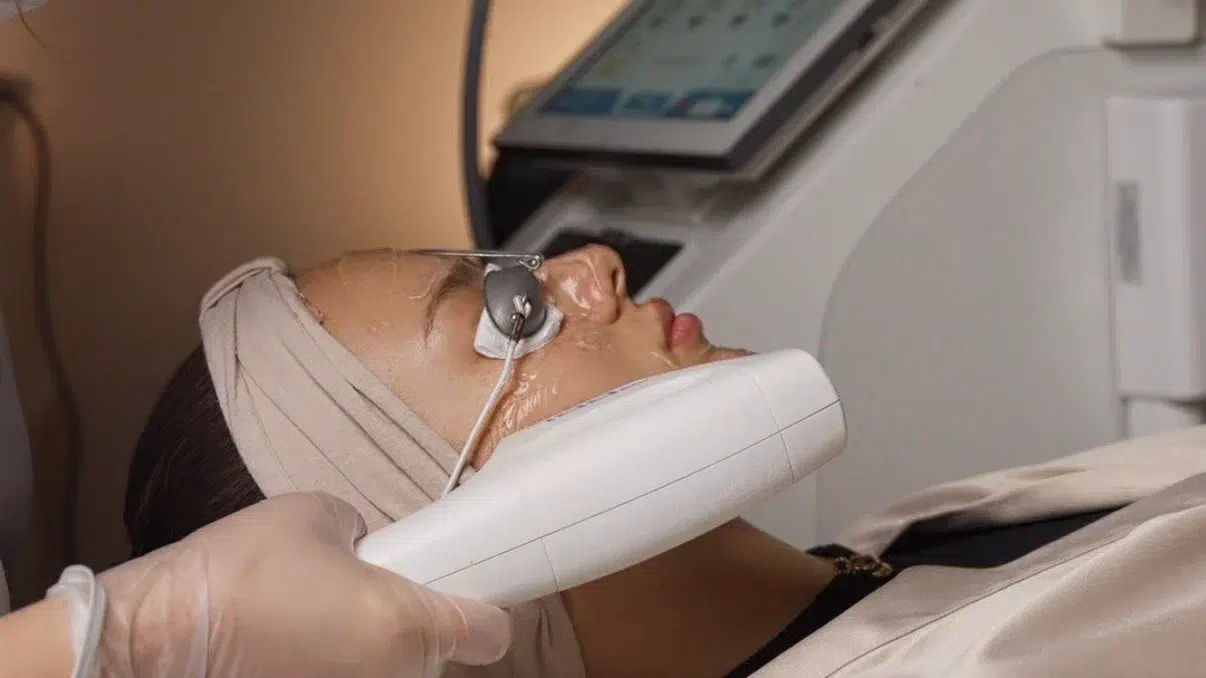
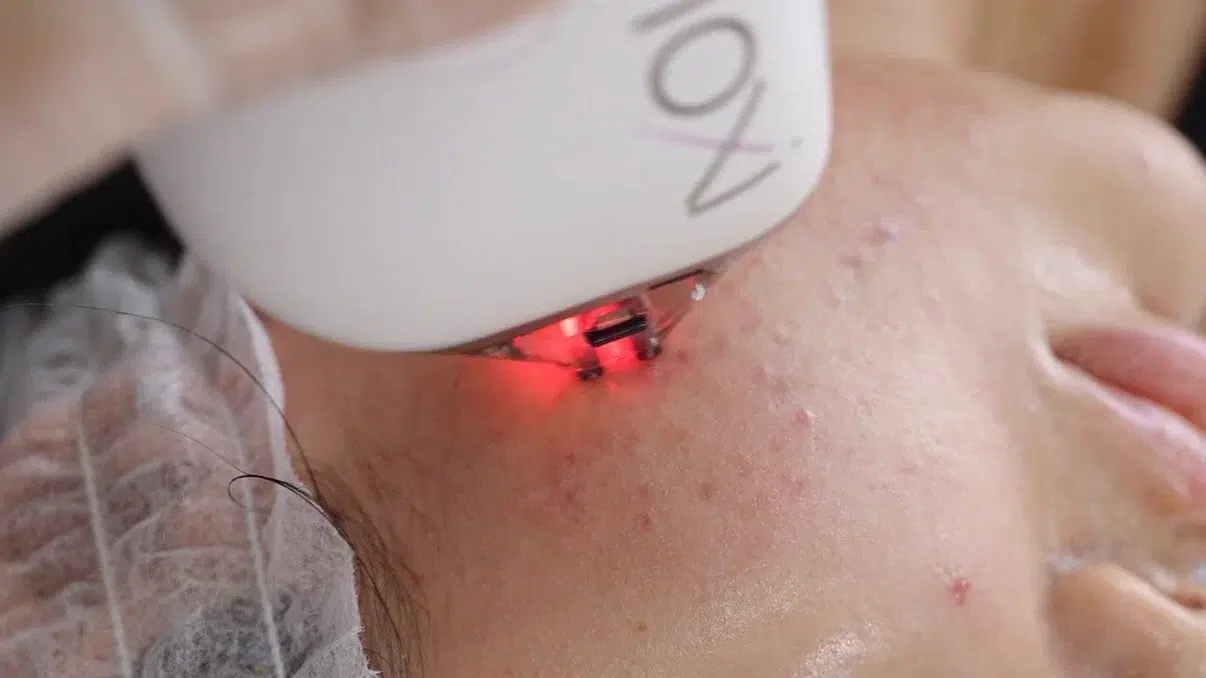
The face is cleansed and a topical numbing cream is usually applied for comfort ahead of the fractional pass. The broadband light portion is done first, since post-laser skin is more sensitive to light exposure, followed by the fractional resurfacing pass set to the patient’s skin type and concern. A cooling or barrier product is applied afterwards, and the doctor advises on the following days of skincare. Most protocols call for more than one session spaced weeks apart, and the treating doctor sets the exact interval based on how the skin responds.
Risks and when the procedure should be postponed
Both components can cause temporary redness, swelling, and a sandpaper-like texture for a few days after treatment. Bruising, blistering, and infection at the treatment area are uncommon but possible with laser and light-based devices, and pigmentary changes, whether darker or lighter than the surrounding skin, occur rarely and are usually temporary. Treatment is postponed over active breakouts, cold sores, or sunburned skin, and patients are asked to pause certain topical actives and skin-lightening products beforehand, on the doctor’s instruction.
When pigmentation needs a diagnosis before any treatment
Not every dark mark is sun damage. Melasma, post-inflammatory marks, and pigmented lesions that could be something other than a benign sun spot all need a dermatologist’s eye before any device is used, because the wrong technology on the wrong diagnosis can make pigment worse rather than better. Any lesion that has changed in size, shape, or color recently should be assessed by a doctor before cosmetic treatment of any kind, not after.
What MED YU MED offers
MED YU MED offers BBL Phototherapy and MOXI laser resurfacing as part of its energy-based device programme. A doctor assesses which technology, or combination, fits a given case at consultation.
When to seek emergency care
Call the clinic if pain increases after the first day, if blistering spreads, or if you notice pus, drainage, or fever following a session. Outside clinic hours, go to the nearest emergency department or call 998 for an ambulance rather than waiting for the clinic to reopen.
What to read next
- ?
- ?
Frequently asked questions
Do I need both treatments, or would one be enough?
It depends on what’s actually going on with your skin. Surface pigment and dullness respond well to broadband light alone. Textural roughness and deeper pigment respond better to fractional resurfacing. The doctor decides at consultation whether one device covers your concern or both are worth combining.
How much downtime should I expect?
Broadband light alone causes little visible downtime beyond some flushing. Adding fractional resurfacing usually means a few days of pinkness and light flaking. The doctor will tell you what to expect for your specific skin type and case.
Will this get rid of melasma?
Melasma is a different condition from sun-induced pigmentation and is more prone to flaring with heat-generating devices if it isn’t diagnosed and managed correctly first. It needs its own diagnosis and treatment plan from a dermatologist.
How many sessions are usually needed?
Most protocols involve more than one session spaced several weeks apart, though the exact number depends on how the skin responds and is set by the treating doctor rather than fixed in advance.
Can I combine this with my regular skincare actives?
Certain skincare products can be paused for a few days on the doctor’s advice, particularly retinoids and exfoliating acids. Bring your skincare list to the consultation so the doctor can mark what to pause and when to restart.
References
1.Vingan NR, Panton JA, Barillas J, Lazzarini A, Hoopman J, Kenkel JM, Culver A. Investigating the efficacy of a fractionated 1927nm laser for diffuse dyspigmentation and actinic changes. Lasers Surg Med. 2023;55(4):344-358. doi:10.1002/lsm.23653
2.Hennessey E. A novel combination of broadband light (BBL HERO) and nonablative fractionated 1,927nm (MOXI) laser for addressing solar lentigines. J Clin Aesthet Dermatol. 2024;17(9-10 Suppl 1):S36-S39. PMID:39386001. Available from: https://pmc.ncbi.nlm.nih.gov/articles/PMC11460752/
3.Sadick NS, Weiss RA, Kilmer SL, Bitter P. Photorejuvenation with intense pulsed light: results of a multi-center study. J Drugs Dermatol. 2004;3(1):41-49. PMID:14964745. Available from: https://pubmed.ncbi.nlm.nih.gov/14964745/
Medical disclaimer: This page is for informational purposes only and does not replace a consultation with a licensed physician. It does not recommend or prescribe any prescription-only medicine.
License statement: MED YU MED operates under DHA License 6589480.
Individual results caveat: Results vary by diagnosis, anatomy, product used and individual response, and no outcome is guaranteed.
MEDICALLY REVIEWED BY
DR. Alina Lebedeva
General Practitioner, Aesthetic Medicine Doctor, Dermatologist
DHA License No. 35044799-002