Published 8 July 2026 · Updated 19 August 2026
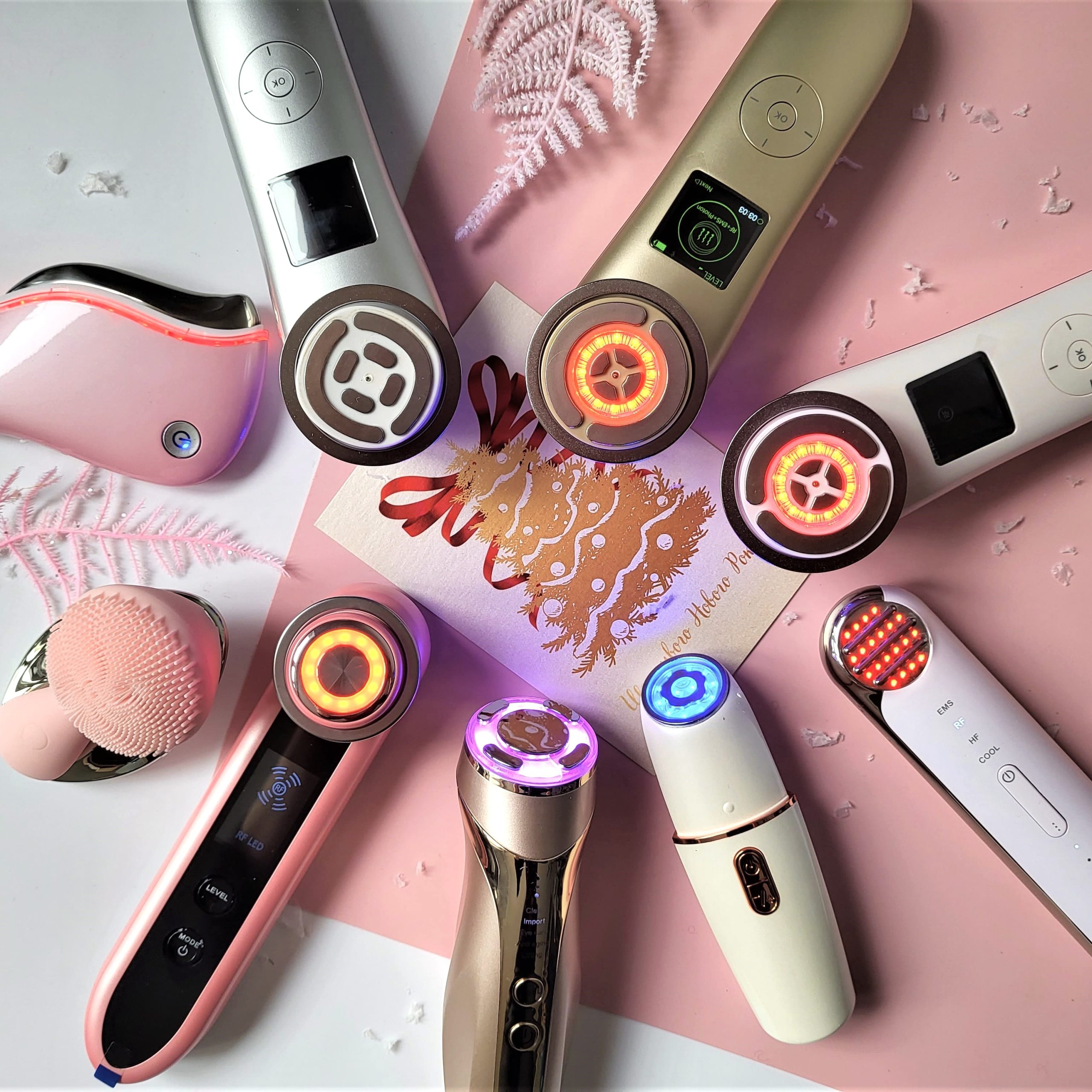
In our endless quest for a sharp jawline and firm skin, it is incredibly tempting to buy into the latest viral beauty gadgets. Over the past few years, portable, at-home RF (radiofrequency) devices have completely taken over social media and online shopping carts. They promise professional-grade skin tightening right from the comfort of your couch.
But is at-home RF lifting actually effective, or is it just clever marketing? Can a compact, handheld device truly replace a trip to a top-tier aesthetic clinic?
Let’s dive into the real science behind how these devices work, look at what they can realistically achieve, and break down the major differences between home gadgets and medical-grade clinical hardware.
What is RF Lifting and How Does It Actually Work?
RF stands for Radiofrequency. The core science behind the treatment is simple: it delivers deep, controlled warming to the dermis (the structural layer of your skin) and the subcutaneous tissue underneath.
When your skin tissues are warmed to a very specific target temperature, it triggers two incredible biological responses:
- The Instant Lift: Your existing, stretched-out collagen fibers immediately contract and shrink. This gives you that beautifully refreshed, lifted look right after a session.
- The Collagen Factory: This safe thermal stimulation jolts your structural cells (fibroblasts) awake. They immediately begin constructing fresh, young collagen and elastin fibers, a process that develops over the following months to make your skin significantly denser and firmer.
However, the magic word here is temperature. To kickstart neocollagenesis (the formation of brand-new collagen), the deep tissue must be heated strictly to 42°C-45°C. If the temperature stays below this window, your cells simply will not react. If it goes too far above, you risk a severe burn. This exact temperature requirement is where the massive gap between home care and clinical treatments begins.
Why At-Home Gadgets Can’t Compete with Clinical Platforms
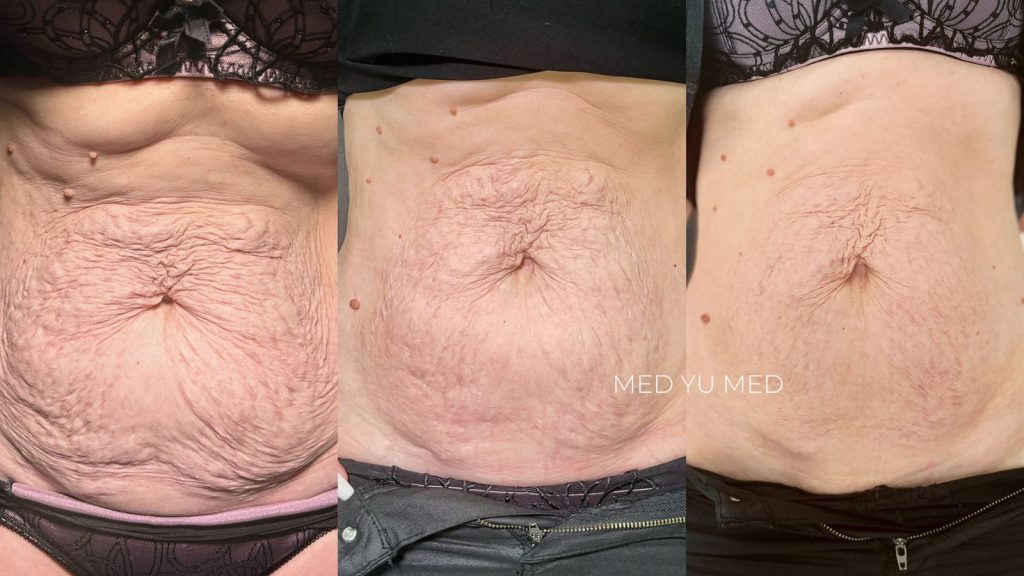
Many brands claim their portable tools deliver a full-face RF lift that easily rivals a doctor’s visit. From a medical and physics standpoint, however, that is simply impossible. Here are the three reasons why:
1. Power and Frequency
An authentic, medical-grade platform (such as Morpheus8 or Genius) possesses immense power, allowing it to instantly deliver radiofrequency energy to precise depths within the skin layers. Handheld home devices operate on tiny batteries or standard wall plugs. For user safety, their power is artificially restricted. They physically cannot heat the deep structural layers of the skin to that critical 42°C-45°C target. At best, they create a cozy, warm sensation on the very surface of your skin (around 37°C-39°C).
2. Penetration Depth
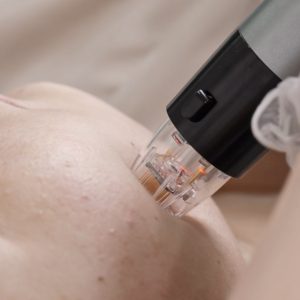
Advanced clinical procedures are often fractional or needle-based, meaning the radiofrequency pulse is delivered directly inside the tissue through ultra-fine micro-needles, completely bypassing the skin’s protective outer barrier. At-home devices are purely superficial. The weak electric current struggles to break through the skin’s tough outer layer, losing almost all its energy on the surface.
3. Real-Time Safety Sensors
Medical systems are built with incredibly smart, highly sensitive sensors that track your skin’s unique resistance and monitor heat to a fraction of a degree in real time. Budget-friendly home devices lack these sophisticated safety systems. If an over-the-counter gadget were manufactured with clinical-strength power, an untrained user could easily cause severe facial burns or sub-dermal scarring. To prevent this, manufacturers purposefully keep them mild.
What Can a Home RF Device Actually Do?
Does this mean portable skincare gadgets are a complete waste of money? Not necessarily. If you manage your expectations and don’t expect the dramatic results of a clinical lift or plastic surgery, they can still be a nice addition to your routine.
Because they offer mild, superficial warmth, home tools are excellent for boosting microcirculation. When combined with other common built-in features like microcurrents or LED light therapy, they can provide:
- A brighter, healthier complexion due to increased blood flow
- A subtle reduction in morning puffiness (thanks to gentle lymphatic drainage)
- A temporary boost in skin elasticity (similar to a fantastic face massage)
- Enhanced absorption of your favorite medical-grade serums and gels
However, if you are dealing with a sagging jawline, prominent jowls, deep lines around the mouth, or structural acne scars, home devices will not deliver visible changes. These concerns require the depth and power of clinical hardware.
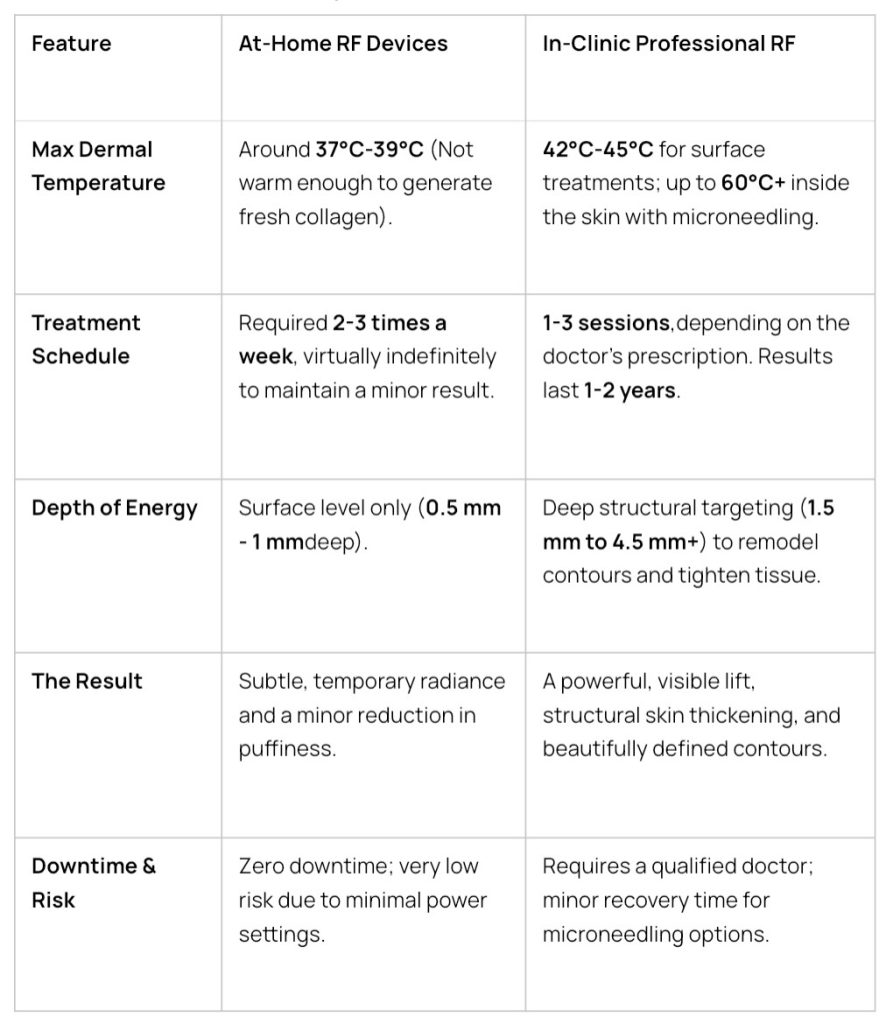
Head-to-Head: Home Gadgets vs. Clinical Treatments
Does Home RF Work for Body Sculpting?
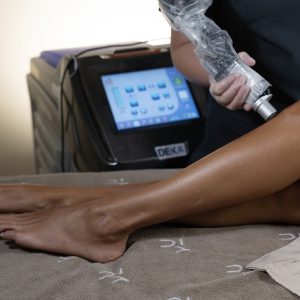
It is also worth mentioning the popular handheld devices designed to treat cellulite or tighten loose skin on the stomach and thighs. When it comes to the body, the laws of physics are even less forgiving. Body skin is significantly thicker, and the underlying fat layer is much denser than the skin on your face.
To successfully smooth out cellulite or firm up the skin, clinical machines must use tremendous energy to penetrate several centimeters deep. No handheld home device has the power required to reach those depths. While a home tool might act as a pleasant massage that temporarily improves surface circulation, it will not reduce fat or smooth out structural dimpling.
The Verdict: Home Care or the Clinic?
When answering the ultimate question “is at-home RF lifting actually effective?” the conclusion is clear. As a standalone method for reversing skin laxity and lifting facial contours, it simply cannot deliver clinical results. Professional treatments win across every single metric: they are infinitely more powerful, hit the exact anatomical depths required, require only a few visits a year, and provide long-lasting, scientifically proven results.
With that said, you don’t have to throw your favorite gadget away. Think of a portable device as a lovely, pampering supplement to your daily beauty ritual, perfect for maintaining young skin or giving your face a quick boost between your regular, high-performance appointments at the clinic.
Medical disclaimer: This page is for informational purposes only and does not replace a medical consultation.
License statement: MED YU MED operates under DHA License 6589480.
Individual results caveat: Results vary by diagnosis, skin type, and individual response.
What a home device cannot do for you
A home appliance does not assess your skin. Radiofrequency interacts with implanted electronic devices anywhere in the body, and heat over fillers, threads or metal implants changes the plan, so those situations need a clinician rather than a purchase decision. Do not treat over an active infection, an open wound or a fresh flare.
When radiofrequency treatment is not done
- Pregnancy and breastfeeding
- Active skin infection, inflammation or open wounds in the treatment area
- Recent isotretinoin use, until the course is completed and cleared by a doctor
- Active acne flare or herpes in the treatment area
- History of keloid or abnormal scarring
- An implanted electronic device anywhere in the body, including a pacemaker or defibrillator, not only in the treatment area
- Metal implants, dermal fillers, lifting threads or facial implants in the treatment area, after doctor assessment
- Uncontrolled chronic conditions that impair skin healing
This list is not exhaustive. Other conditions, medicines and previous treatments may also rule the treatment out or change the plan. Final suitability is determined by a clinician at an in-person assessment.
If something goes wrong afterwards
Call MED YU MED on +971 52 184 5011, daily 10:00-22:00, if you develop a blister, a burn or an open area of skin, pain that increases rather than eases, spreading redness with heat, or a fever. Any change in vision needs assessment the same day. Outside our opening hours go to the nearest emergency department or call 998 for an ambulance, rather than waiting for the clinic to reopen. The clinic does not operate 24 hours.
Related articles
Medically reviewed by

General Practitioner, Aesthetic Medicine Doctor
DHA License No. 09620692-002