Published 25 May 2026 · Updated 5 October 2026
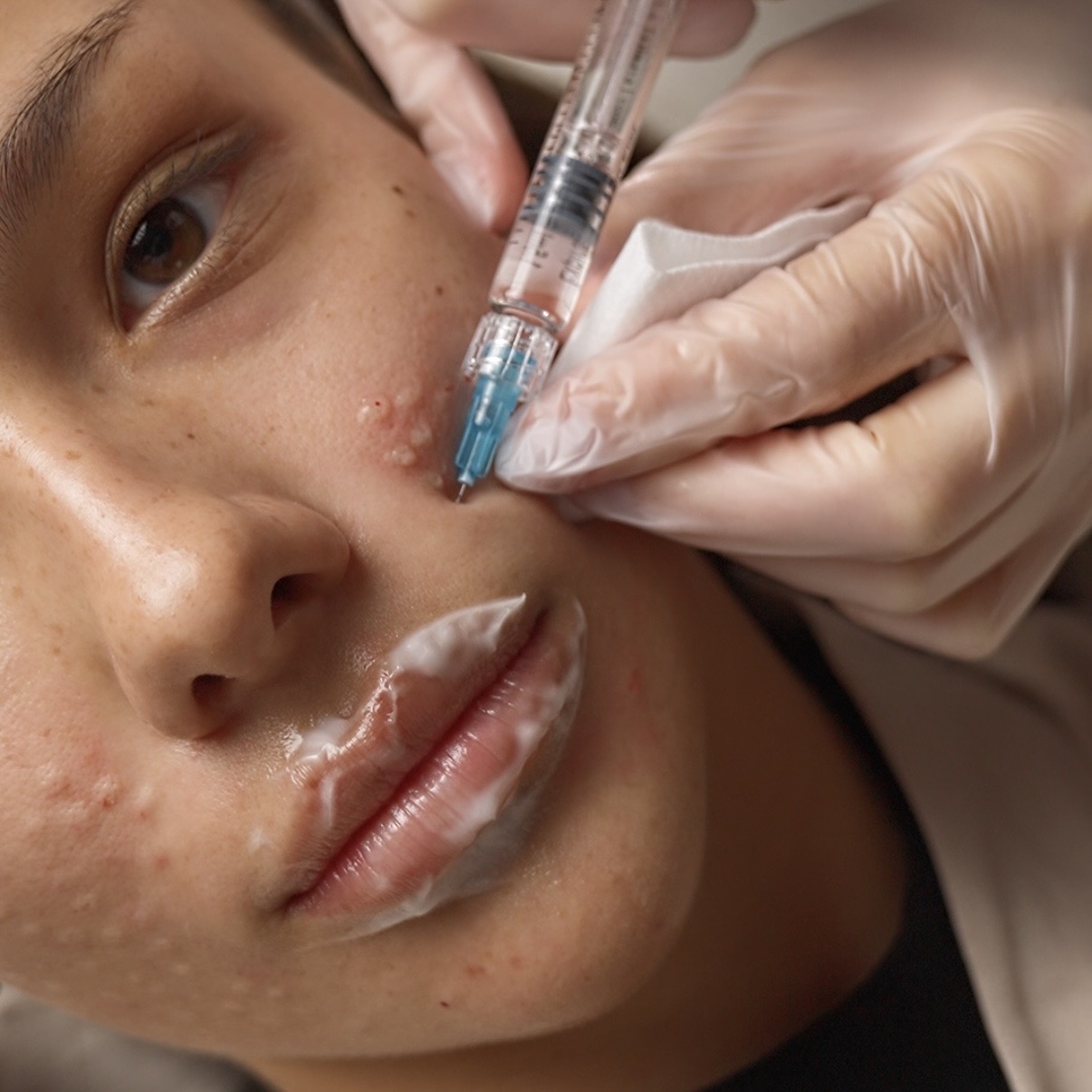
One of the more widely discussed developments in aesthetic medicine is the use of polynucleotides, commonly known as PDRN. Unlike hyaluronic acid hydration injections, PDRN is thought to work mainly by supporting the skin’s own repair processes.
Here are five key points about this treatment, explained.
Fact 1: What PDRN Is and Where It Comes From
PDRN stands for polydeoxyribonucleotides. Essentially, these are small fragments of DNA. They are extracted from salmon DNA or from plant sources such as ginseng, rice, and lotus. In medical aesthetics, salmon-derived PDRN is widely used because its structure is similar to human DNA.
To reduce the risk of reactions, these ingredients go through a multi-step purification process intended to remove other genetic material. Reactions are still possible, so tell your doctor about any allergies, including to fish, before treatment.
Fact 2: Supporting the Skin’s Repair Processes
When PDRN is injected, it is described as a signal that supports the skin’s natural healing response. Studies report effects on collagen production and blood flow, and a calming effect on redness, and PDRN is used to support recovery of skin after environmental damage. The evidence is still developing, and individual results vary (see the evidence review linked at the end of this article).
Fact 3: Supporting Skin Firmness
The main aim of PDRN is to support the cells responsible for skin elasticity and firmness. Unlike treatments that work through controlled injury to the skin, PDRN works through a different mechanism. It is intended to encourage the skin to build its own collagen and elastin, which may gradually improve texture and the look of fine lines. As with any injection, redness, swelling, bruising or tenderness at the injection sites can occur, and rarer reactions are possible.
Fact 4: Puffiness, Under-Eye Bags and Dark Circles
Many traditional hydration injections rely on hyaluronic acid, which attracts water. For patients who are prone to swelling, this can leave the face looking puffier. PDRN is not primarily used to draw water into the skin, which is why some doctors consider it for people whose face tends to retain fluid.
PDRN is described as supporting small blood vessels and circulation, which may help with fluid retention around the eyes. Some clinicians use it in the delicate eye area, but dark circles and under-eye bags have several different causes, and PDRN does not address all of them. It is not a cure for dark circles. Your doctor will assess whether it is suitable for you.
Fact 5: Calming Properties and Skin Tone
PDRN is described as having calming properties and is being studied for concerns such as acne, rosacea, and visible capillaries. Evidence for these uses is still limited.
It is also studied for skin tone. Some studies have tested PDRN together with ingredients such as vitamin C and niacinamide on sunspots and uneven tone. How the results compare with other pigment treatments has not been established, and results vary from person to person (see the evidence review linked at the end of this article).
Where Science Meets Aesthetics
The history of PDRN dates back to the mid-20th century, when researchers noticed that DNA fragments could be involved in tissue healing. In the 1980s, Italian scientists at the University of Parma reported that these compounds could support skin recovery. This research contributed to later work in regenerative medicine.
Today, clinics use PDRN in anti-aging treatments, for hydration, for acne and rosacea, for dark spots, to support skin after lasers, and in some cases for hair thinning. Several of these uses are still being studied, and not all have strong evidence. Whether PDRN suits you is a decision for your doctor after an examination.
For the full evidence review, read PDRN treatment in Dubai: science, evidence and clinical uses. Skin booster courses with PDRN and their prices are on our biorevitalization page and in the price list.
Medical disclaimer: This page is for informational purposes only and does not replace a consultation with a licensed physician. It does not recommend or prescribe any prescription-only medicine.
License statement: MED YU MED operates under DHA License 6589480.
Individual results caveat: Results vary by diagnosis, anatomy, product used and individual response, and no outcome is guaranteed.
Medically reviewed by

Biorevitalization at MED YU MED: prices
- Profhilo - 2 ml2100 AED
- Viscoderm Hydrobooster3000 AED
- Xela Rederm silver 1.1% - 2 ml2100 AED
Treatment page and booking · full price list
The final protocol and cost are confirmed at an in-person consultation.