


Published 30 October 2026
The one-minute version
Plasma treatment uses argon or nitrogen gas that has been charged with energy and applied to the skin in very short pulses. In an animal study, argon plasma affected the top layers of skin and the oil glands, while nitrogen plasma reached a little deeper and triggered new collagen. In people, nitrogen plasma has been tested on inflamed acne in a clinical study of 20 patients, and argon plasma has been reported in two patients with acne and enlarged pores. Plasma does not replace acne medication. A doctor decides at a consultation whether it suits your skin and which gas to use.
How gas plasma works on the skin
Medical plasma is made from argon or nitrogen gas. The device charges the gas with energy and releases it in tiny pulses that touch the skin’s surface. It has nothing to do with the plasma in blood, which is used in a different procedure called PRP.
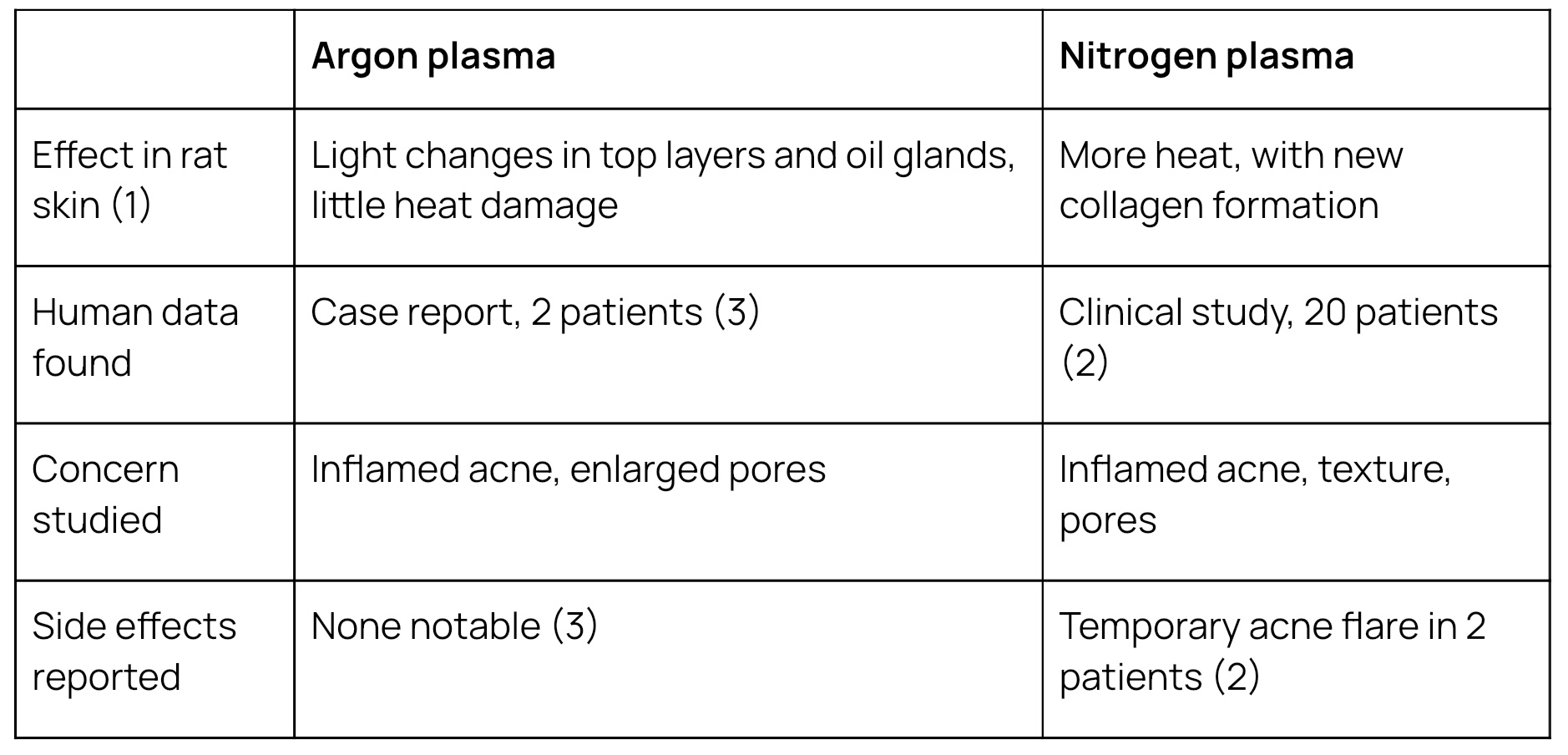
The two gases act differently. A study on rat skin compared them directly (1). Argon plasma changed the top layers of skin and the oil glands without causing much heat damage. Nitrogen plasma produced more heat, depending on the energy level, and the skin responded by building new collagen. In simple terms, argon is the gentler option for oily, inflamed skin, and nitrogen is the one that works on texture and firmness.
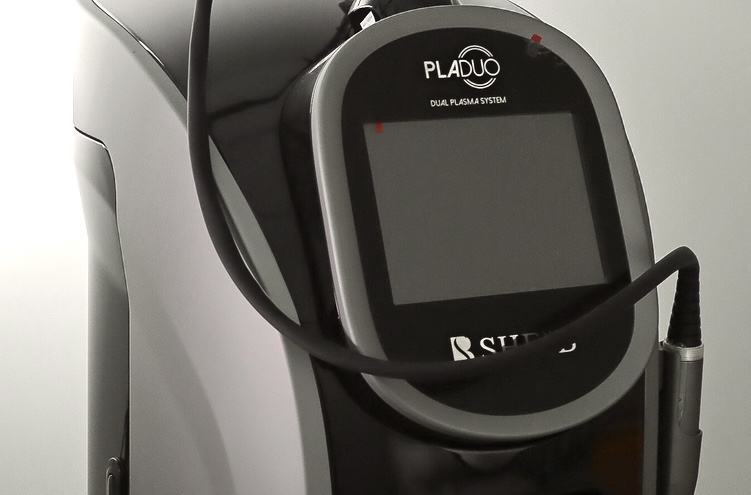
PLADUO is a device that can deliver both gases. The doctor picks one or the other depending on what needs treating.
What the research shows
Three studies are worth knowing about.
The first is the rat study mentioned above (1). It shows how each gas affects skin tissue. It was done on animals, so it explains the mechanism and does not predict results in people.
The second is a clinical study from Tokyo on nitrogen plasma in acne (2). Twenty patients had three sessions, four weeks apart. The researchers used computerised facial imaging to measure the results. They found clear improvement in redness and in a marker linked to acne bacteria. Fine lines, pores and skin texture also improved, and both doctors and patients rated the change as better. Two patients had a temporary flare of acne. Follow-up lasted two months after the last session.
The third is a case report from Korea (3). Two women with inflamed acne and enlarged pores were treated with argon plasma. The authors reported marked improvement and no notable side effects.
How plasma fits with regular acne care
Acne treatment starts with a medical plan. A dermatologist examines the skin, asks about breakouts, hormones, products and past treatments, and chooses the therapy. Plasma works alongside that plan and does not take its place.
Where it can help is in supporting a medical plan, since medication handles the cause while a procedure works on the skin itself. Whether that makes sense for you is a question for the consultation.
Who may be suitable and who may not
The human studies above involved adults with inflamed acne, and two of the three were done in Asian patients (2, 3). The sources reviewed here did not cover other skin tones or concerns such as pigmentation, so the doctor looks at each case on its own.
A doctor will usually hold off on a procedure like this in these situations:
- pregnancy or breastfeeding
- a skin infection, open wound or cold sore in the treatment area
- recent sun exposure or a fresh tan
- certain prescription medicines or recent procedures on the same area
- a tendency to scarring or dark marks that has not been assessed
This list is not complete. Your suitability is decided by a doctor at an in-person assessment.
What happens during a session
The visit begins with a conversation and an examination. The doctor asks about your acne, your medication, your past treatments and your sun exposure. If plasma suits you, the skin is cleaned and the doctor passes the handpiece over the treatment area, adjusting the settings as your skin reacts. Sensations differ from person to person, so the doctor checks in with you during the session.
Afterwards, daily sun protection and a gentle skincare routine matter most. The number of sessions depends on your concern and how your skin responds. The Tokyo study used three sessions four weeks apart (2), but that was the plan for that study and not a PLADUO schedule. Your doctor sets your own plan.
Risks and when to postpone
Plasma delivers controlled energy to the skin, so some reaction is expected. The animal study showed that nitrogen plasma affects deeper layers as the energy goes up (1). That is why the settings, and the experience of the doctor choosing them, matter. In the Tokyo study, two of twenty patients had a temporary acne flare (2).
Postpone your appointment and tell the clinic if you have a new rash, a cold sore, a sunburn, or if you have started a new prescription treatment.
When acne needs a diagnosis first
Deep, painful bumps that keep returning, acne that leaves marks, or sudden breakouts in adulthood need a medical assessment before any procedure. A dermatologist checks for hormonal causes, reviews your products and medicines, and builds a plan. Starting with a device first often wastes time, and with deep acne, lost time can mean scars.
What we don’t know yet
Plasma for acne is still a young field. The studies above are small, none had a comparison group, and the longest follow-up was two months. Nobody has compared plasma with acne medication or with other procedures. That is why your doctor treats it as an option to discuss and not as a standard answer.
What MED YU MED offers
PLADUO is part of the clinic’s device range. Any plasma procedure begins with a consultation, where the doctor decides whether it fits your diagnosis, which gas to use, and how it works with your medical treatment. If plasma is not right for your skin, the doctor will tell you.
When to seek emergency medical care
Call MED YU MED on +971 52 184 5011, daily 10:00-22:00, if redness spreads instead of settling, if the skin blisters or breaks, if pain grows after the first day, or if a fever follows a session. Fever with rapidly spreading, hot, painful skin needs a hospital emergency department the same day. Outside our opening hours go to the nearest emergency department or call 998 for an ambulance. The clinic does not operate 24 hours.
What to read next
- ?
Frequently asked questions
Does plasma replace acne medication?
No. Acne care starts with a diagnosis, and plasma may be considered as an addition to a medical plan.
Is this the same as PRP?
No. PRP uses a concentrate made from your own blood. Gas plasma is argon or nitrogen charged with energy by a device and applied to the skin surface.
How many sessions will I need?
It depends on your concern and how your skin responds. Your doctor sets your plan.
Can plasma treat acne scars?
The sources reviewed for this article looked at active inflamed acne. Scars are assessed separately at the consultation.
References
- Kim H, Kim HJ, Kim HK, Hong JY, Cho SB. Effects of argon and nitrogen plasma pulses on the skin and skin appendages in an in vivo animal model. Skin Res Technol. 2020. doi:10.1111/srt.12767 (https://doi.org/10.1111/srt.12767)
- Takaya K, Kishi K. The effectiveness of nitrogen plasma skin rejuvenation in the treatment of acne vulgaris in Asians. Lasers Med Sci. 2025. doi:10.1007/s10103-025-04381-3 (https://doi.org/10.1007/s10103-025-04381-3)
- Cho SB, Kim H, Kim H, Yoo KH. Argon plasma: a new approach for the effective treatment of inflammatory acne vulgaris and enlarged pores in Asian patients. Med Laser. 2018. doi:10.25289/ML.2018.7.2.97 (https://doi.org/10.25289/ML.2018.7.2.97)
Medical disclaimer: This page is for informational purposes only and does not replace a consultation with a licensed physician. It does not recommend or prescribe any prescription-only medicine.
License statement: MED YU MED operates under DHA License 6589480.
Individual results caveat: Results vary by diagnosis, anatomy, product used and individual response, and no outcome is guaranteed.
MEDICALLY REVIEWED BY
DR. Ilias Ildarovich Dautov
General Practitioner, Aesthetic Medicine Doctor
DHA Licence No. 09620692-002.


