


Published 27 October 2026
The one-minute version
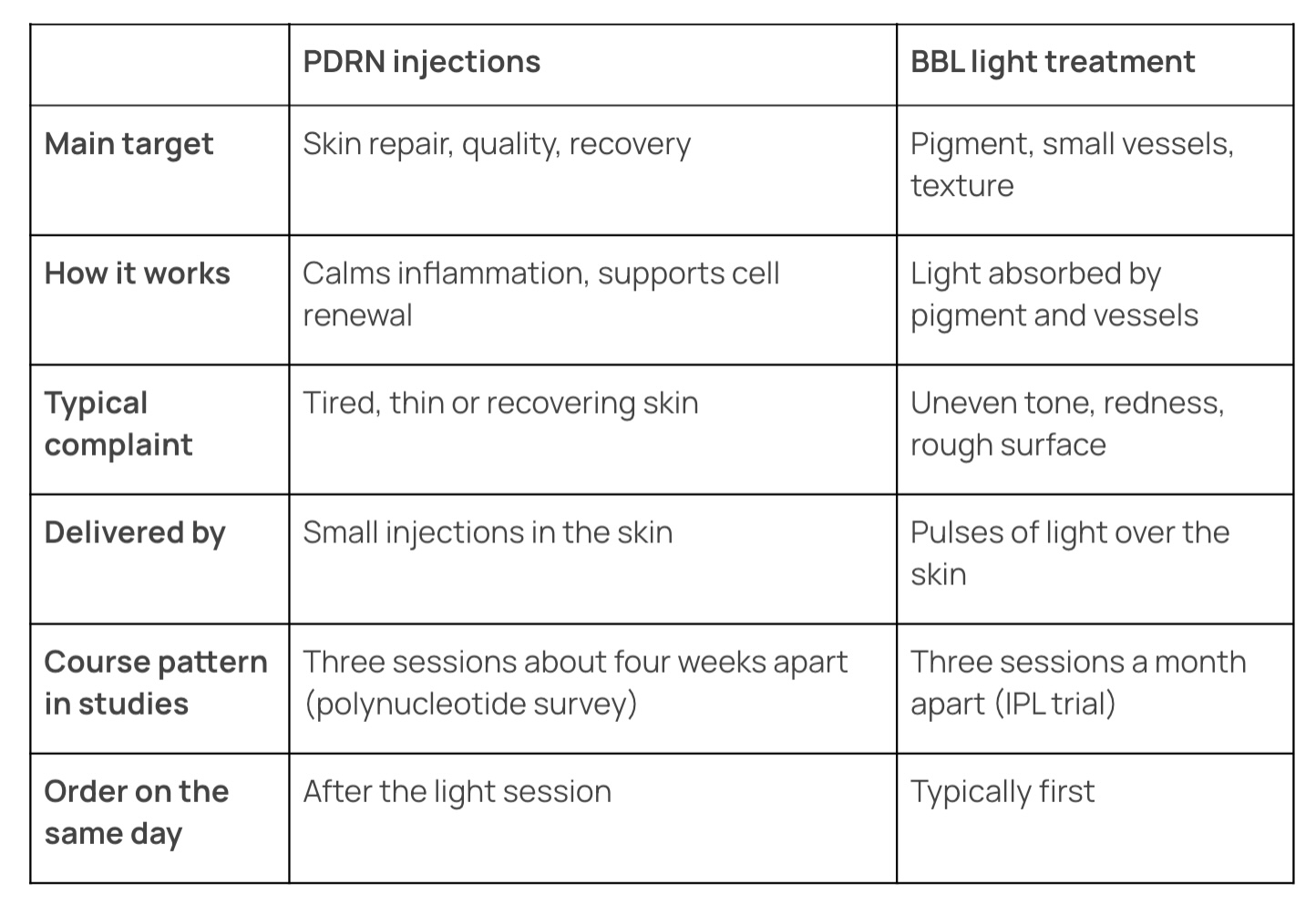
Yes, and the reasoning is sound. PDRN is a purified DNA-based injectable that supports the skin’s own repair. Light-based treatment, such as BBL, works on tone, redness and texture, and it asks the skin to repair itself afterwards. Putting the two in one plan means the repair step has some support. Published research backs each treatment on its own, with encouraging safety data for PDRN. The pairing is already common in practice. Your doctor decides at the consultation whether to combine them, in which order and at what interval.
What PDRN is and how it works
PDRN (polydeoxyribonucleotide) is made of purified DNA fragments, commonly obtained from salmon or trout and processed to remove proteins. It has been used in clinical practice for more than 30 years, starting with wound care. It acts on a receptor in skin cells (the adenosine A2A receptor), which dials down inflammatory signals. It also supplies building blocks that cells use when they multiply and rebuild tissue (2).
What light-based treatment adds
Intense pulsed light (IPL) sends broad-spectrum light into the skin, where pigment and blood vessels absorb it. That is why it is used for uneven tone, visible redness and a rough surface. BBL belongs to the same broadband light family, which makes the IPL literature the closest published guide to how this technology behaves on skin.
What the research shows
For PDRN and polynucleotide, a systematic review of seven randomised trials with 183 participants found improvements in wrinkle-related outcomes, scar quality, wound-healing measures and patient satisfaction. The benefits were most consistent in wound healing, and no serious treatment-related adverse events were reported (3).
For recovery after skin injury, a narrative review describes a randomised controlled trial in 44 patients after thyroid surgery. Intradermal PDRN on the first two days after surgery led to a significantly lower scar vascularity score at three months (P=0.010), along with lower redness and scar height. The overall scar score did not reach statistical significance (P=0.059) (2).
For skin quality, a randomised, double-blind split-face trial in 27 people compared polynucleotide with non-cross-linked hyaluronic acid around the eyes. It found no significant difference between the two in the investigator and patient scores. The improvement in elasticity and hydration was better maintained with polynucleotide at 28 weeks (2).
On the light side, a randomised controlled split-face trial of 32 women (skin types I to III) used three IPL sessions a month apart. Blinded evaluators found significantly better texture on the treated side (P<.006 at most assessments), plus improvement in visible small vessels and uneven pigmentation. However, wrinkles did not change (1).
For combined practice, a survey of more than 235 Korean dermatologists and aesthetic physicians found that 79% of those using polynucleotide injections combined them with laser or light-based treatments, mostly radiofrequency and focused ultrasound (2). The reviewers also state that no published human randomised trial has yet tested PDRN after a laser, peel, microneedling or radiofrequency session in an aesthetic patient group. They describe the use as a reasonable adjunct subject to individual assessment (2). Dedicated trials of this exact pairing are the next step for the research.
How the sequence is planned
If both are done on the same day, an expert-panel consensus recommends starting with the light treatment and avoiding skin manipulation after the injection (4). That consensus covers hyaluronic acid fillers, so we use it as guidance on timing. Separate visits are also reasonable. The interval depends on your skin and the plan.
Who may be suitable and who may not
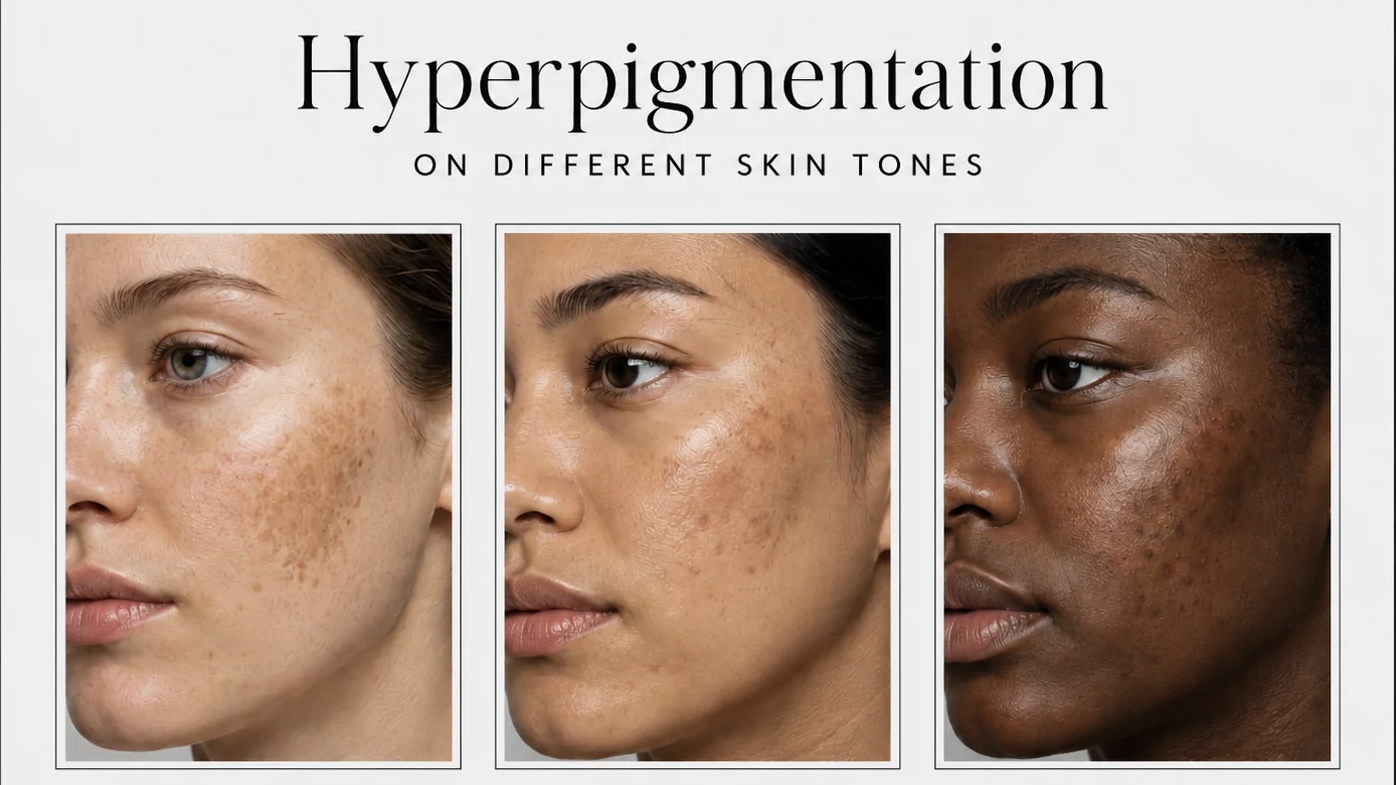
The pairing is worth discussing if you have uneven tone or redness and you also want support for skin quality and recovery. Light-based treatment needs extra planning with a recent tan, with medicines that raise sun sensitivity, and with darker skin types. The controlled IPL trial included skin types I to III (1), so the doctor assesses deeper skin tones individually.
Neither treatment is done during pregnancy and breastfeeding, over active skin infection, inflammation or herpes at the treatment site, with a known allergy to any component of the injectable, with bleeding disorders or anticoagulant therapy without a doctor’s assessment, or with a tendency to keloid scarring. This list is not exhaustive, and final suitability is determined by a clinician at an in-person assessment.
What happens during the process
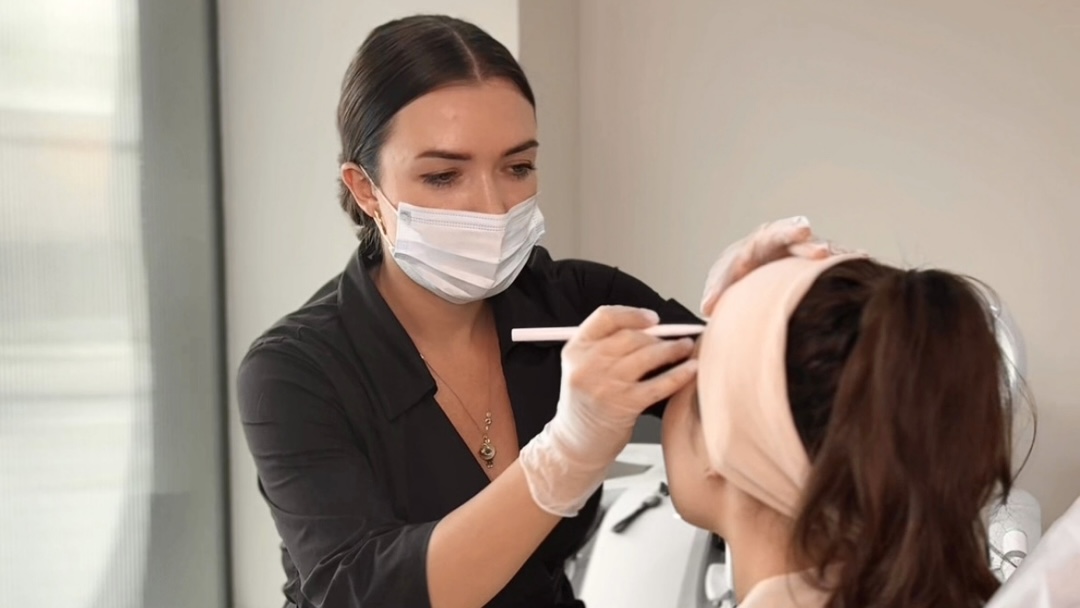
It starts with a consultation. The doctor examines your skin, asks about sun exposure, medication and previous treatments, and builds the plan. A light session involves eye protection and pulses over the treated area. An injection session involves small injections spread across the area. After the treatments, daily sunscreen matters most to secure results.
Risks and when to postpone
Light-based treatment can cause redness and temporary darkening of freckles and pigmented spots. In the IPL trial, adverse events were minimal. All patients saw freckles darken in the first week (1). In the PDRN literature, no serious adverse events attributable to PDRN were reported, and the events seen were minor and self-limiting (2,3). Injections can cause bruising, swelling and tenderness, and rarely infection at an injection point.
Postpone if you have a fresh tan, a cold sore, any active skin infection, an irritated or sunburnt area, or if you are unwell.
When the condition requires a medical diagnosis before any treatment
Some skin changes need a diagnosis before any cosmetic plan. Pigmentation patches that darken or spread, persistent redness or flushing, and any mole that changes in size, colour or shape should be examined by a dermatologist first.
What MED YU MED offers
The doctor builds a plan around your skin: PDRN, BBL, both together or a different route. Light-based care is delivered with BBL, and skin-quality injectables are covered on the biorevitalisation page. Protocols, intervals and the order of sessions are set individually.
When to seek emergency medical care
Call MED YU MED on +971 52 184 5011, daily 10:00-22:00, if redness spreads rather than settles, if the skin blisters or breaks, if pain increases after the first day, or if a fever follows a session.
Go to the nearest emergency department or call 998 for an ambulance straight away if you notice sudden vision changes, severe pain, or skin that turns pale or dusky after an injection. Outside our opening hours, don’t wait for the clinic to reopen. The clinic does not operate 24 hours.
What to read next
- ???
Frequently asked questions
Is PDRN the same as a skin booster?
PDRN and polynucleotide are DNA-based, and hyaluronic acid boosters work differently.
Can I have BBL and PDRN on the same day?
Often yes, at the doctor’s discretion. The recommended order is the light treatment first, then the injection.
Does PDRN speed up recovery after light treatment?
PDRN has shown faster healing and less redness in surgical and wound settings.
Is it suitable for darker skin?
It can be, with individual planning. The IPL trial included skin types I to III, so the doctor pays particular attention to pigment response.
How many sessions are needed?
The IPL trial used three sessions a month apart (1), and polynucleotide injections are usually given three times, four weeks apart (2). Your plan is set at the consultation.
Do I need sunscreen afterwards?
Yes, daily. Sun exposure after light-based treatment raises the risk of pigmentation changes.
References
- Hedelund L, Due E, Bjerring P, Wulf HC, Haedersdal M. Skin rejuvenation using intense pulsed light: a randomized controlled split-face trial with blinded response evaluation. Arch Dermatol. 2006. doi:10.1001/archderm.142.8.985 (https://doi.org/10.1001/archderm.142.8.985)
- Flores Rodríguez J, Toledo Avelar L, Yi K, et al. Polydeoxyribonucleotide (PDRN) in post-procedure recovery in aesthetic medicine: a narrative review. Cureus. 2026. doi:10.7759/cureus.108886 (https://doi.org/10.7759/cureus.108886)
- Alshehri AF. Polynucleotides and polydeoxyribonucleotides for skin rejuvenation, postoperative scar prevention, and wound healing: a systematic review of randomized clinical trials. Cureus. 2026. doi:10.7759/cureus.112403 (https://doi.org/10.7759/cureus.112403)
- Urdiales-Gálvez F, Martín-Sánchez S, Maíz-Jiménez M, et al. Concomitant use of hyaluronic acid and laser in facial rejuvenation. Aesthetic Plast Surg. 2019. doi:10.1007/s00266-019-01393-7 (https://doi.org/10.1007/s00266-019-01393-7)
Medical disclaimer: This page is for informational purposes only and does not replace a consultation with a licensed physician. It does not recommend or prescribe any prescription-only medicine.
License statement: MED YU MED operates under DHA License 6589480.
Individual results caveat: Results vary by diagnosis, anatomy, product used and individual response, and no outcome is guaranteed.
MEDICALLY REVIEWED BY
DR. Zhibek Rakhimbekova
General Practitioner, Aesthetic Medicine Doctor
DHA Licence No. 28857822-001


